Wake Words
With your eyes closed, you will focus on my voice. And my voice will guide you through this voyage inside yourself ... I will count back from 5 to 0 ... On zero, everything will become obvious.
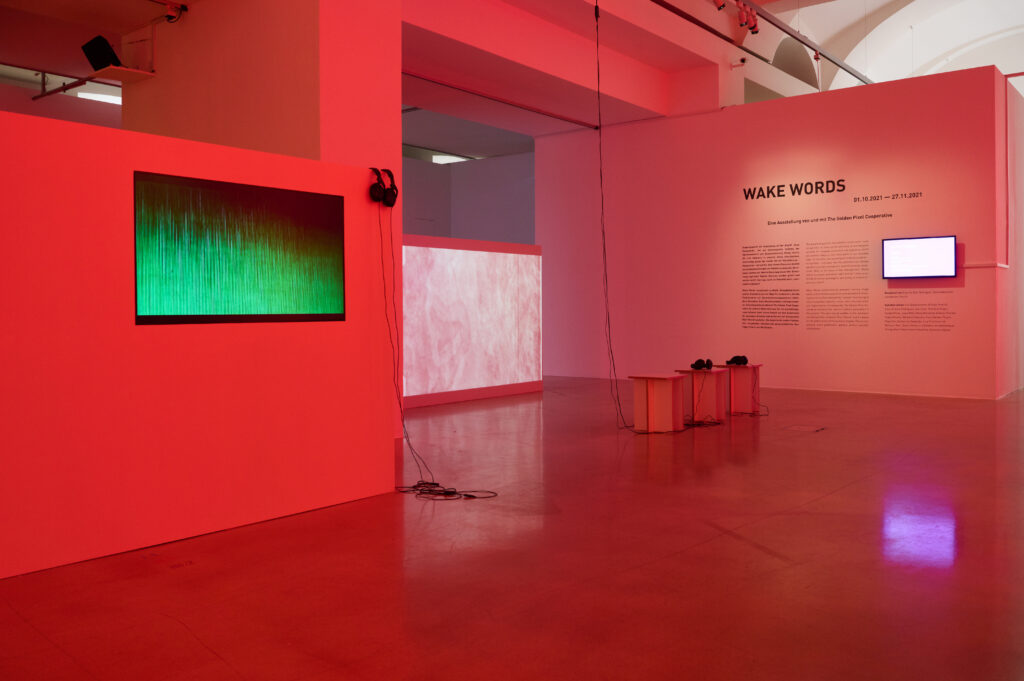
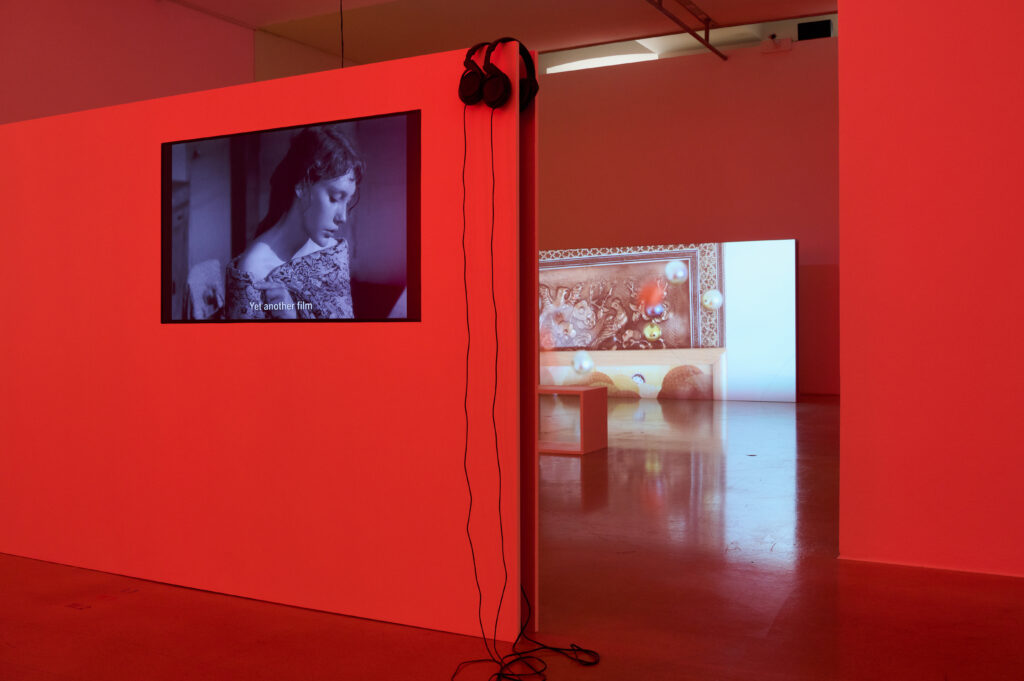
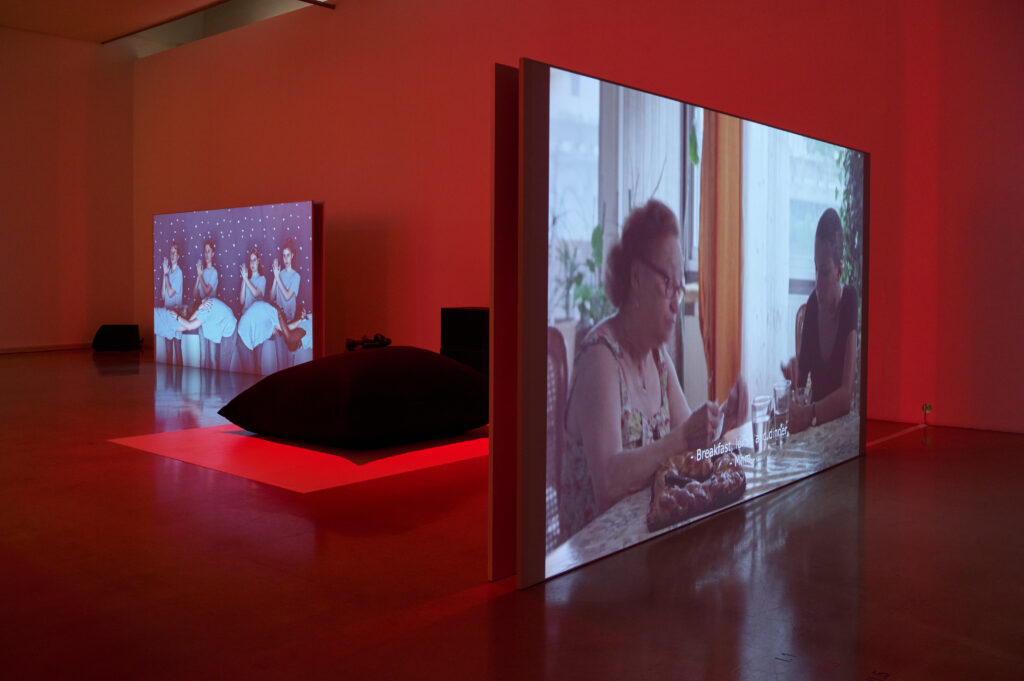
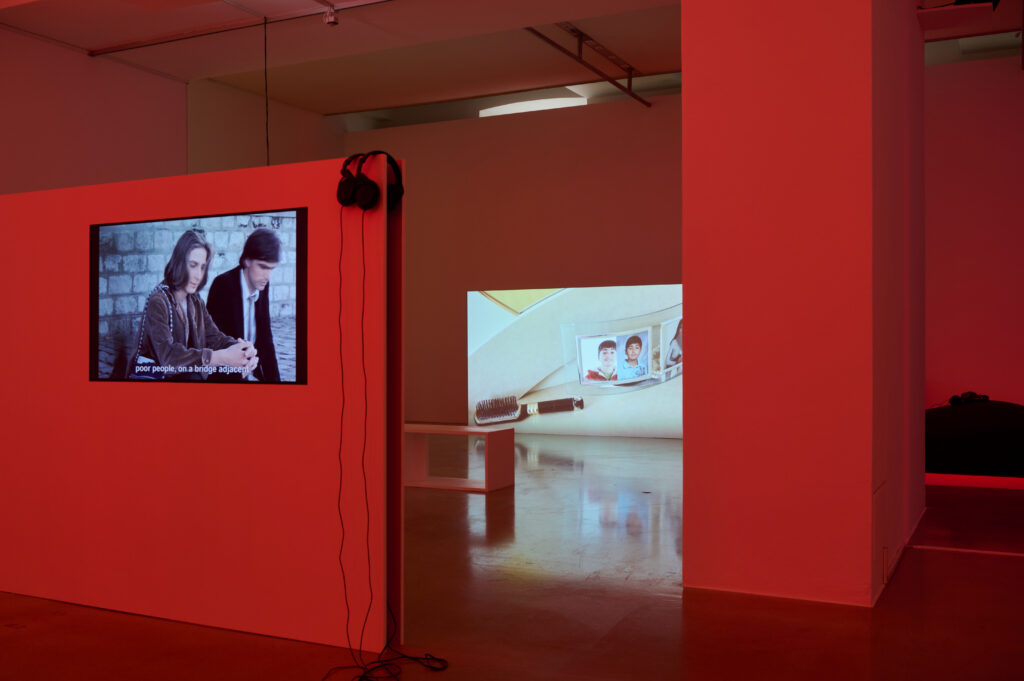
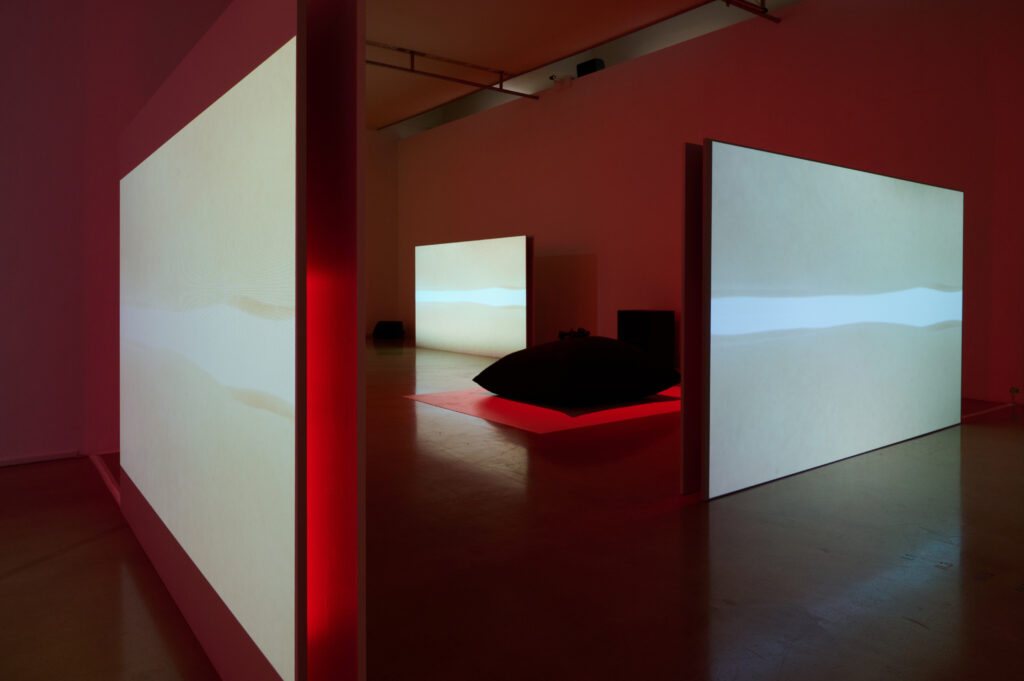
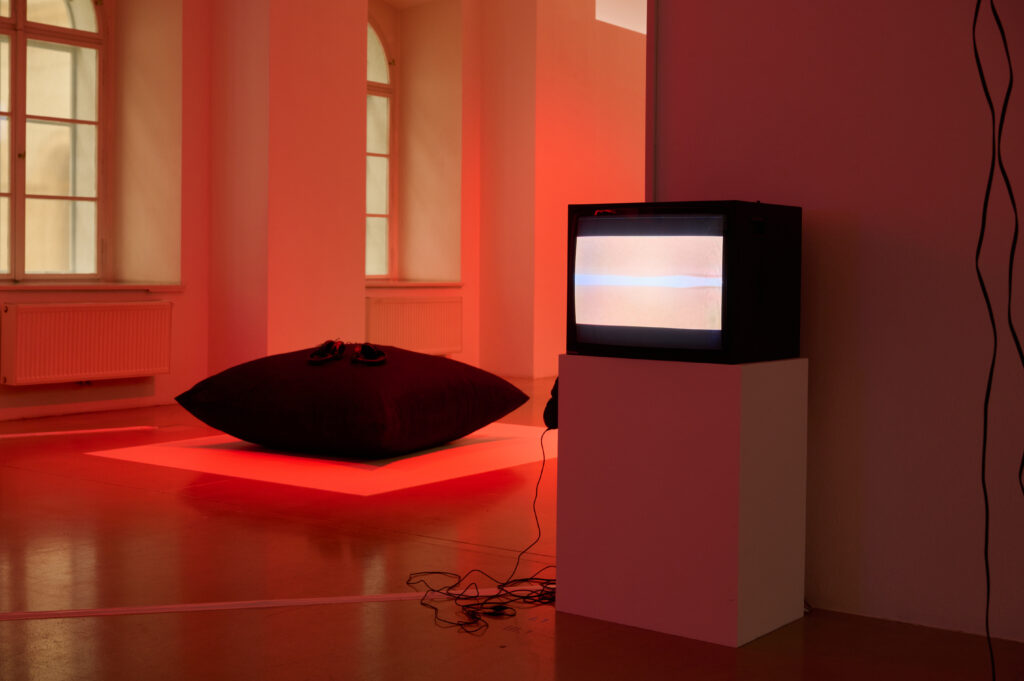
Wake Words. Words that rouse someone or something from a sleep, that call back to presence, to “reality”. But it could as well be that these words simply call someone—or something—to work, such as the app Alexa, whose wake word is its name. This exhibition refers to the magical power of such invocations, which operate in a zone between dream and wakefulness. They denote a field of tension between transparency and opacity. There are various layers in this (exhibition) space that initially remain in latency, exist in parallel, and are brought to appearance over time.
Wake Words departs from the term “voice recognition”. On the one hand, it refers to technological systems of voice assistance and speech recognition that are currently creeping into our everyday lives. On the other hand, the second part of the term (“recognition”) indicates that this phenomenon already presupposes a certain concept of the kind of voice that is to be recognised. The exhibition looks at the basis of this recognition and searches for the discrepancy between heard and unrecognised voices. Following Édouard Glissant’s concept of opacity, it explores the potential of remaining unrecognised or becoming unrecognisable.
Inspired by forms of resistance that are possible through processes of encoding and coding, or that can take place in linguistic spaces that are not accessible, permeable, or interpretable but opaque, this exhibition addresses the potential of voices that remain unintelligible. While embracing diverse aesthetic, political, and formal approaches, the exhibited artworks explore aspects related to the possibility of remaining unrecognised.
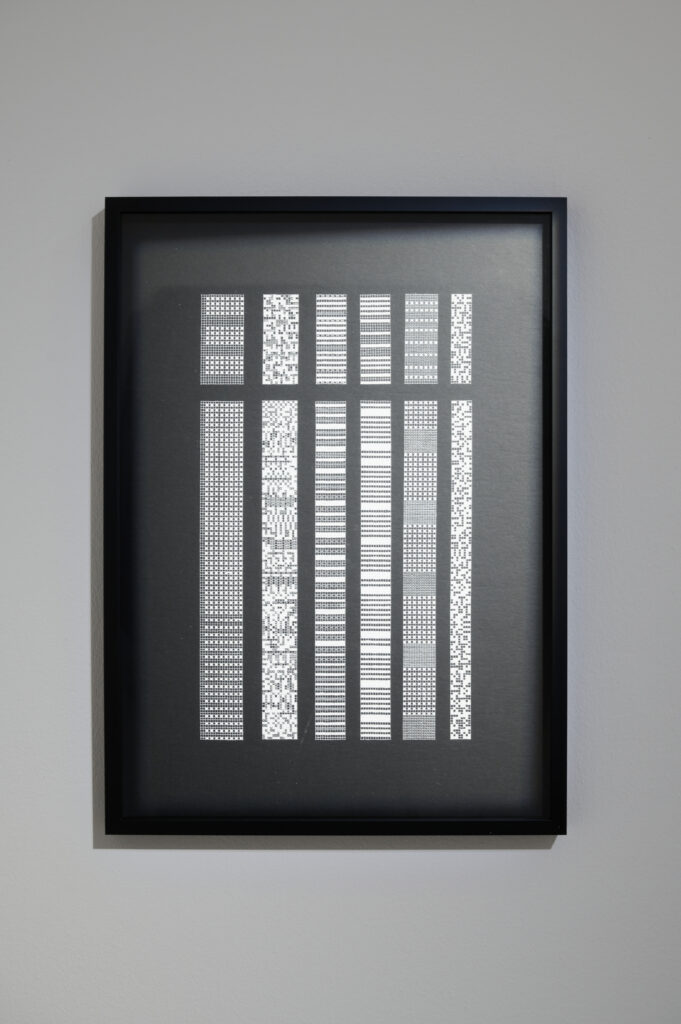
Unrecognition can take place for different reasons. Within the computing technologies that are used to identify, distinguish, and authenticate voices, there are four common parameters that might disrupt these systems. There may be too much noise to identify the voice’s signal. Oftentimes, the echo created by the voice leads to the malfunctioning of the recognition system. Other times, improvised speech may confuse the parameters established. It might also happen that the machine itself, because of an internal error, stops working as programmed. Wake Words is thematically structured around the following four terms that obstruct the “correct” functioning of voice recognition systems: noise, echo, improvisation, and machine error.
Layers
As with other technologies, there is a primordial duality within voice recognition systems: the division of information between signal and noise.[1] It is in this initial separation that the relevance or irrelevance of a sound is decided by programmers. Where one sound can be identified, analysed, and used for a purpose, all others should be removed from the analysis in order to allow the usefulness of the first. Within speech recognition technologies, the sound of breathing could be considered one recurring “noise” of the voice that escapes identification. The first layer of the exhibition—noise—functions as a poetic landscape of inhaling and exhaling, where bodies perform this fundamental act of the living, so essential for the act of speaking as well.
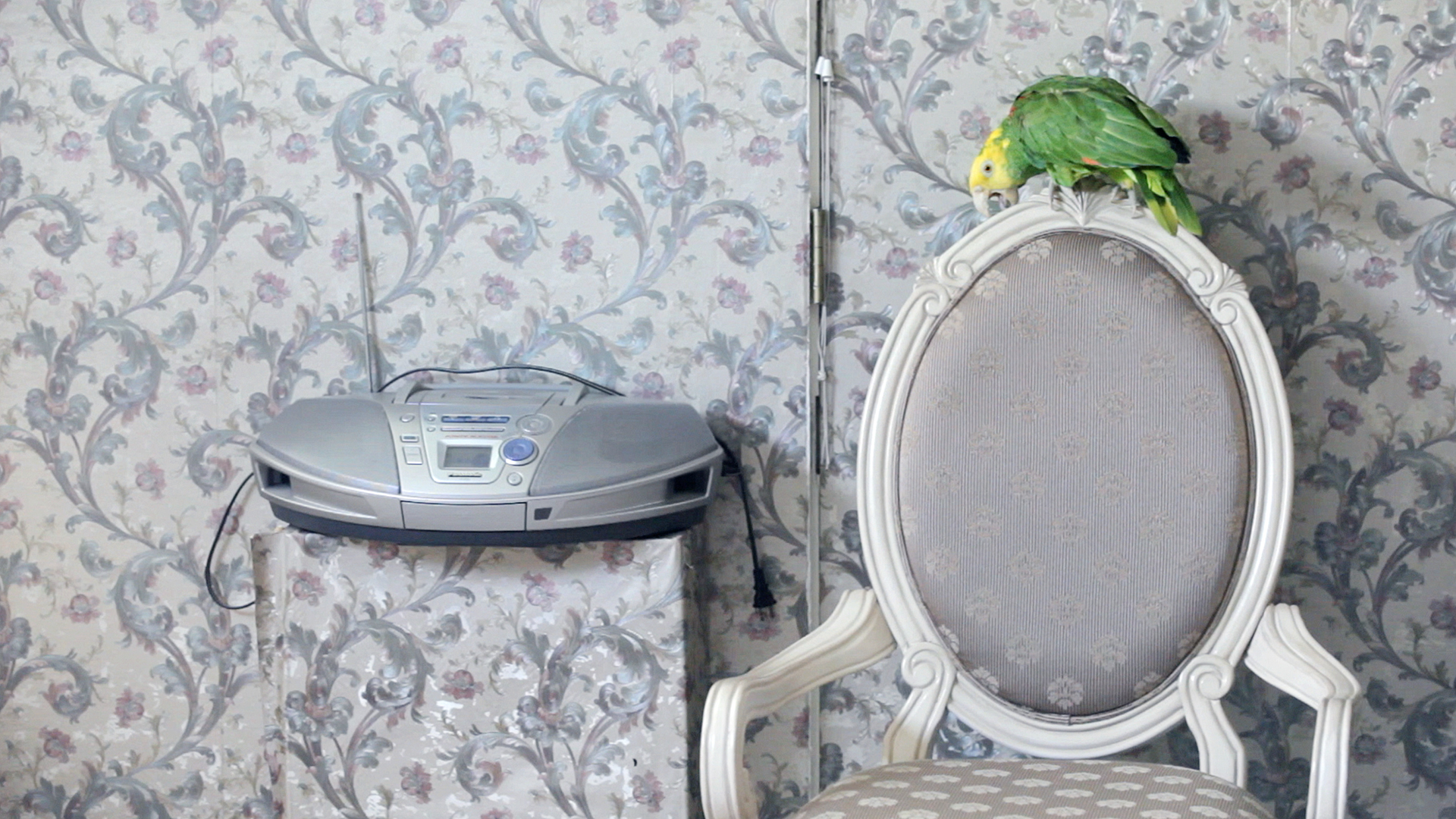
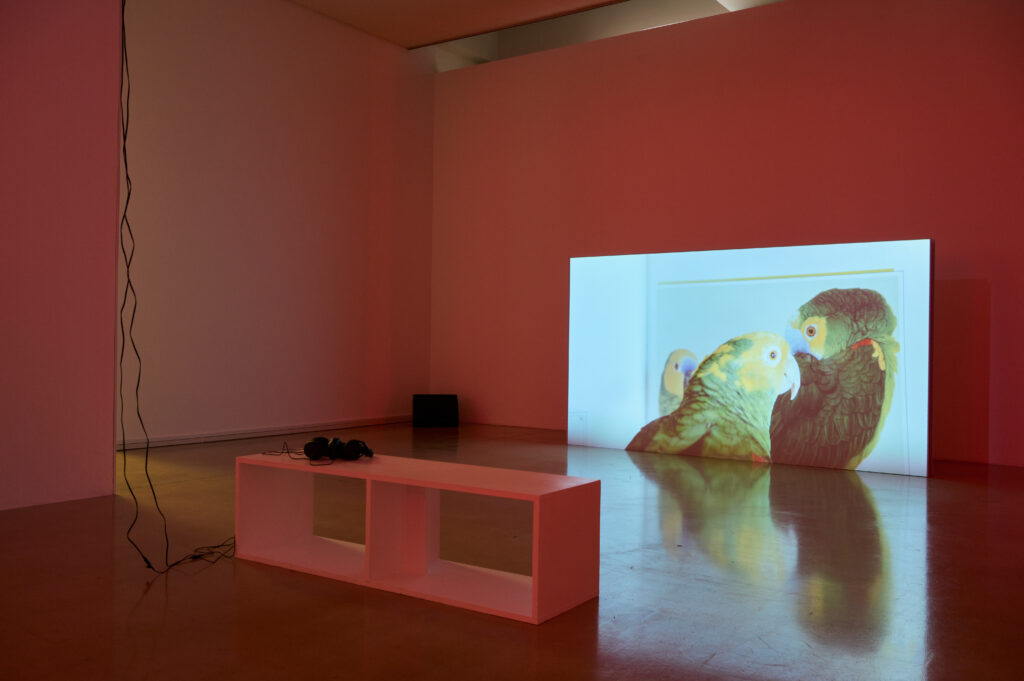
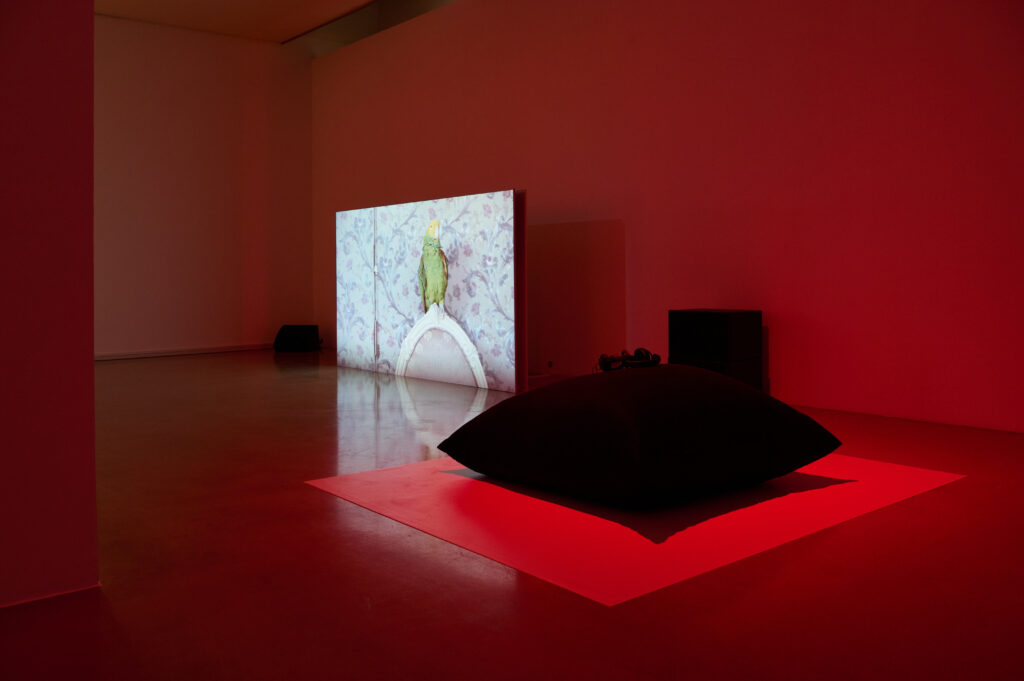
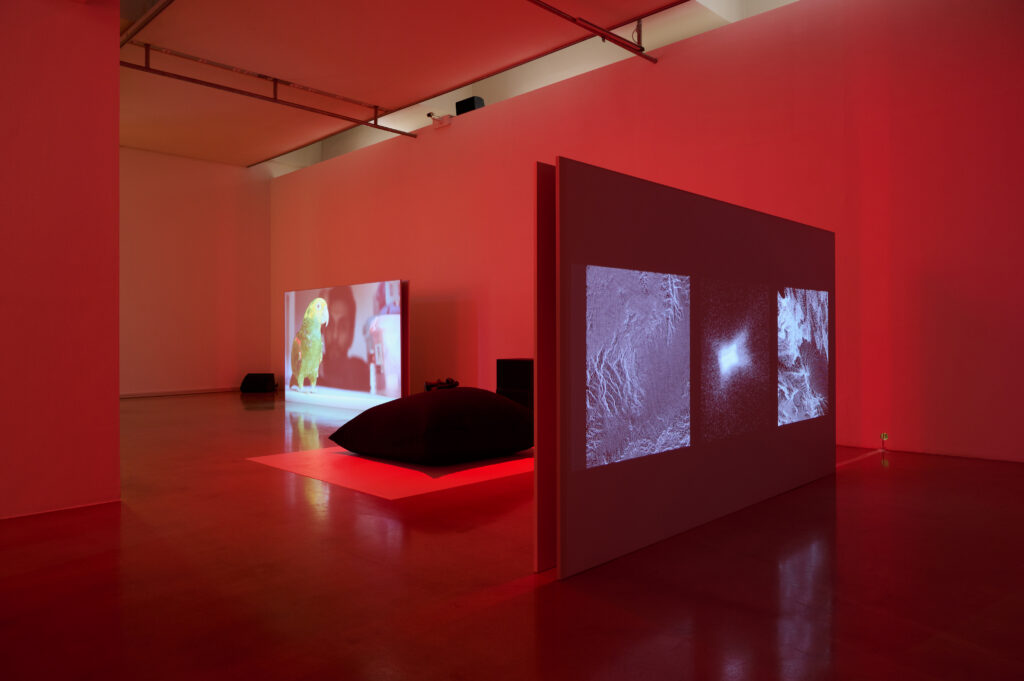
The exhibited works also expand the concept of the voice beyond the anthropocentric view, which only refers to the vocal capacity (vocal agency) of the human body or the technical reproduction of human utterances. The sonic realm of non-human agents is frequently considered voiceless. This non-recognition of sounds produced by the lungs, larynxes, and syrinxes of all living beings draws many bodies into a realm of unhearability, or to the status of mere background noise. However, if we were to carefully listen to the trembling voice of an iceberg, we would hear a warning: a clock ticking signalling that we might be running out of time.I f we paid attention to the accent of a parrot, we would grasp his/her history of displacement. If we could imagine what ants say through pheromones and touch, we might hear the critical voice of a rhizomatic superorganism.
Supposedly incapable of uttering autonomous messages, technically generated voices have been linked to the mythological figure Echo, who was condemned to repeat what was already said. Moreover, the most widely used smart speaker that combines voice recognition capabilities with speaker functionality bears her name. Speech apparatuses are characterised by the fact that they permanently operate in the mode of repetition and thus are linked to processes of rehearsal and standardisation. But at what point does repetition become transformation? How does repetition play into the routine tasks performed throughout one’s lifetime? How to repeat without being heard? The selected audiovisual artworks deal with repetition and rehearsal by highlighting the moment in which re-enactment takes place and has the potential to become otherwise.
A “machine error” comes to the foreground in Joanna Moll’s Sound Collage in a Dark Room. The artist creates a setup in which a video is recorded over and over again until the machine only talks about itself. Technological systems are designed to perform a specific function or capture a certain kind of information according to a predefined pattern. However, any apparatus can deliver a performance that goes against its productive aims, or be used in such a way that it fails in its original purpose. What would a phonograph say if it were to read an image of a plant?
In Western cultures, the voice is considered a “portal to the soul”. There are currently a multitude of applications that aim to make visible or speculate about the authenticity hidden in a voice: an immigrant’s actual place of origin or a job applicant’s individual personality profile. In doing so, these systems often draw on databases that are culturally, politically, and historically shaped or biased. “History is not a perfect loop.” All programming involves cultural bias, and every repetition of the process adds new layers. The “noise” contained in this programming ultimately recounts the errors and continuities of the system that conceived it. How could anyone be “mistaken for nobody”?
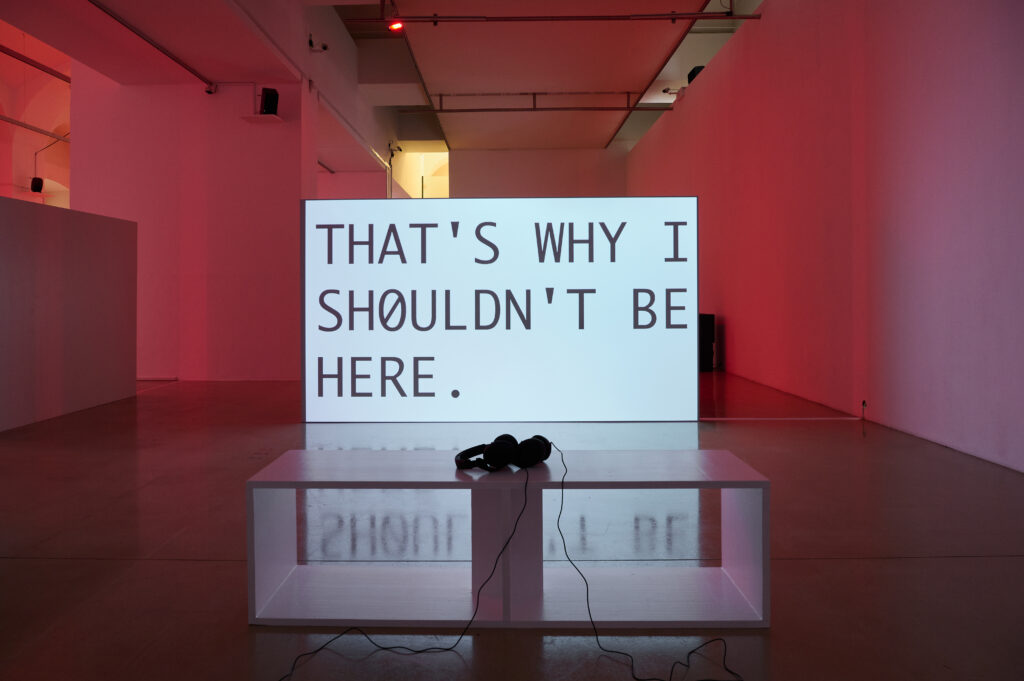
Speech recognition systems are based on rules of standardisation that ensure that linguistic input is readable by machines. Consequently, any form of improvisation remains unreadable for these systems and offers a potential for remaining unrecognised. Improvisation means the ability to react to the unforeseen, to understand the unpredictable or unintelligible as a foundational element of (collective) action. In Katarina Zdjelar’s Shoum, the song “Shout” by Tears for Fears is reinterpreted and comes alive in a new, invented language. This transformation of the New Wave song into a kind of anthem of the working class alludes to the fact that pop songs always already carry cultural coding—which can be dissolved through improvisation.
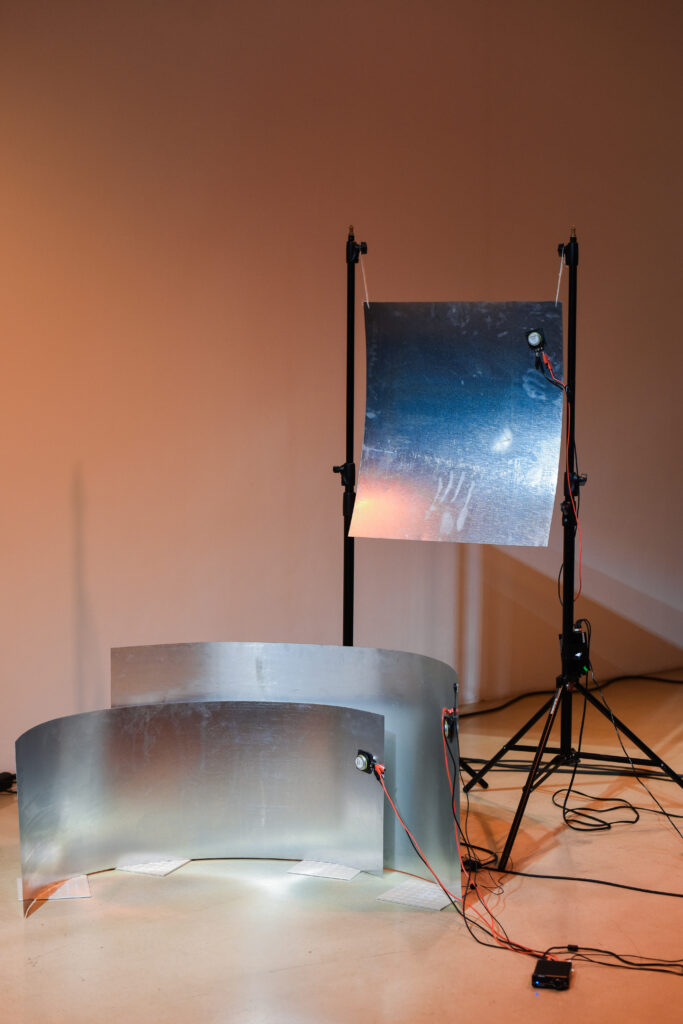
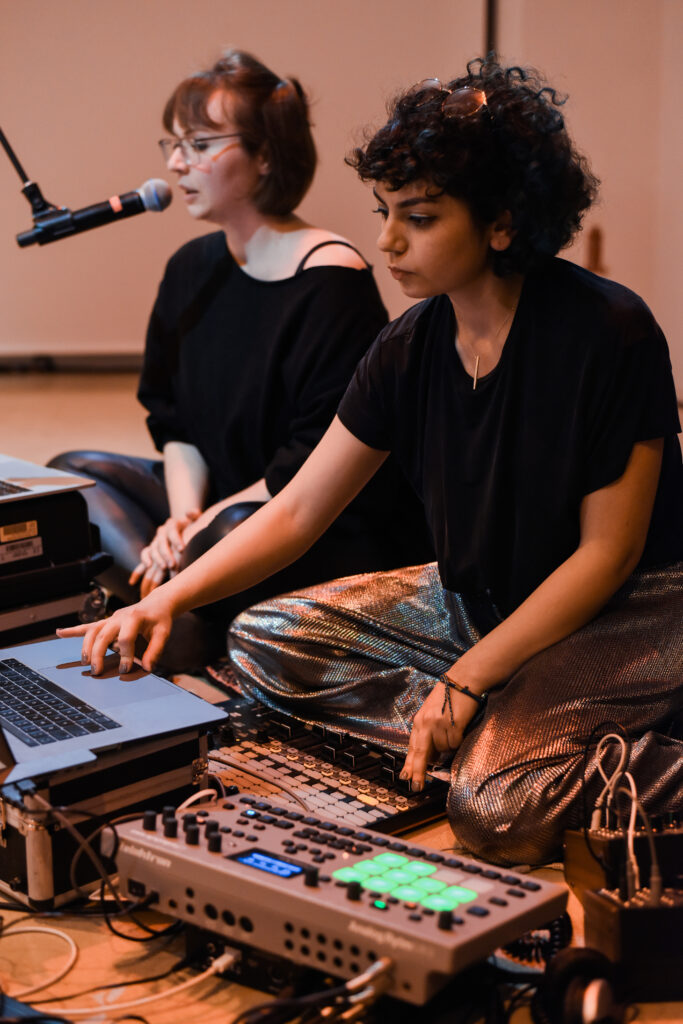
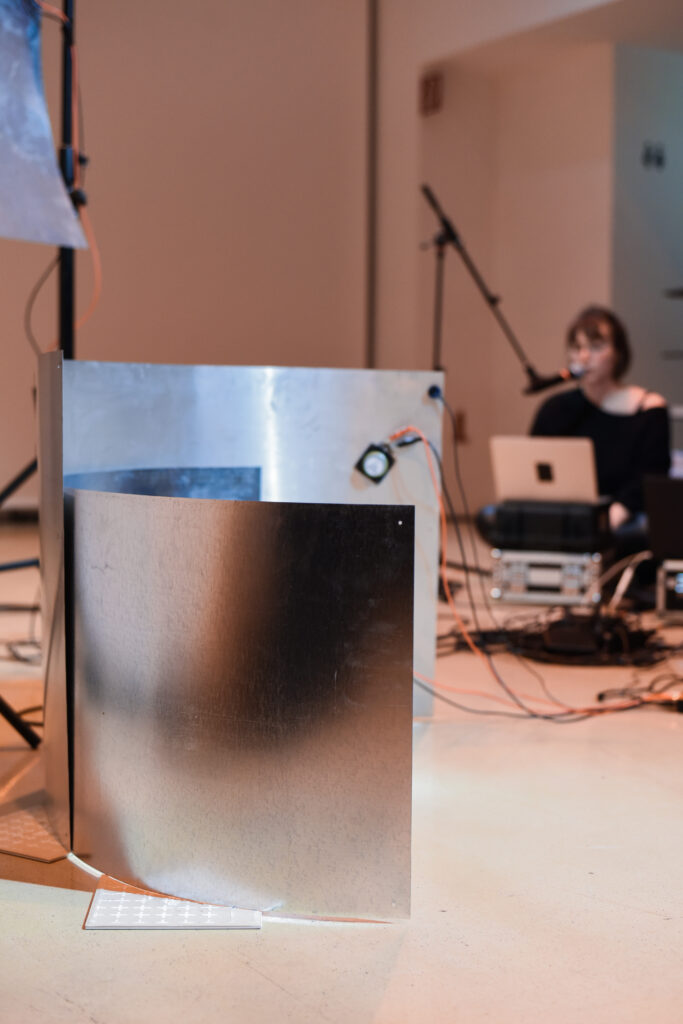
Diana Vidrascus Silence des Sirènes bezieht sich auf Glissants Auffassung von Opazität im ursprünglichen Sinne: als Suche nach einem Ort der Stille, fern von Erwartungshaltungen und Ansprüchen der dominanten Kultur. Improvisation, als Form der Inszenierung, wird hier sowohl zum ästhetischen als auch politischen Programm. Improvisation ermöglicht Opazität, indem sie sich den Erwartungen entzieht und so die Situation neu definiert. Opazität ist dabei nicht als eine Form der reinen Selbstbezogenheit zu verstehen – das Subjekt steht in Verbindung mit anderen pluralisierten Identitäten, die sich wechselseitig konstruieren und gemeinsam improvisieren. Die wechselseitige Konstruktion, oder Intra-Aktion zwischen menschlichen und nichtmenschlichen Akteur*innen ist auch das Thema von Marlies Pöschls Simple Whistles und der Performance Strom von Iris Blauensteiner und Rojin Sharafi.
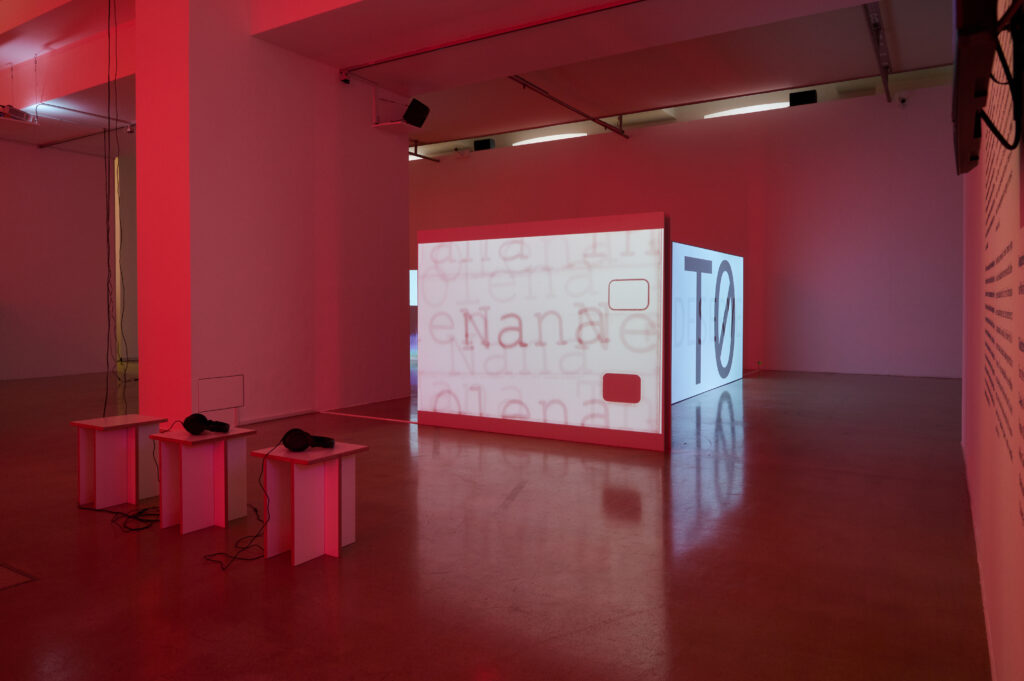
Clouds of smoke are billowing out of dried leaves being burnt, der „Open Sound“, der im Ausstellungsraum hörbar ist, unterwandert den meist für selbstverständlich erachteten Zusammenhang von Bild und Ton in Videoarbeiten: Er verweist auf die Idee, dass Klang per se eine vibrierende Materie ist, die Menschen und technologische Objekte auf physische und affektive Weise verbindet. Durch den Open Sound wird ein geteilter Raum hergestellt: zwischen den Besuchenden und der Umgebung, aber auch zwischen den einzelnen künstlerischen Arbeiten. Basierend auf bestehenden Sounds der präsentierten Videos entwickelt Rojin Sharafi in Clouds of smoke…mittels generativer Software-Prozesse eine Komposition. So beginnen die technologischen Geräte unerwartet ihre eigenen Sprachen zu entwickeln, abseits der vorgefertigten Scripts zu agieren, zu improvisieren. Zusammen bilden sie eine lebendige, ambivalente Form, die sich immer wieder neu erfindet und die Besucher*innen durch den Raum leitet.
Accompanying the exhibition, the Wake Words audio publication considers how the process of listening is not only affected by physical but also cultural preconditions; how the politics embedded in the surrounding space filter what is heard and what is kept silent, and how technological apparatuses impact the auditory perception. Talking back at the present hierarchies of speaking and listening, the voices gathered in the audio book have developed these audio tracks in collaborative and experimental conversations with other practitioners, musicians, and mobile phone applications, too. Thus, the four tracks continue the thematic layers addressed in Wake Words at the same time as contextualising them within a broader interdisciplinary, artistic, and theoretical research on sound and media art.