Footprints in a Sea of Data
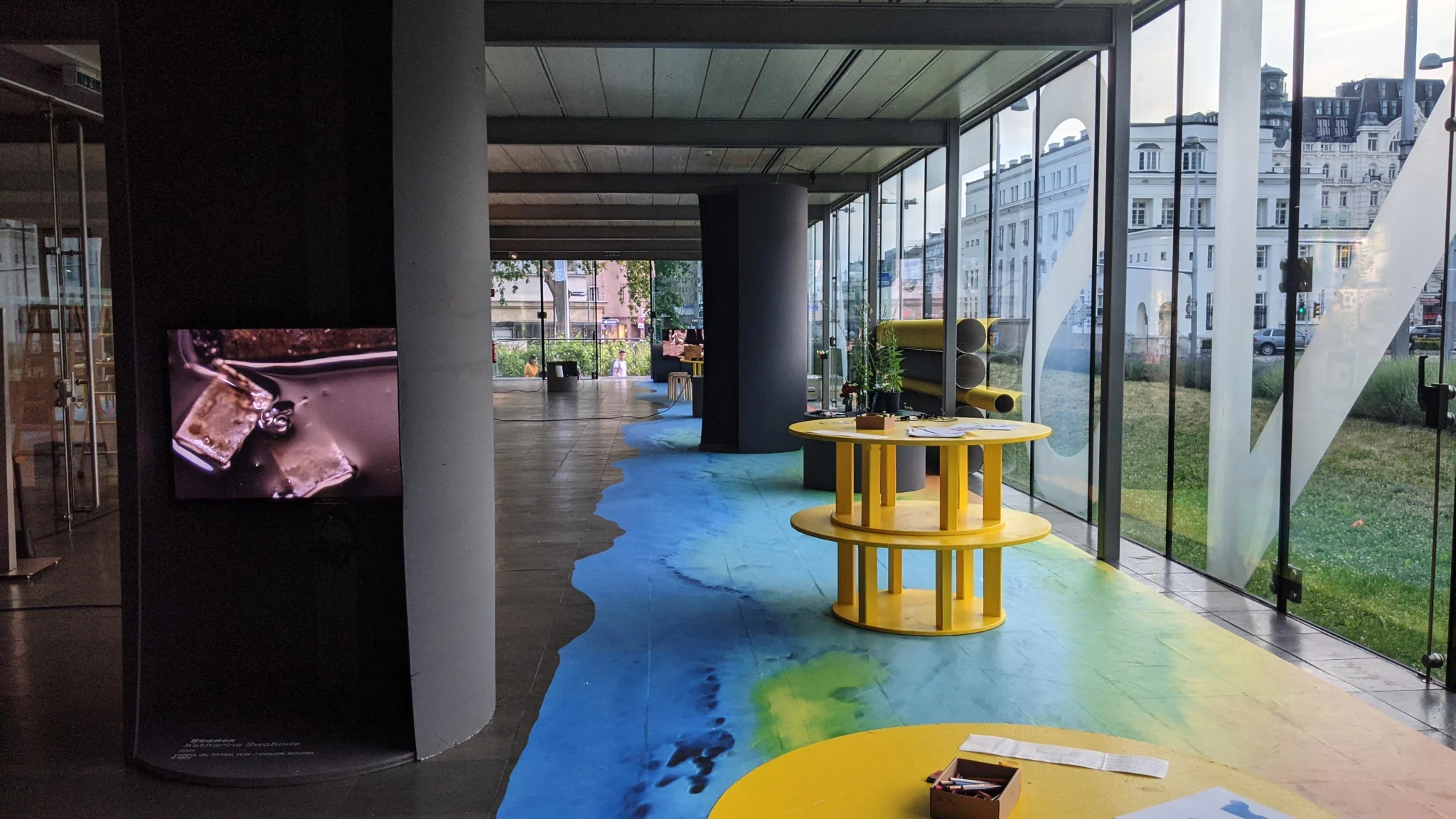
a Sea of Data”, Kunsthalle Vienna, 2021, Photo: Marlies Pöschl
■ DATE:
■ LOCATION:
■ CONCEPT AND REALIZATION:
■ ARTISTS:
■ DISPLAY:
■ SUPPORT:
■ CURATED BY:
■ RELATED CONTENT:





We always leave traces—no matter what we do. These traces may be visible or invisible; they may have been left intentionally or completely by chance. When we walk in the snow, for example, we leave visible footprints. But what invisible footprints do we leave behind on the internet? And how do our actions in digital spaces change the landscapes and ecosystems that surround us? What kinds of stories do animals and plants tell us if we listen closely, and do children and young people actually have a say in shaping climate policy? […]
The departure point for this hands-on exhibition project is images and videos of landscapes, plants, or weather phenomena, that the artists produced within the framework of the Supergau Festival in Salzburg. We are constantly surrounded by such pictorial worlds: photos of crystal-clear lakes, images of sand dunes and snowy slopes, or even snapshots of traffic-congested streets wander across our screens day after day. But where do these images really exist, and where are they stored? How do they reach us? And how big is their ecological footprint? In this exhibition, which interweaves analog and digital media, we provide a platform for the collective development of artistic and scientific concepts and proposals for a more environmentally friendly future. Visitors are invited to get to the bottom of these issues, to respond to them, and to leave their own traces in the exhibition. […]
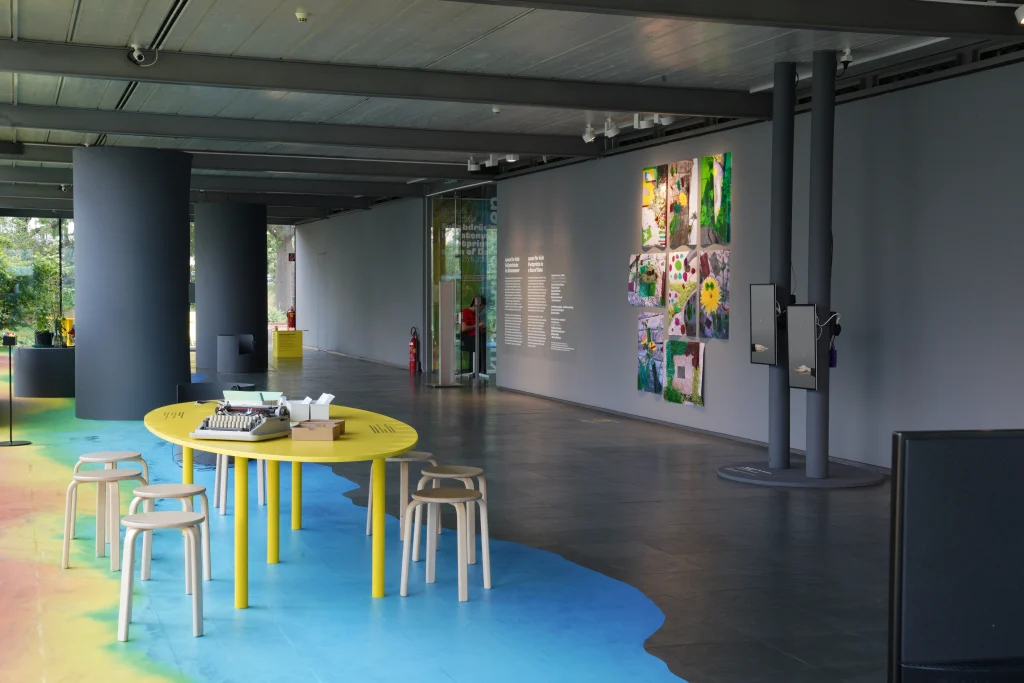
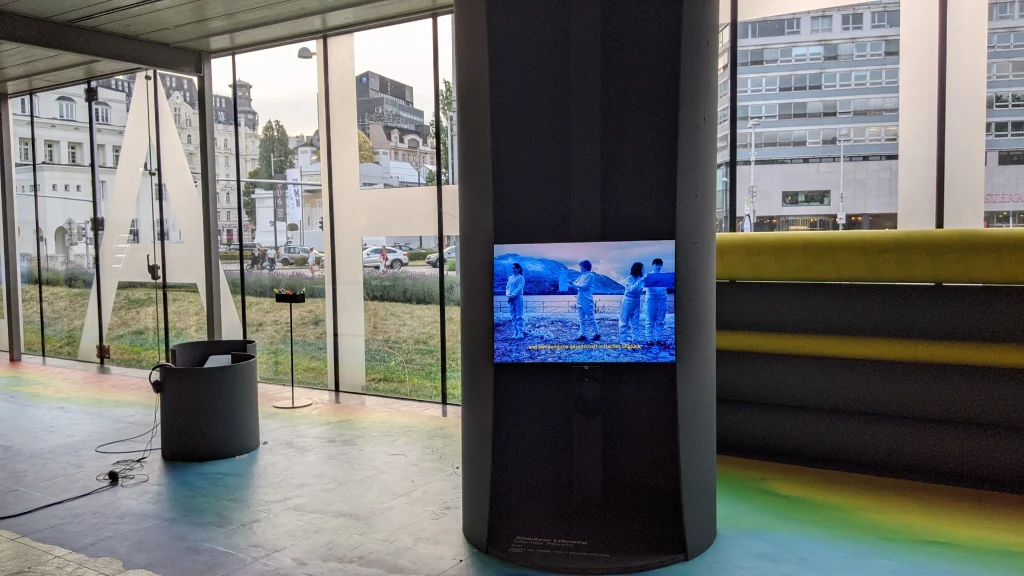
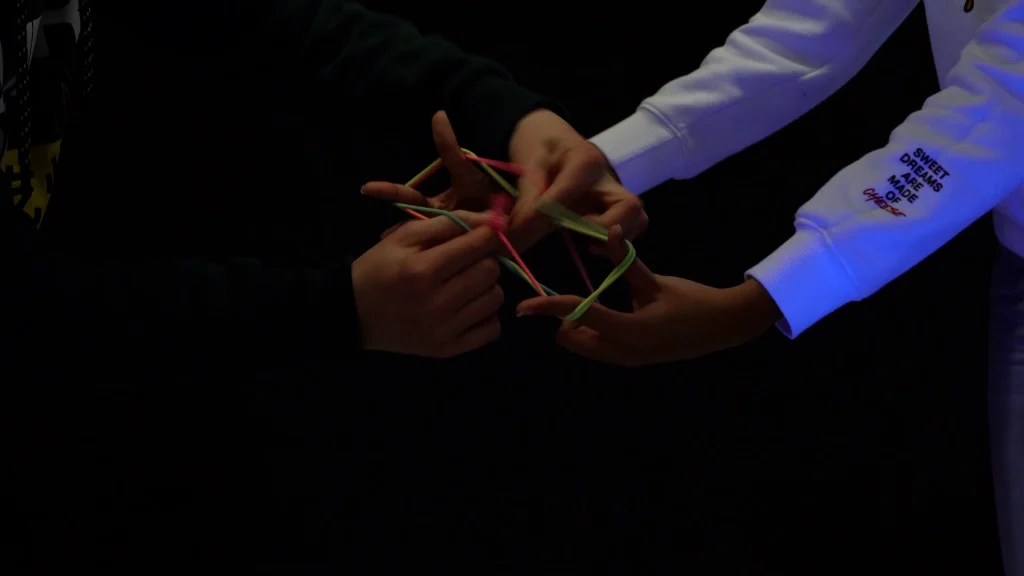
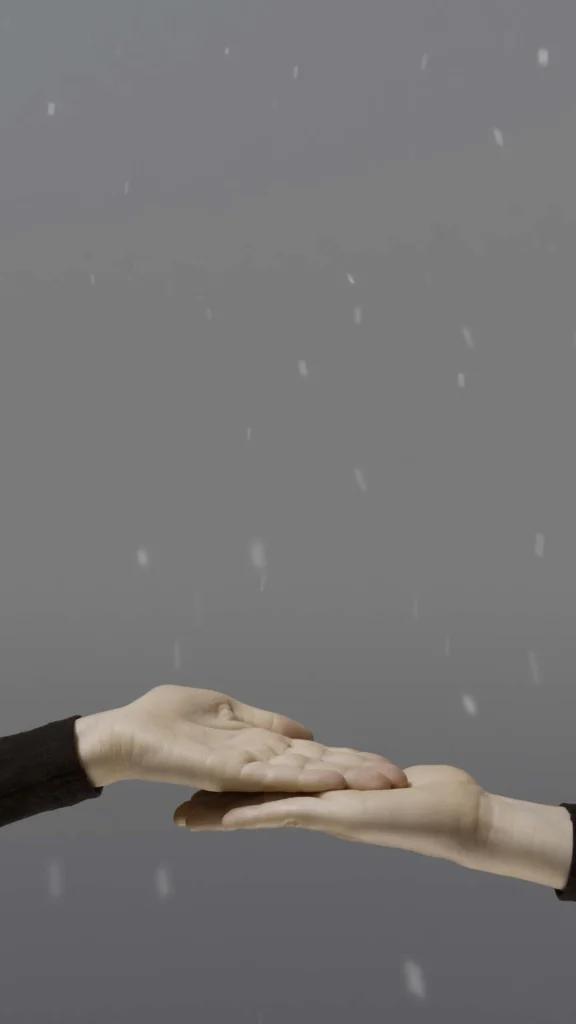
“Space for Kids. Footprints in a Sea of Data” is an exhibition project that explores how environments are accessed and represented with digital technologies. The Golden Pixel Cooperative has developed an exhibition structure that links together the different artistic works—like individual chapters—and centers them around a common theme. In her contribution to the exhibition, Simona Obholzer questions the “authenticity” and emotional charge of visually reproduced natural phenomena such as snowfall. Enar de Dios Rodríguez investigates artificially made landscapes, probing our insatiable hunger for sand—after water, the most mined natural resource on our planet. Lisa Truttmann examines radio signals and shows how technologies have inscribed themselves into every nook and cranny of nature, while Marlies Pöschl focuses on plants as data storage devices. With reference to Erich Kästner’s children’s book “The Animals’ Conference” and Donna Haraway’s theoretical work “Staying with the Trouble” (a plea for “making kin”), Nathalie Koger involves a group of children in her studies of human encroachments on the habitats of other living beings, thus threatening their existence. And Katharina Swoboda brings “e-animals” roaming about the internet into the Karlsgarten.
Complementing each of these artistic works, instructions on how to use your own creativity and elaborate ideas while visiting the exhibition and at home are given.
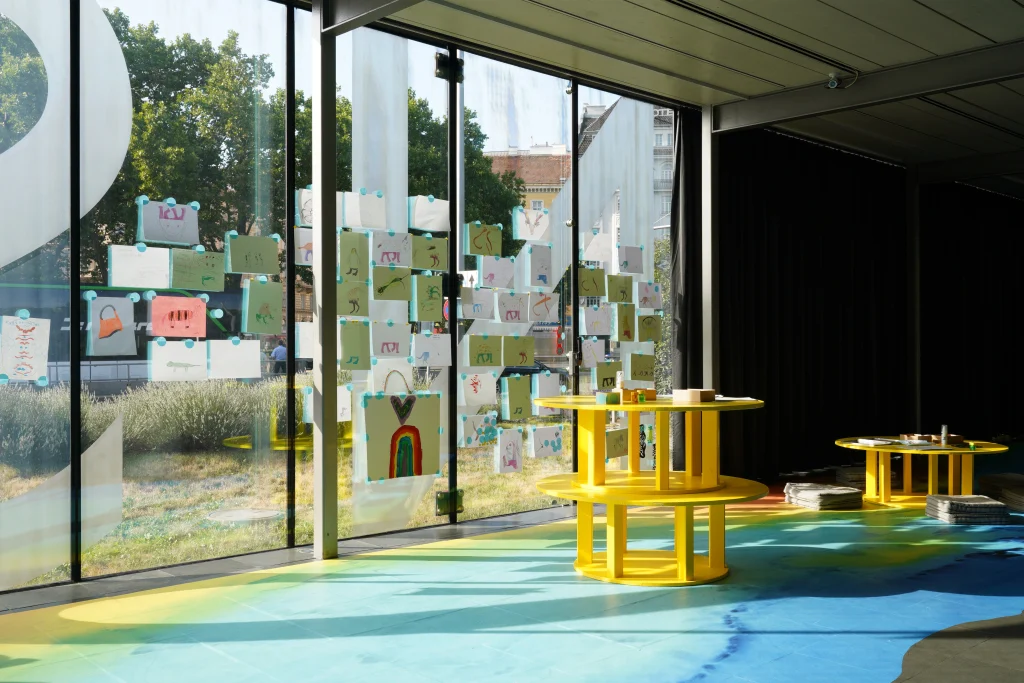
A key aspect of the “Space for Kids” hands-on exhibition is the opportunity for visitor participation outside of the scheduled workshop program. At numerous points in the exhibition space, there are stations that offer inspiration and materials for independent, creative pursuits. Artworks made by the visitors are presented on site and become part of the exhibition: each contribution expands it, enriching the show with diversity.
Fitting to the theme, “Space for Kids. Footprints in a Sea of Data” proliferates not just within the kunsthalle wien Karlsplatz but also in the Karlsgarten beside the building. In the garden, for example, there are quite conspicuous displays furnished with QR codes, which have a story to tell when you scan them with your smartphone.
“Space for Kids. Footprints in a Sea of Data” promotes participation in the field of art and presents contemporary artistic positions that provide both children and adults with impulses for critical engagement.
kunsthalle wien’s art education team


Program
■ ENAR DE DIOS RODRÍGUEZ: VESTIGES (AN ARCHIPELAGO)
Video essay in four chapters on digital devices, color, sound, each chapter: 10 min, 2020.
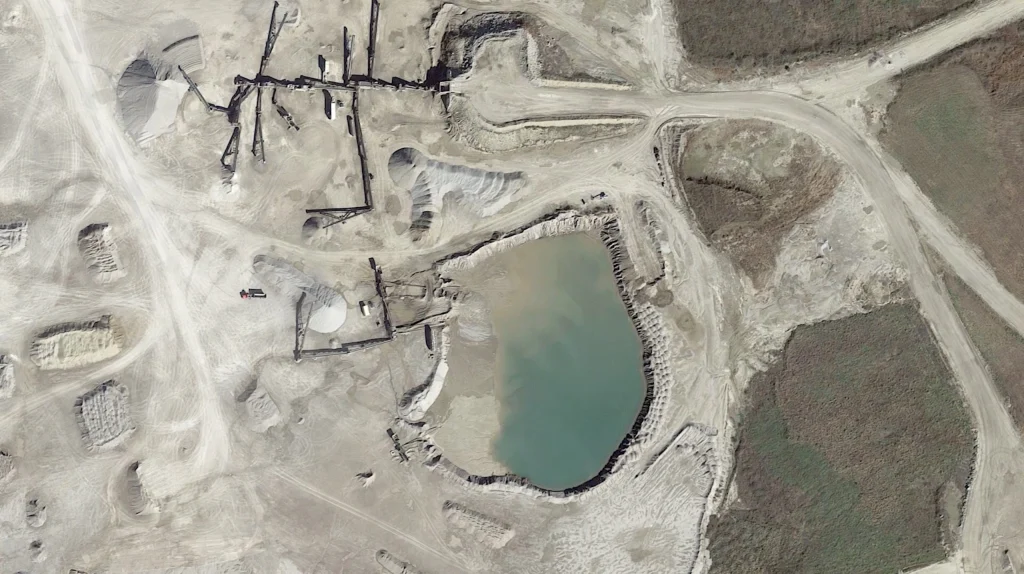
Besides air and water, sand is the most important resource on our planet. It is used for the production of glass, such as windows, screens, or eyeglasses, but it is also essential to making microchips in computers and smartphones. Furthermore, it is a constituent part of airplanes or toothpaste, and even some foods. Most of it, however, is deployed in the construction of streets and houses. Two-thirds of concrete—by far the most popular building material for homes and other structures—consists of sand, and already a mere kilometer of highway contains 30,000 tons of it. The growing demand is particularly harmful to our environment and represents a threat for many habitats on Earth.
In her video work, Enar de Dios Rodríguez traces the impacts and history of sand mining. The film shows Earth from a bird’s-eye perspective, visualizing how large areas of land have been deformed over time through the extraction of sand as well as the accompanying dramatic changes this causes in the lives of humans, animals, and plants. What does it mean when land simply disappears at one point on the surface of the planet in order to build homes at another?
The artist conducted plenty of research to provide us with a good overview of the topic. She has divided her video into four chapters: the first is about the places where sand is mined. The next chapter describes how the extracted resource is transported across great distances, and then we see what happens when the sand arrives at its destination. And, finally, we learn about the consequences this journey has for all of us. In this film, we can follow sand almost all the way around the globe, and at the same time we learn a lot about, above all, the people who inhabit this place.
Credits
SCRIPT, DIRECTOR, EDITING: Enar de Dios Rodríguez
VOICE-OVER: Mariah Proctor
SOUNDTRACK: NASA Space Recordings of Earth
■ NATHALIE KOGER: The Animals’ Conference, revisited
Video, 4K, color, sound, 14 min, 2021
This video features children and youth as well as six albino animals. Similar to people who have albinism, albino animals have a lighter skin, hair, or fur color because of a partial or complete lack of pigment.
The work is inspired by Erich Kästner’s book "The Animals’ Conference" (in the original German, Die Konferenz der Tiere), in which all the animals in the world, including fantasy creatures from books, act as agents for a better future for humanity.
The underlying idea of this 72-year-old children’s book is transferred to the present and our current situation and thereby becomes a statement for the future of the animals and children in the age of human-made climate change.
The six albino animals are something like visitors from the future: they tell us about our present time and that the living conditions in the future might be quite different because, for instance, many places will be much warmer due to climate change. Then the light-sensitive albino animals have to live underground. In the video, they act as ambassadors—they want to draw our attention to the fact that we constantly forget that animals have their place on Earth just like we humans. But we do not want any wolves in the forests or spiders in our rooms, and we force cows to live in narrow stalls. In real life, such albino animals live in animal reserves of an urban environment: in the zoo, game preserve, or an animal shelter.
To pay tribute to them and their existence, the children and youth in the film dedicate the poem “Human Animal Song” by Marion von Osten, which tells of repression and neglect. They now act—as opposed to the storyline in Kästner’s original—as agents of the animals. The children stand for the future; the animals show us the present.
Credits
DIRECTOR, SECOND CAMERA, EDITING, PRODUCTION: Nathalie Koger
CAMERA: Mathias Windelberg
POEM: Marion von Osten
TRANSLATION: Ivana Milos
VOICES: Louisa Schloßbauer, Eleonora Berger, Guneet Toor, Saranda Azemi, Shivali Shrungarkar
SOUND DESIGN: Sara Pinheiro
COLOR GRADING: Andreas Lautil
ADVISORS: Konstantin Sautier/Nymphenburger Schulen, Christine Lang
THANKS TO: Sabine Öfner, Rainer Zöchling, Uwe Ringelhan, Thomas Knauer and Guneet Toor, Sarah Krohnfeld, Clement King, Linus Rieger, Alexander Sentenstein, Magnus Clausing, Moritz Funk, Marina Weiß, Noah Alibaba, Luca Rupp, Nymphenburger Schulen
■ MARLIES PÖSCHL: DATA GARDEN
4-teilige ortsspezifische Videoinstallation, 360 Grad-Video, Farbe, binauraler Ton, gesamt ca. 10 min., 2021
Eine junge Wissenschaftlerin aus Guian, China, hat ein Verfahren entwickelt, mit dem sie, als Alternative zu den bestehenden Datenzentren, Daten in der DNA von Pflanzen speichern kann. So gelangt eine geheimnisvolle Pflanze nach St. Gilgen, in deren DNA Informationen gesichert sind, und die den Anfang des Data Garden, einer verborgenen Bibliothek, darstellt. Die Pflanze enthält Erinnerungs-Fragmente über eine Gruppe von Wanderarbeiterinnen in einer chinesischen Elektrofabrik. Jene Menschen, die unsere Mobiltelefone zusammenbauen, tauchen auf geisterhafte Weise in St. Gilgen auf. Die Realität der Produktionsbedingungen legt sich als “Augmented Reality” über den Ort, den wir sehen.
Die Szenen basieren auf den Gedichten von Zheng Xiaoqiong, einer chinesischen Autorin, die Wanderarbeiter*innen und deren Lebens- und Arbeitsbedingungen porträtiert. So thematisiert Data Garden, wie die Auswirkungen der global ungleichen Produktionsverhältnisse sich in Pflanzen einschreiben, mit ihnen migrieren und sich im kollektiven Gedächtnis verankern.
Credits:
Regie, Schnitt, Produktion: Marlies Pöschl
Gedichte: Zheng Xiaoqiong
Übersetzung: Lea Schneider, Martin Winter
Zhou Yangchun: Daniela Chen
Voice Over: Kun Jing
Chor: Xingchen Liu, Haili Luo, Ying Qui-Zhang, Jiayi Steiner, Sissi Qi Wang, Yu Li Ya, Guanpei Zhou
Regieassistenz: Sophie Averkamp
Kamera: David Rabeder
Ton & Sounddesign: Simon Rabeder
Kostüm: sandy wetcliff vienna
Danke: Xie Feru, Felix Rank, Meni Böhm, Christof Krainthaler, Stiegl
■ KATHARINA SWOBODA: STONES
Video, 2K, color, sound, 8 min, 2021
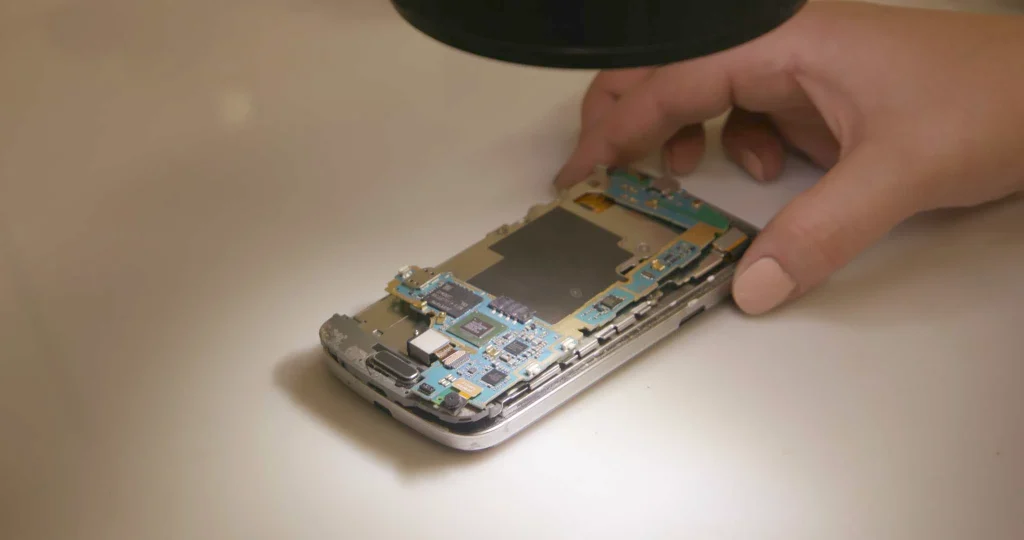
Many components of a smartphone's building blocks are first laboriously extracted from the earth in the form of rocks before being further processed with thermal and chemical processes. Some of these raw rocks, from which elements such as palladium, tantalum, lithium, or rare earth metals can be extracted, are shown in the video. A scientist examines these stones under a microscope, and with her, we cast an abstracted gaze upon the “inner landscapes” of a smartphone. The video concludes with an experiment – after the rocks have referenced the beginning of the smartphone raw material chain, the experiment addresses the end of the device's lifespan.
Credits:
Konzept, Regie, Produktion: Katharina Swoboda
Kamera: Sonja Vonderklamm
Sound: Sara Pinheiro
Performerin: Christine Murkovic
Danke an: Kamen Stoyanov, Iris Blauensteiner, Dr. Bernd Moser/Chefkurator Mineralogie Joanneum Graz, Dr. Michael Murkovic/TU Graz
■ LISA TRUTTMANN: TRACKS I-III
Three-channel video installation, HD, color, stereo sound, 10 min, 2021
When the first films were screened in cinemas more than 125 years ago, from time to time moviegoers would cringe in their seats with fear. Either because they thought that the locomotive would drive right out of the picture frame and into the middle of the theater, or because the landscape was rapidly speeding past them. People were able to have this experience in the cinema as the cameras were mounted onto the trains and recorded new types of imagery. These images conquered the landscape for viewers at a blazing speed—one that today, however, would seem rather slow. We are used to much higher tempos since a long time. In the meanwhile, humans have developed new techniques, like mobile phone technology. Now these technologies control our vision and also capture landscapes in a new way.
This caught the interest of artist Lisa Truttmann, who went on an expedition in her three-channel video installation Tracks I–III. She followed a section of the former Salzkammergut Railway between Mondsee and Strobl, which she describes as follows: “In the digital ghost train of the present, we cross landscapes in search of clues, while looking forward and backward at the same time.” When we take a ride on this “digital ghost train”, perhaps we feel the same as the moviegoers 125 years ago—only now it is no longer the speed that irritates us, but rather the succession of images and times. Invisible radio signals take us on a journey.
How do radio signals travel anyway? And why do we all constantly stare at our mobile phones, while often being in motion in fact ourselves, yet rarely sit in the cinema anymore?
Credits
CONCEPT, CAMERA, EDITING: Lisa Truttmann
INTERVIEW WITH: Alfred Wiener
SOUND: Gerald Roßbacher
DRONE PILOT: Daniel Ausweger