They I Sie I Oni

■ DATE:
■ LOCATION:
■ CONCEPT AND REALIZATION:
■ ARTISTS:
Bárbara Palomino Ruiz, Igor Simić, Lisa Truttmann, Katharina Swoboda,
Enar de Dios Rodríguez, Katarina Zdjelar
■ DESIGN:
■ WEB INTERFACE PROGRAMMING:
■ SUPPORT:
■ CURATED BY:
They I Sie I Oni
by Maja Ćirić
It goes without saying, after the digital turn and the tech-explosion in the hindsight 2020, technology IS forever the second self (Turkle, Sherry, 1984). Permanently hooked on the interfaces, ways of doing and thinking are being re-shaped. If “Physicality is a bug, not a feature,” (Tyler Winklevoss) an online screening is an opportunity to tell a different story about both physicality and bugs. Decentralised and decontextualized, once exclusive, frames collide indefinitely in one another.
Contrary to what one may think, the only way to continue in the second year of pandemic is not to dissolve the saturation with images. It is to find a way of taking part in the virtually expanded reality by trying to capture and also manage attention. What would have been an autonomous screening in the black box is exchanged for the logic of the expanded internet art (Ceci Moss) in a sense that it is a continual hybrid becoming. An artistic film is not only a film, it is the high-quality data competing with low-quality data of SnapChat and TikTok. The frames are expanding, there is a need for adaptation, for a change in a hearbeat. It’s time to get personal, afterall, the content is to be viewed in the intimacy of our households, as a relation between the subject in the films and subjects outside of it.
They is a way of addressing and testing the exposure of artistic films in an environment of competitive images. It is a public reflection on how connected end embedded filmic parcels can behave within the expanded circumstances. The title They shows respect to non-binary gender but actually implies that the respect is also shown in a wide angle on nationality, to other non-anthropocentric entities, to technology, to whatever different angle on looking might be there.
Instead of representing bi-lateral cultural relations, between for example Austria and Serbia, these artistic films connect their authors through their emotions and sensations they evoke, rather than through their national origin. Narratives are not only a subtle manipulation of the possible visuals amidst current conditions and the hyper-mediated realities, but a tool that suggest different ways of looking upon and looking after the environment and the experiences of both self and the Deleuzian notion of the ‘dividual’, as “a person made of data which can be endlessly subdivided and recombined.”
The selection is organized around non-binary pronouns, each, with an aim to transgress national borders and promote inclusivity by the means of the sensorial. All kinds of subjects are considered as and within They: a melancholic drone, a hard drive with 2.8 terabyte leftover data, a street in the city of Teheran, overlapping melodies, archival images from Yugoslav cinema, tools for bodily ‘enhancements’, a female formula driver, the machine weaving the image of the Virgin of Guadalupe, the oldest oak tree in Belgrade, sand dunes. All content is interwoven in an only seemingly binary constellation, because these images representing both a cultural anthropology and ecocentricsm, consist of a myriad of unstatic complexities.
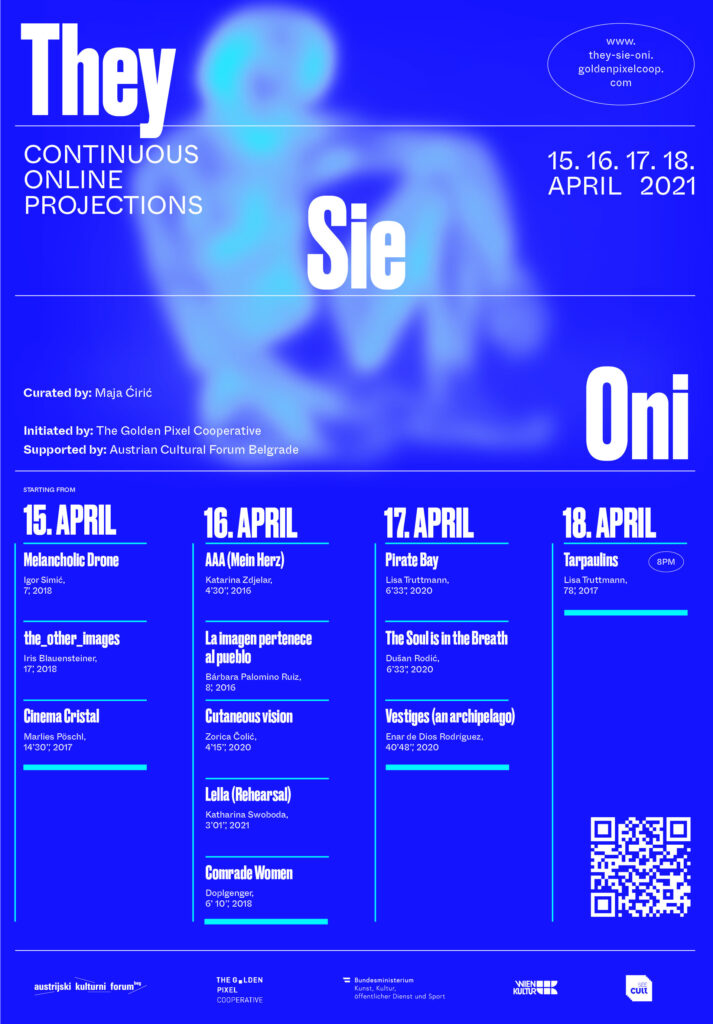
From 15–18 April 2021, a new part of the film programme was presented each day on the website
↗︎ http://they-sie-oni.goldenpixelcoop.com
Program
15.04. | They I
■ Igor Simić: Melancholic Drone
7 min, 2018
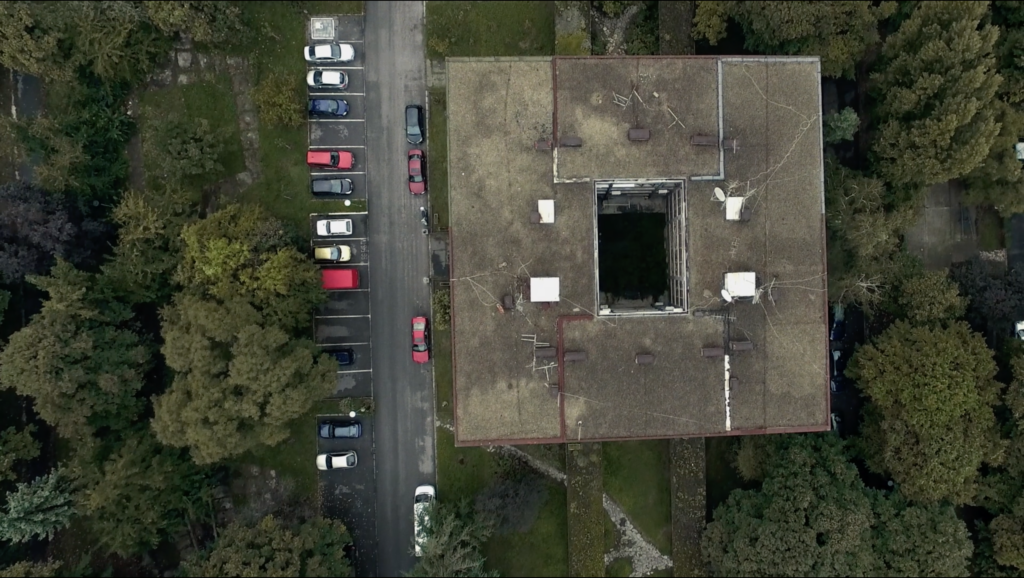
During his last morning in Belgrade, a military drone reflects on his wasted existence as a drone out of combat, while flying on autopilot to a couple having sex, a route his previous operator would take to spy on them.
■ Iris Blauensteiner: the_other_images
17min, 2018
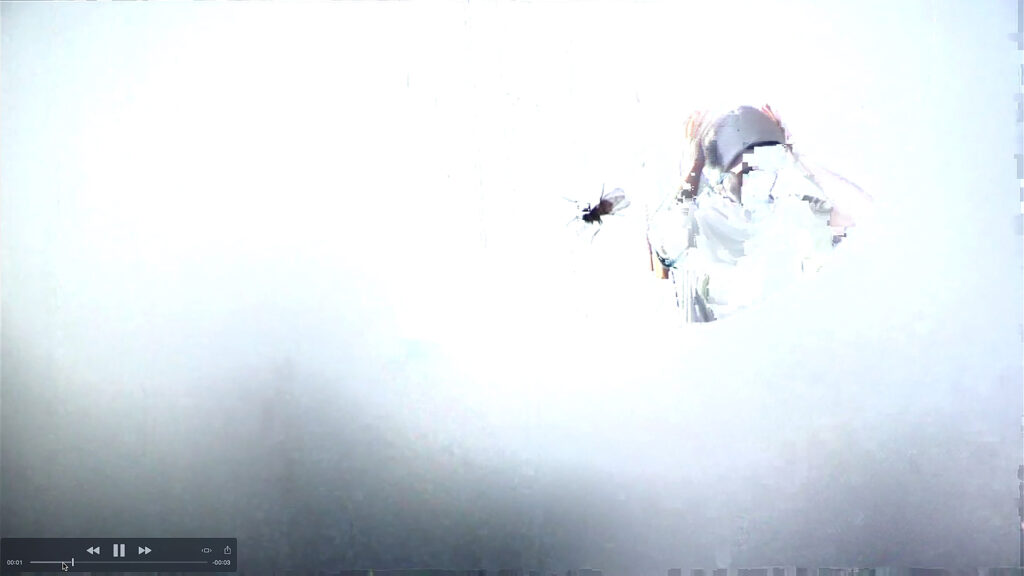
A hard drive, 2.8 terabyte leftover data from a project that was shot 10 years ago. In 2008, the author and filmmaker Iris Blauensteiner made her first short movie. Now she sifts through this waste material: outtake scenes, photographs, sound files, e-mails, script passages, discarded ideas. This data was archived and well stored, but time has taken its toll. Old data formats cannot be played anymore because they are no longer compatible with current players. The multitude of read errors and image distortions disallow a comfortable recollection of the past, the pictures and sounds are not what they used to be. Ghostly, eerily magical scenes arise from the digital waste material and read errors, they reach into the visible and audible spectrum. Memories are recycled. They require a different cinematic experience, a new narrative, a different film.
„the_other_images“ is an experimental documentary short film. It raises the question how memory and remembering is possible when all the digital storages fail or cannot be accessed, postulating a possible answer in form of recycling and reutilizing the digital archive.
■ Marlies Pöschl: Cinema Cristal
14:30 min, 2017
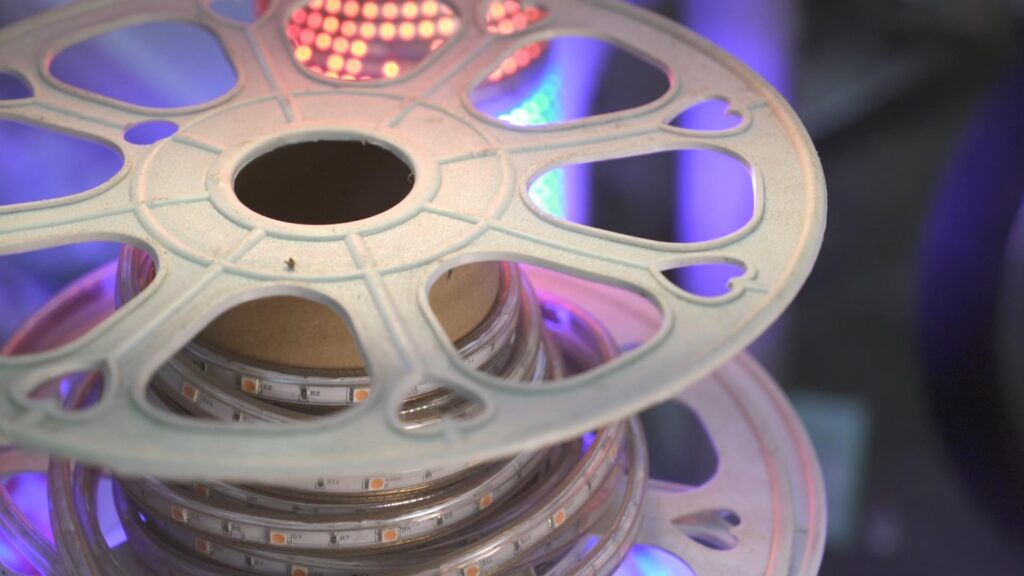
Laleh Zar — a street located in the city centre of Tehran, formerly home to many cinemas, and often seen as a symbol for the modernisation of Iran — is today characterised by a multitude of luminous elements, which are offered for sale alongside the street. The flow of images through light — cinema — seems to have broken apart into a variety of different light sources after the changes that the Iranian revolution has brought about.
“Cinema Cristal” recombines these different lustrous fragments into a new composition, a texture of light, linking the historical moment it refers to with the moment of the film’s exposure. On the soundtrack film lovers, witnesses, and theoreticians tell their memories, stories, and homages related to Tehran’s cinemas. A film about the role of cinema as an aesthetic, social, and memorial space. And about the spectators as central characters.
16.04. | They II
■ Katarina Zdjelar: AAA (Mein Herz)
4:30 min, 2016
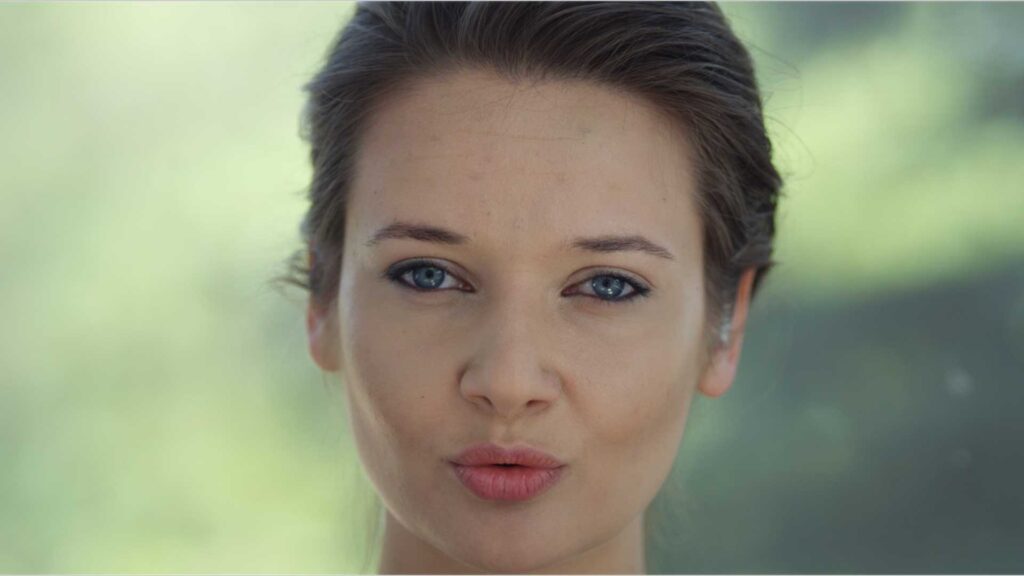
Recorded entirely in 1 take, 4 different compositions (simultaneously yet interchangeably) are performed as one by a young woman. With an intention of keeping the original style, tempo, rhythm of individual compositions intact, the performer takes a vocal walk through them. Oscillating between and clashing silence, music, sounds and words, there is a sense of continuity established on ruptures and breaks. The performer's face and her vocal cords become a site and a battlefield of these meetings, while each cut serves as an escape and an entry.
■ Bárbara Palomino Ruiz: La imagen pertenece al pueblo
8 min, 2016
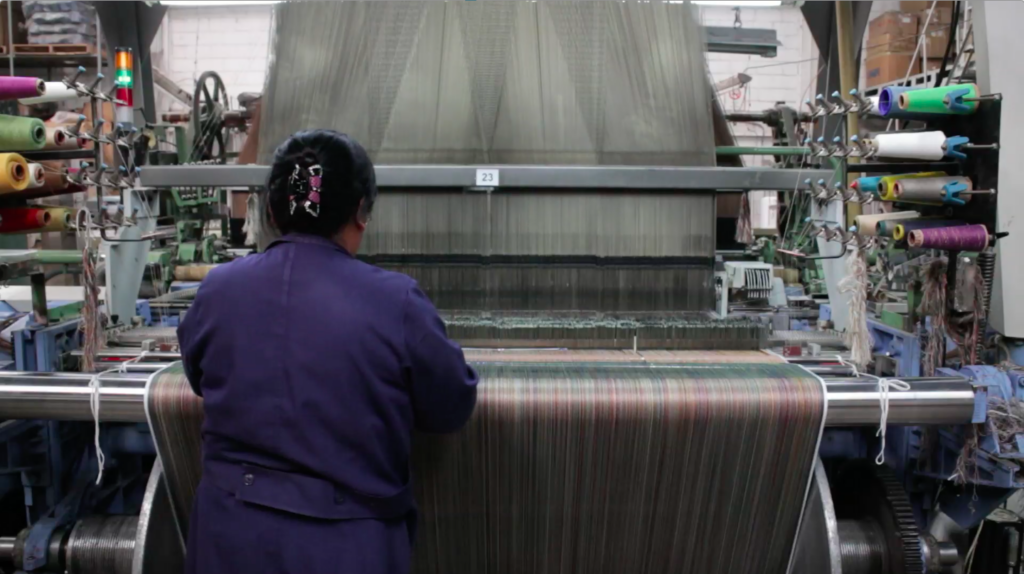
“La imagen pertenece al pueblo”, was inspired by the automatic production of an iconic series, which exposes the veneration of the image as an artifact. It is a video documentary filmed in a textile factory in Mexico City in which the artist, focuses on the weaving production of the image of the Virgin of Guadalupe, a national emblem and controversial symbol to express Mexicanismo.
The image of the Virgin of Guadalupe is part of the popular culture of Mexico and can be found reproduced, recycled and reappropriated in mugs, t-shirts, mural, posters and, as we discovered in this film, also converted in multiple devotional tapestries. Installed in a textile grid the image of Guadalupe becomes a tight unit of identical images, giving the impression that it could be extended almost endlessly.
“La imagen pertenece al pueblo” reflects not only about the legend and superstitious regard to an image but also, and perhaps primarily, about the time involved in the textile production and the relation between humans and machines, magic and technology.
■ Zorica Čolić: Cutaneous vision
4:15 min, 2020
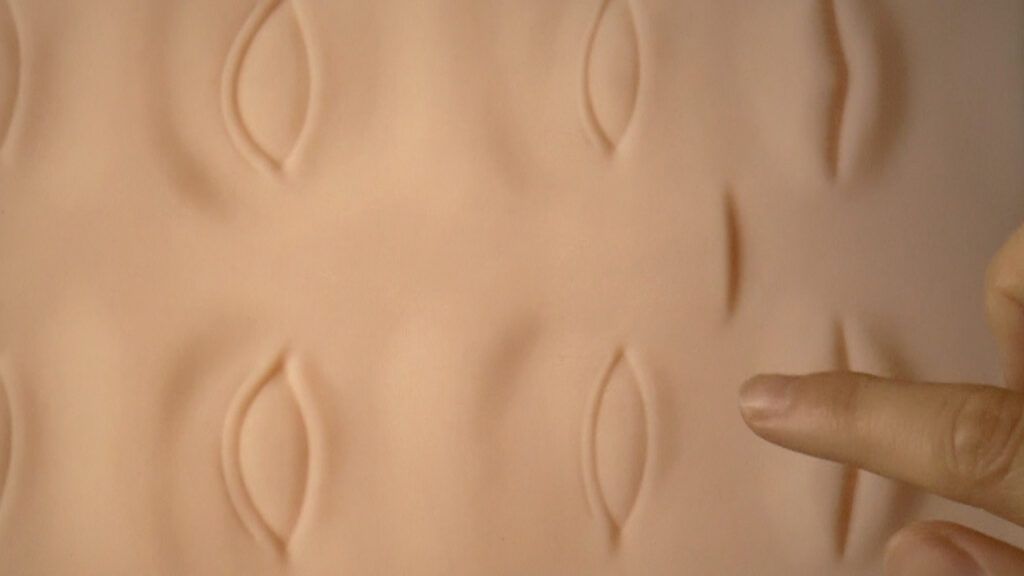
"Cutaneous Vision" is a video composed of material culled from the bewildering array of corporeal images – body parts, medical models, esthetic attachments and tools for bodily ‘enhancements’ sold online. The juxtapositions of human and human-like address material excesses and self-fashioning as a way in which bodies become alternately erased and fetishized.
■ Katharina Swoboda: Lella (Rehearsal)
3 min, 2021
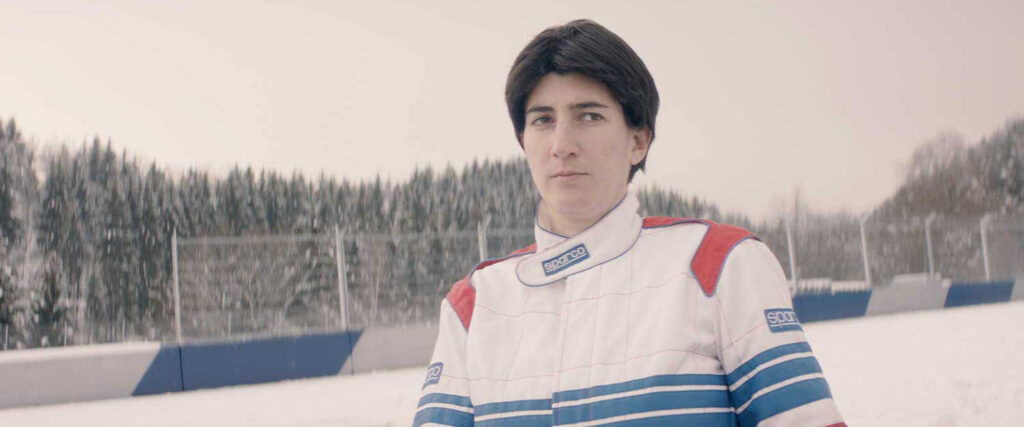
The last woman to ever race in a formula One Race was Lella Lombardi in 1976 in Austria. This work is about a woman observing Lella (or a ghost of Lella) on today's race track. Lella Lombardi was the last to hit the finish line, but at least she reached it. Her fastest round was 1min43 - the duration of the video work
■ Doplgenger: Comrade Women,
6:10 min, 2018
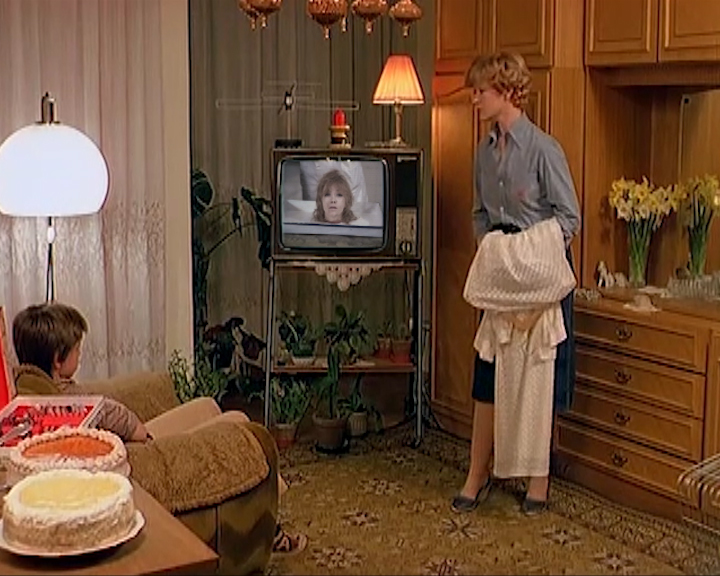
Based on archival images from Yugoslav cinema, the film begins with words spoken by Milena Dravić in Dušan Makavejev’s W.R. Mystery of the Organism. On the other side, marked by the patriarchy, the fragmented experience of the woman and her broken body will follow.
17.04. | They/Them/Theirs
■ Lisa Truttmann: Pirate Bay
6:33 min, 2020
„Pirate Bay“ is a film portrait of the beach-based fishing fleet in Hastings, in south-east England. Poetic wanderings on a stormy late winter’s day lead us along the dormant boats lying on the beach at low tide. Through the rhythmic montage and a jazz composition with its fragmentary tones, the tourist seaside town becomes an abandoned battlefield studded by plundered ships – recalling constant quarrels on and about the sea, that have influenced the country’s economic strategies in the past as much as in current debates. A sparse dystopia by Lisa Truttmann, with music by Guido Spannocchi on alto sax, featuring Gina Schwarz on double bass.
■ Dušan Rodić: The Soul is in the Breath
6:33 min, 2020
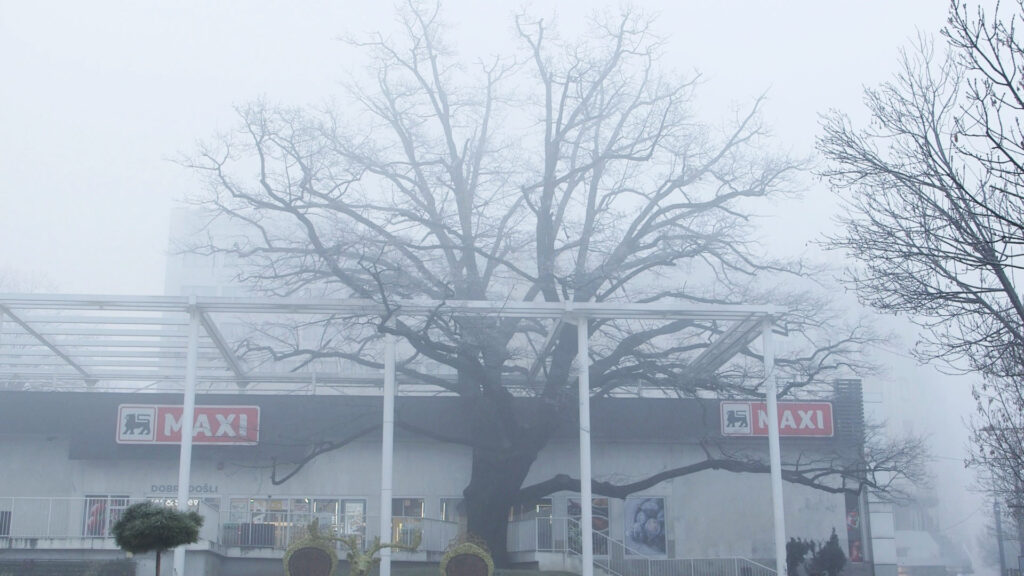
The video essay shows the oldest oak tree in Belgrade city center, the last tree originating from the old oak forest, which used to grow in that region.
Being 200 years old, it is a witness of the historical events and the cultural shift that took place in the relationship between people and trees.
■ Enar de Dios Rodríguez: Vestiges (an archipelago)
40:48 min, 2020
Nach Wasser ist Sand das am zweithäufigsten von Menschen abgebaute Naturmaterial. Unsere Gesellschaft ist buchstäblich auf ihm aufgebaut – und entgegen verbreiteter Annahmen ist er eine begrenzte Ressource, deren Abbau irreparable Schäden in der Natur verursacht. Dieser Videoessay in vier Kapiteln ist Teil von „Vestiges“, einem interdisziplinären Projekt, das die unstillbare Nachfrage nach Sand sowie deren sozio-politische und ökologische Folgen untersucht.
18.04.| BONUS All In (termites included)
■ Lisa Truttmann: Tarpaulins
78 min, 2017
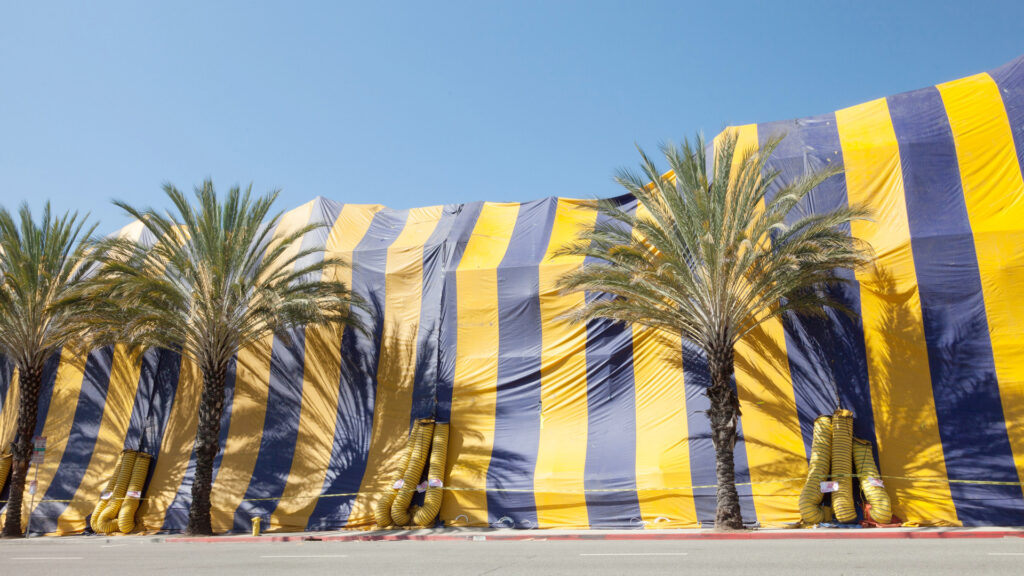
When a house in Los Angeles is attacked by termites, the pest control patrol comes and packs the entire house in candy-coloured tarpaulins meant to keep the alien insects inside, but which at the same time celebrate their ravaging presence with festive colours and stripes. A phenomenon which Lisa Truttman’s original and imaginative film uses to find new and unexpected connections between urbanity and nature. And between the very big and the very small. The megapolis’s smallest inhabitants are also creating their own microcosm, producing new networks between work and decay, control and chaos. They are surrounded by a human microcosm of experts who all have an opinion about termites and the meaning of it all. ‘Tarpaulins’ is a film that immediately convinces you that even the smallest things are exciting as long as you approach them in the right way. An adventurous and eccentric work of 'termite art’ with a wonderfully original idea at its core.