■ Lisa Truttmann: The Courser
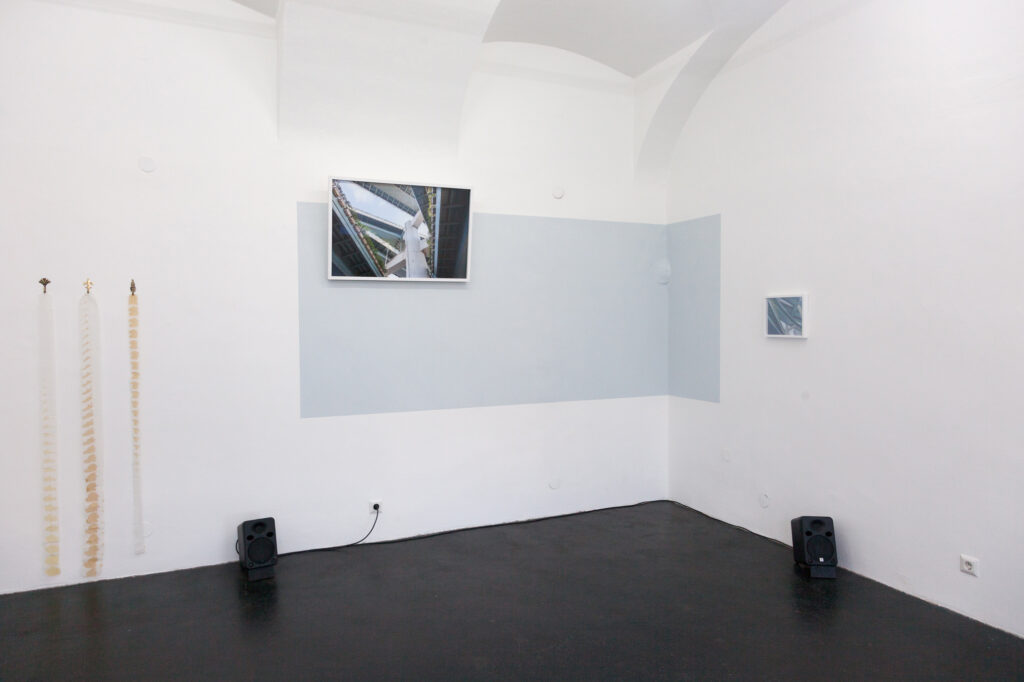
Multimedia installation (video, photography, sound), 2018
Sound editing: Thomas Grill
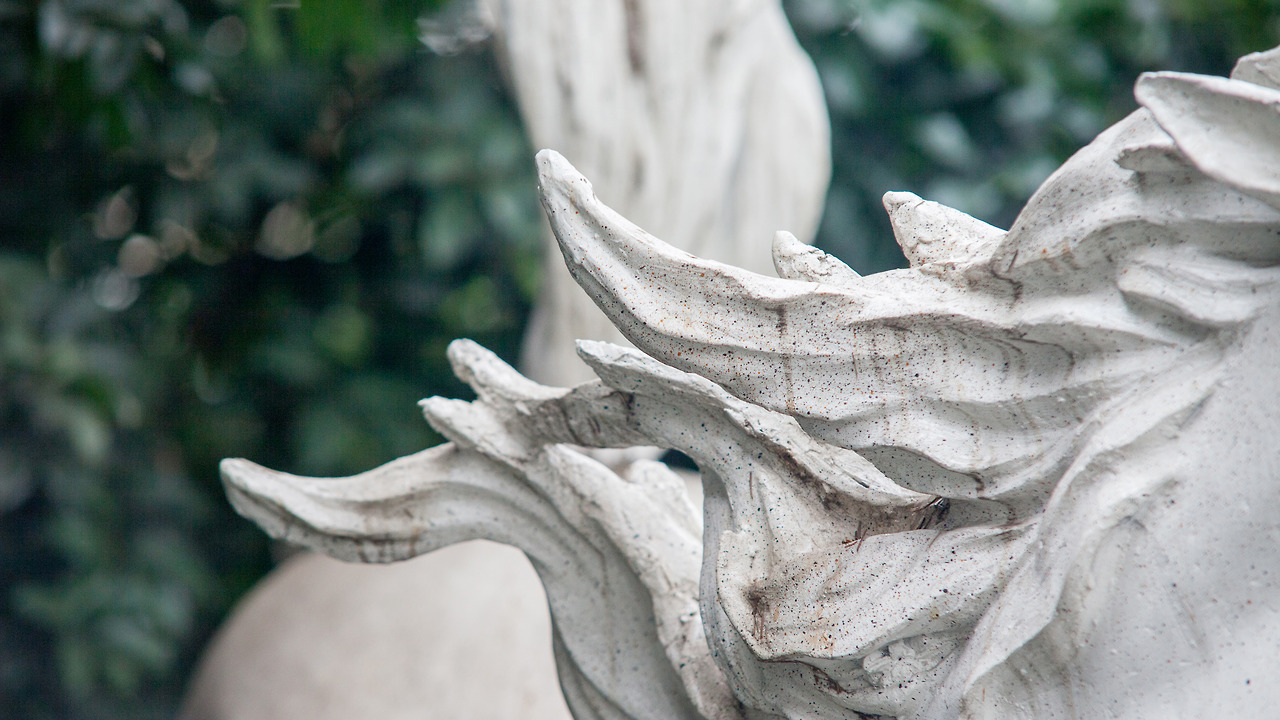
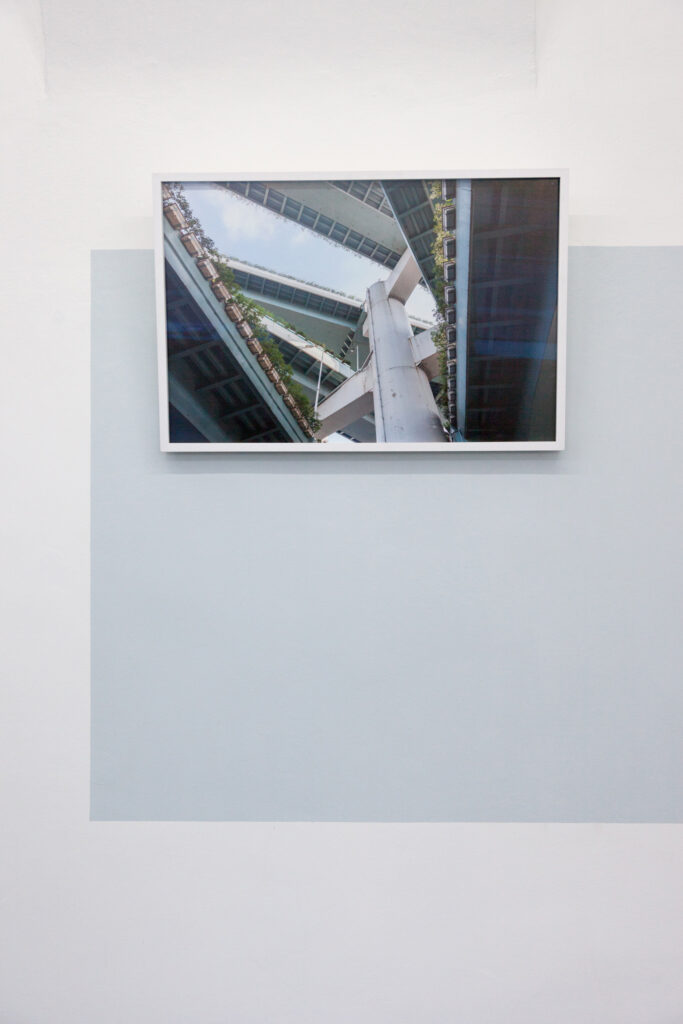
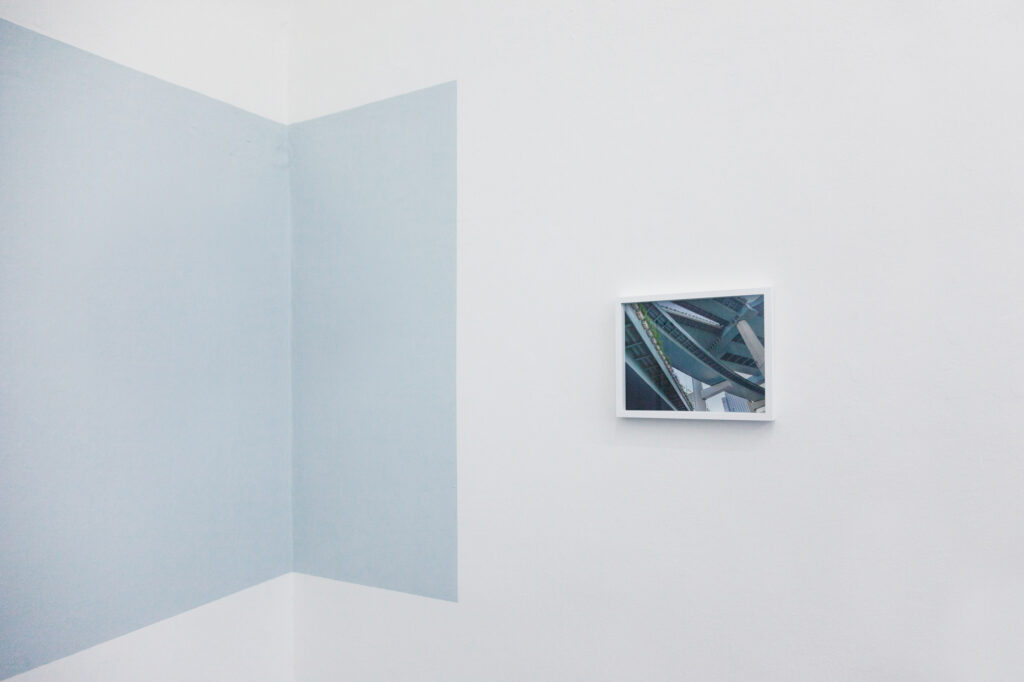
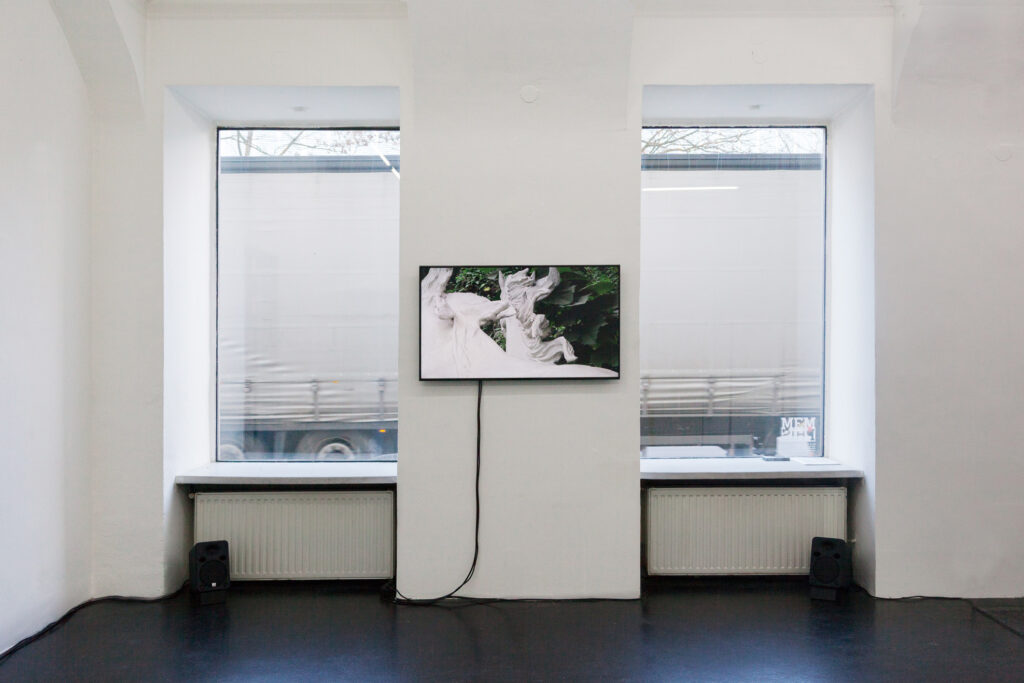
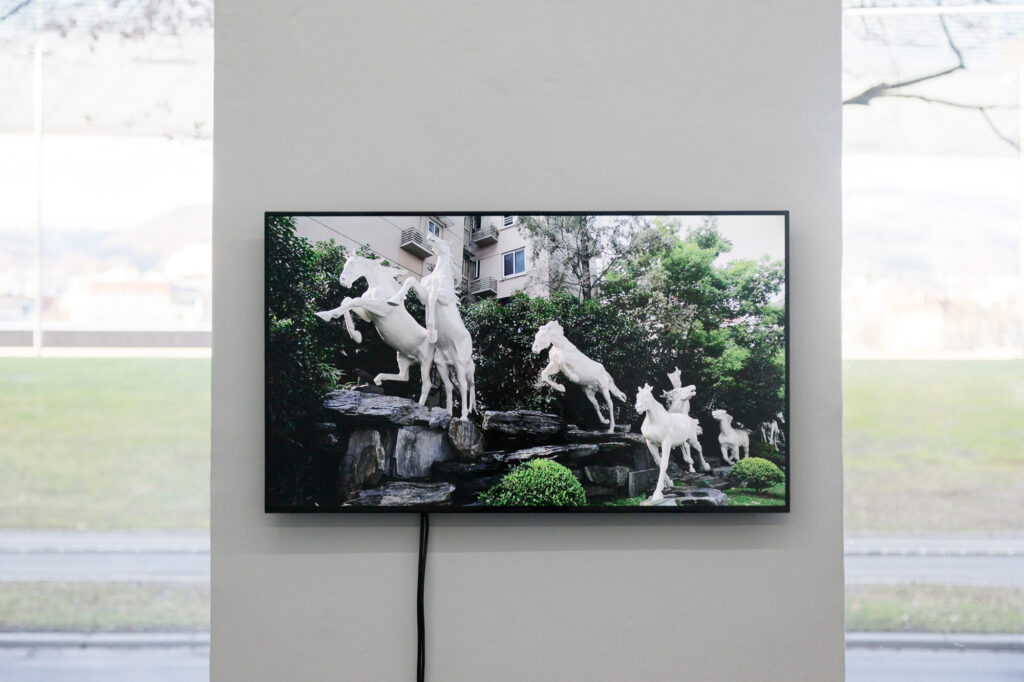
Inscribed with 'The gallop of the courser', a sculptural group in Shanghai forms the centre of Truttmann’s work. 'Courser' refers to a swift or spirited horse, a racehorse. The movements of the horses are rendered expressively in the sculpture. It appears like a three-dimensional study of motion, recalling the early photographic motion studies of Eadweard Muybridge, who recorded the gallop frame by frame. Truttmann approaches these movements carved in stone—frozen in time—and reactivates them. This occurs not only through the moving images of the video camera, but is intensified on the level of sound. Together with Thomas Grill, she creates a soundscape within the exhibition space that engages both the structure of the sculpture and its surrounding environment. Sound and image are presented separately within the space.
The group of horses is situated within a modern, multi-level ensemble of motorways. The imagined movement of the horses is interwoven with the actual movement of cars. Horse and automobile—two means of transport from different historical epochs—are brought into relation at this site. Truttmann approaches the sculptural group through long, carefully composed shots that allow time for contemplation. Whereas in Muybridge’s work movement emerges through the scanning gaze, Truttmann constructs it through audiovisual montage. Her work is again positioned three-dimensionally in space and thus functions, much like the horse group itself, as a sculptural arrangement.
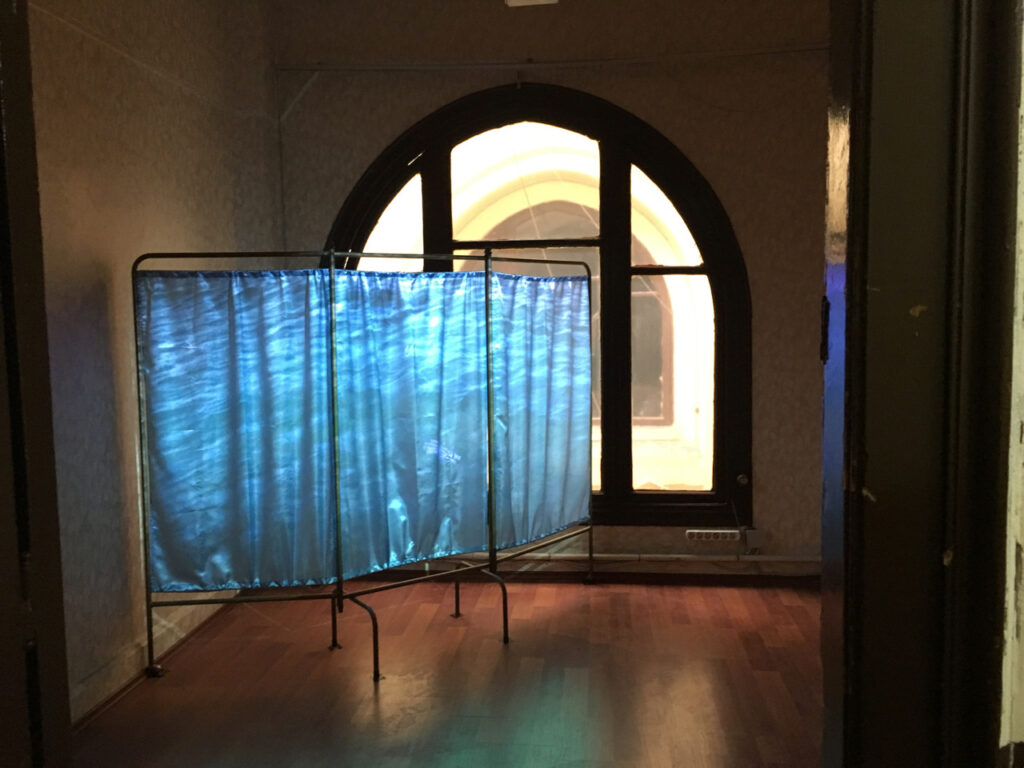
■ Sena Başöz: The Screen
Video installation (with drawings and collages), 2016
Footage of the sea is projected onto a folding screen, a room divider of the kind commonly found in hospitals — a "medical screen", as it is referred to in English. The screen denotes multiple surfaces: it points to the computer monitor, the mobile phone, as well as the cinema screen of mass media on which shocking images are displayed. At the same time, it evokes the notion of "medical screening", the practice of preventive examination.
It is precisely this double meaning that interests Başöz. For it is care — caring for, caring about, caring ahead — that drives her work. What is there to heal? And how can art respond to the increasing complexity of the world?
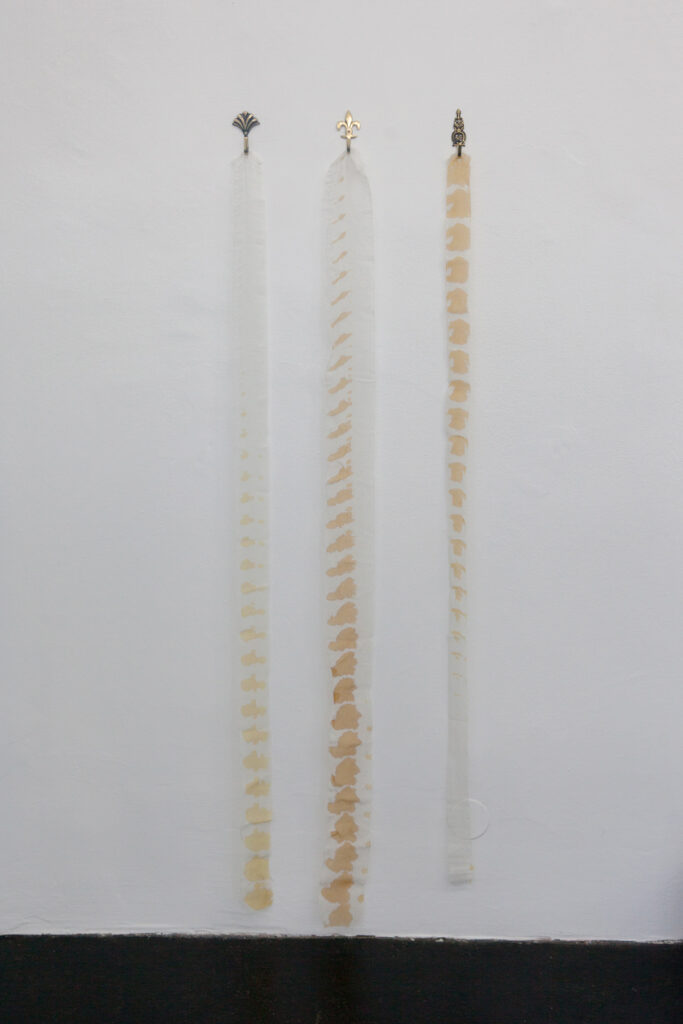
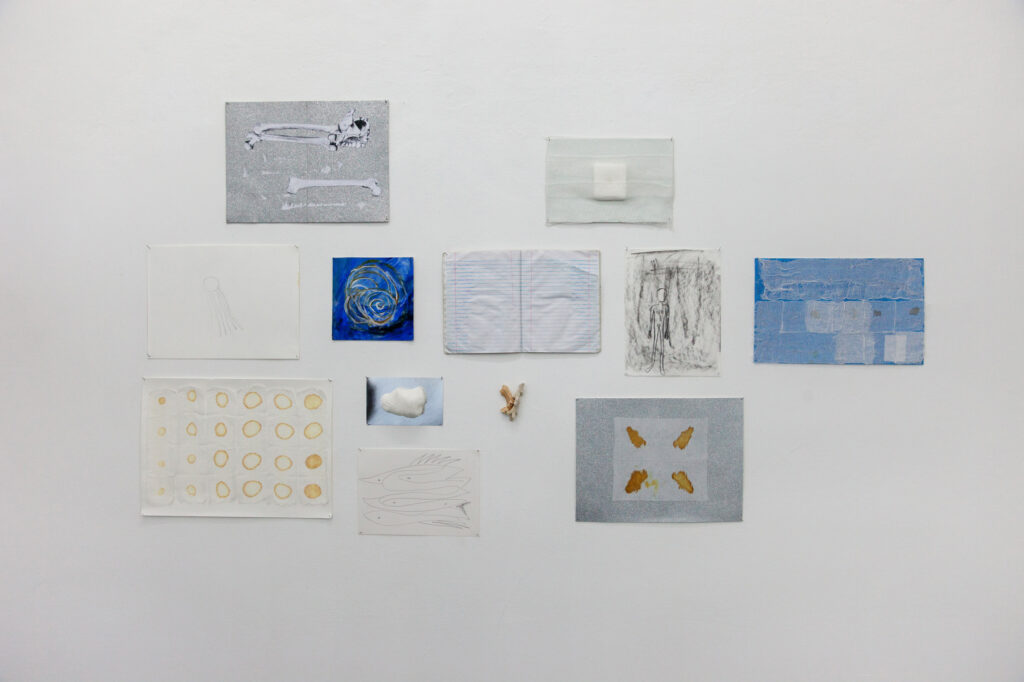
Mit „theoretischer Kreativität und ethischem Mut“ in die Zukunft zu gehen schlägt die politische Denkerin Rosi Braidotti vor, anstatt von eines „rückwärtsgewandten Weg[es] der Konstruktion kollektiver Feindbilder“. Başöz ist sich ihrer Situiertheit (ein Begriff von Donna Haraway) bewusst, also einer bestimmten Position, die sie einnimmt und von der aus sie handelt. Im Ausstellungsraum legt sie diese Position aus: neben dem Paravent, der das Meer und angespülte Knochen zeigt, werden Bilder ausgehängt, die ihre Position und ihre Reaktion verbildlichen. Knochen und andere archäologische Funde werden gewöhnlich aus der Erde geborgen, Başöz jedoch betreibt ihre persönliche Archäologie im Meereswasser. Ihre Geschichten werden nicht ausgegraben, sondern angeschwemmt.