search form
■ DATE:
■ LOCATION:
■ CONCEPT AND REALIZATION:
■ ARTISTS:
■ DISPLAY:
■ GUESTS:
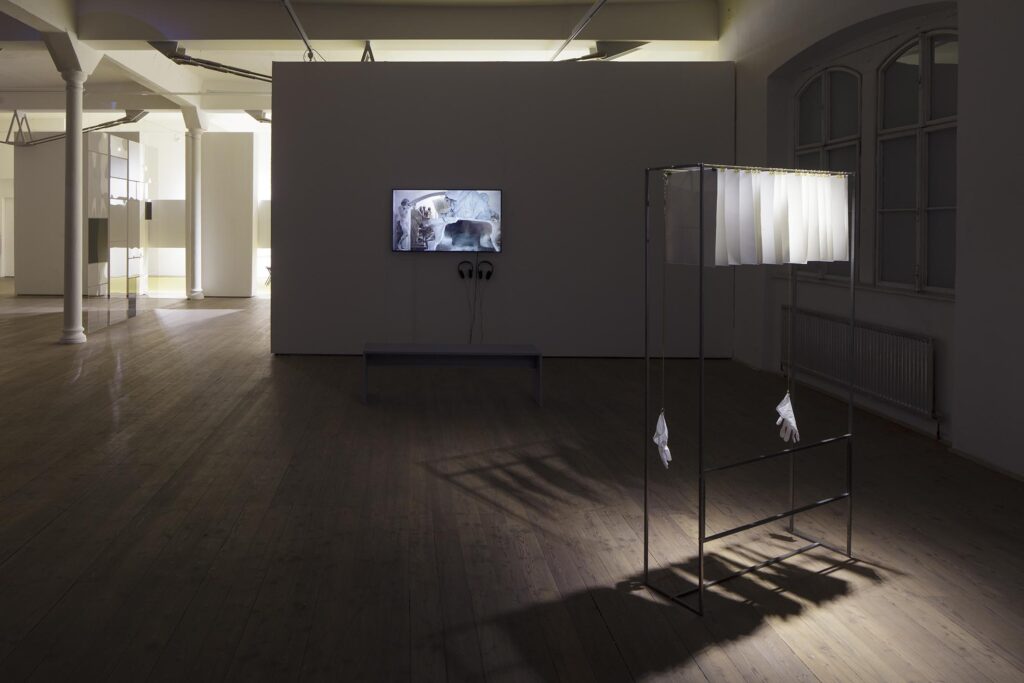
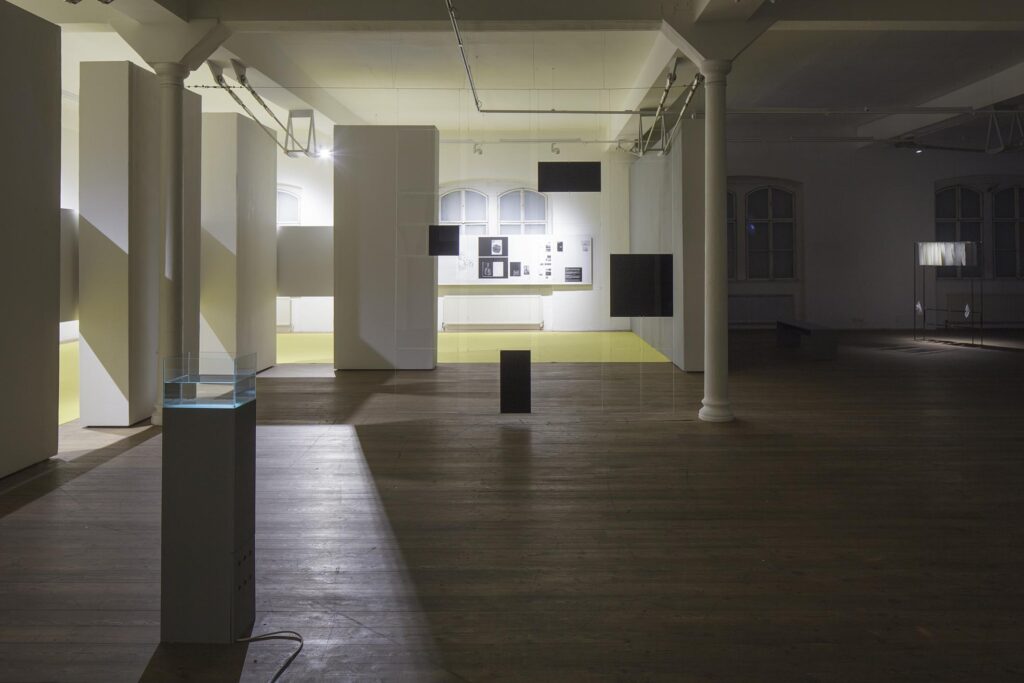
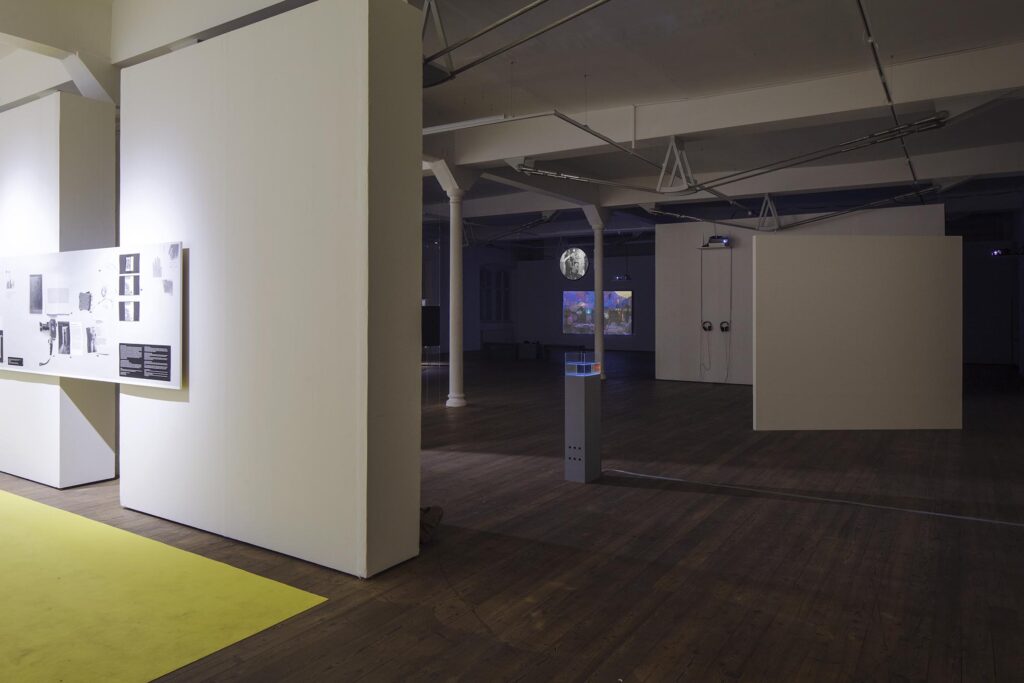
search form
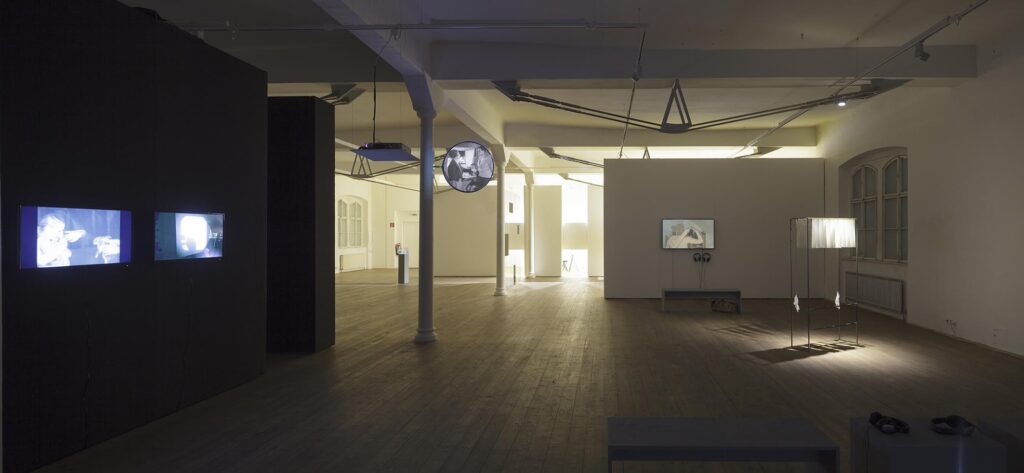
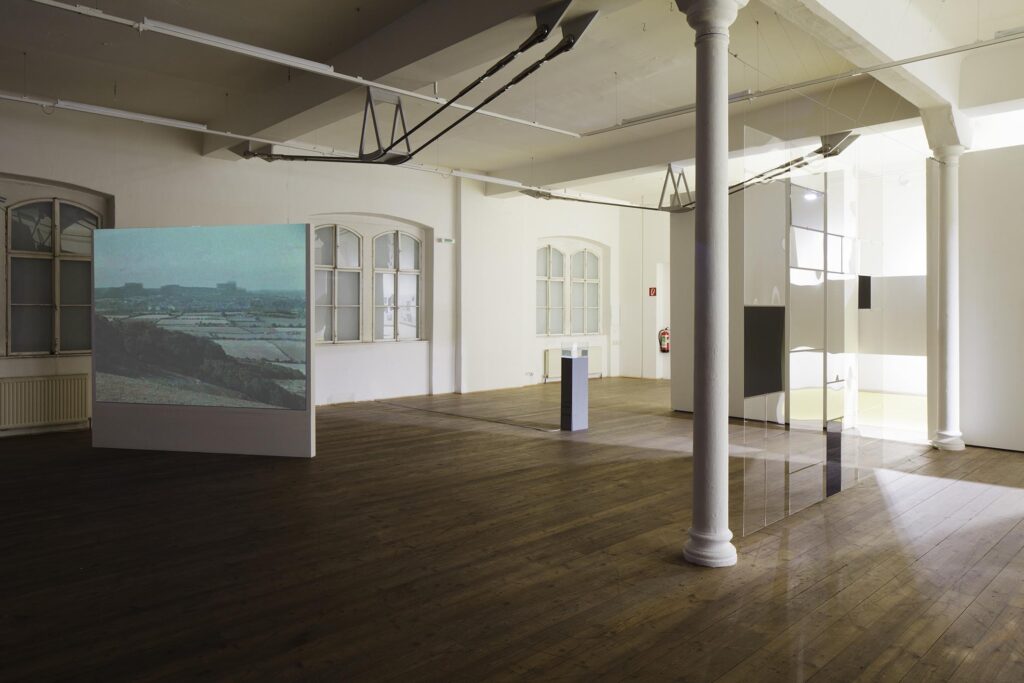
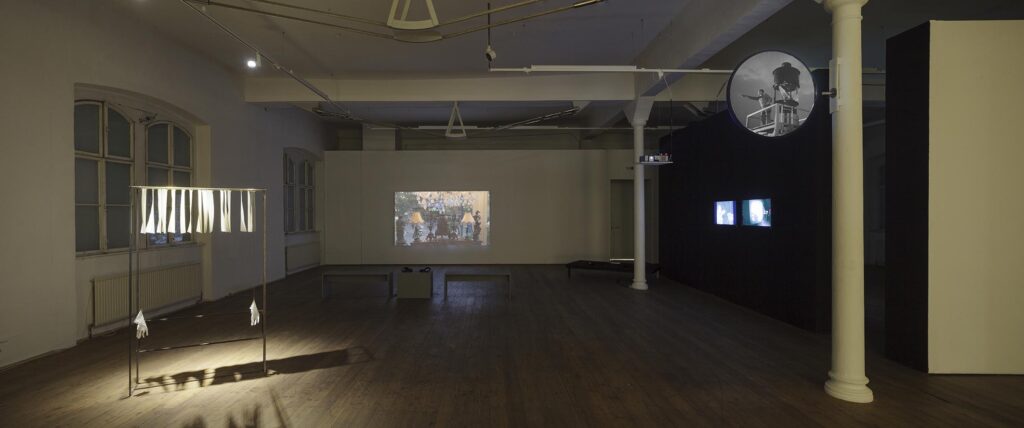
“search form” investigates modes of searching and collecting while revealing the magic of found and existing image worlds as well as the possible and impossible artistic approaches to them.
The “search query” doesn’t serve as a confirmation of what was there; it is not complete with the search result alone – rather it is oriented upon the found items themselves. They become departure points for artistic processes between appropriation and alienation, documentation and imagination. The search becomes a form in itself.
Historical and personal documents; the traces of different processes: movements, experiences, and encounters – in a physical and political sense. They are catalysts in this exploration of perception, representation, and knowledge production in analogue and digital media worlds.
The archive of found items, those searched and found forms, which constitute the departure point and subject of the works at the same time, are not merely an annex or footnotes to the exhibition: As the “Section Objets trouvés” – an ordered chaos of reference points – they form the entrance to the exhibition right at the beginning and therewith a first translation that transcends the individual objects.
Based on an “archive” of “associative objects” that reflect the conception, discussion, and developmental processes of this project exhibition, Sabine Folie was invited to conceive an exhibition in the exhibition: the “Section Objets trouvés” – its name referring to the sections of the fictional museum by Marcel Broodthaers, the “Musée d’art moderne. Département des Aigles” (Museum of Modern Art, Department of Eagles).
Multiple processes of transfer and homogenisation – scanning and photographing, the sober, equalising treatment in black and white, and screening as a reference to the representationality and mediatedness of every object – achieve a distance that eclipses the “original” and reveals the derivative intrinsic to every artistic process.
“search form” sees itself as a project exhibition that incorporates the artists and theoreticians in the research and developmental process.
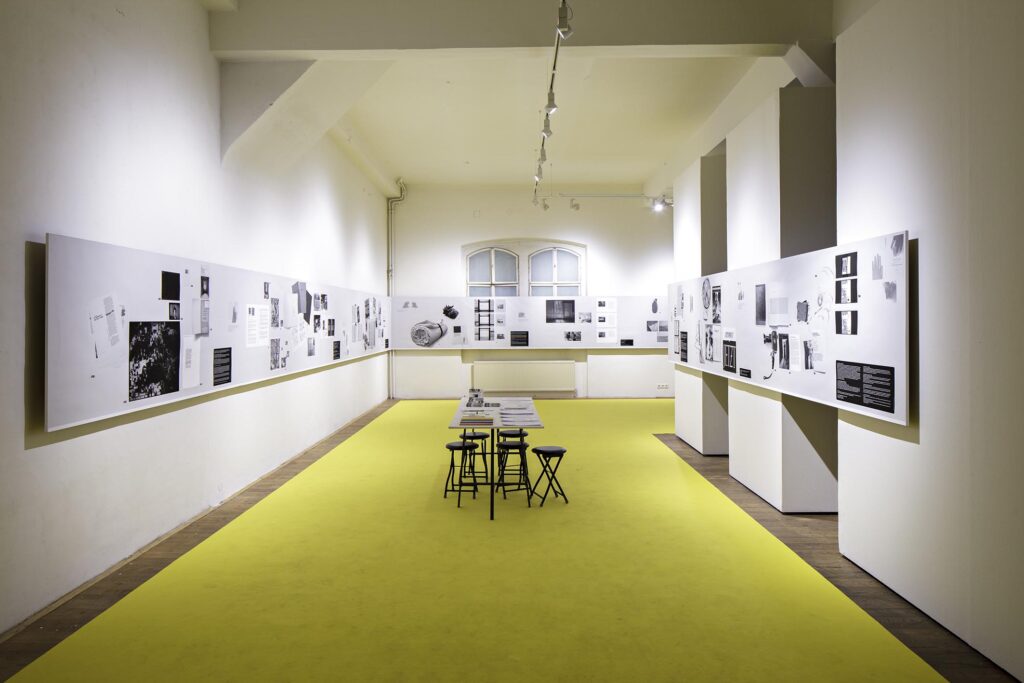
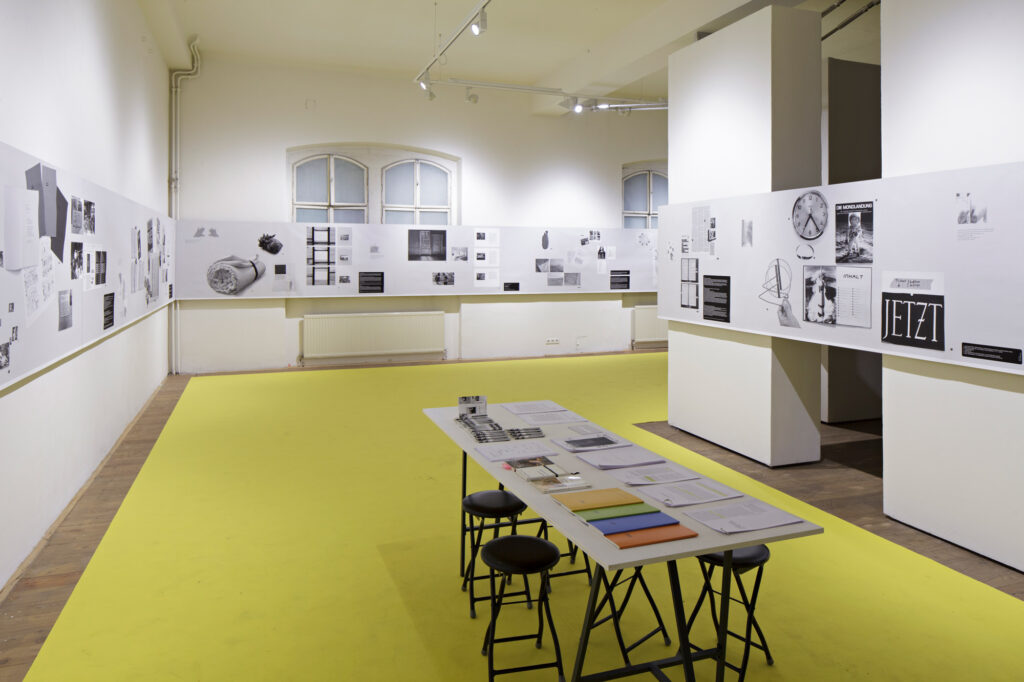
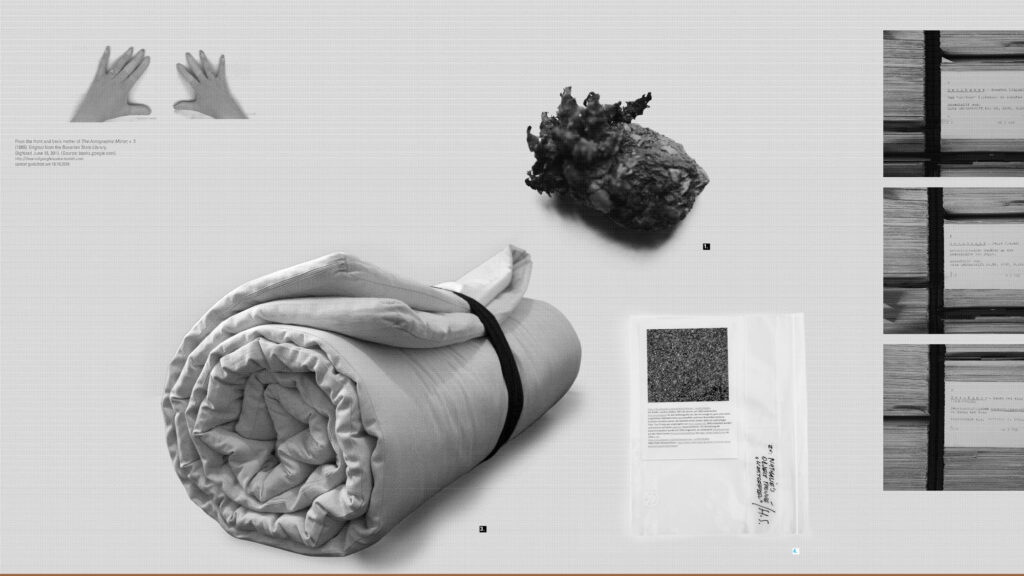
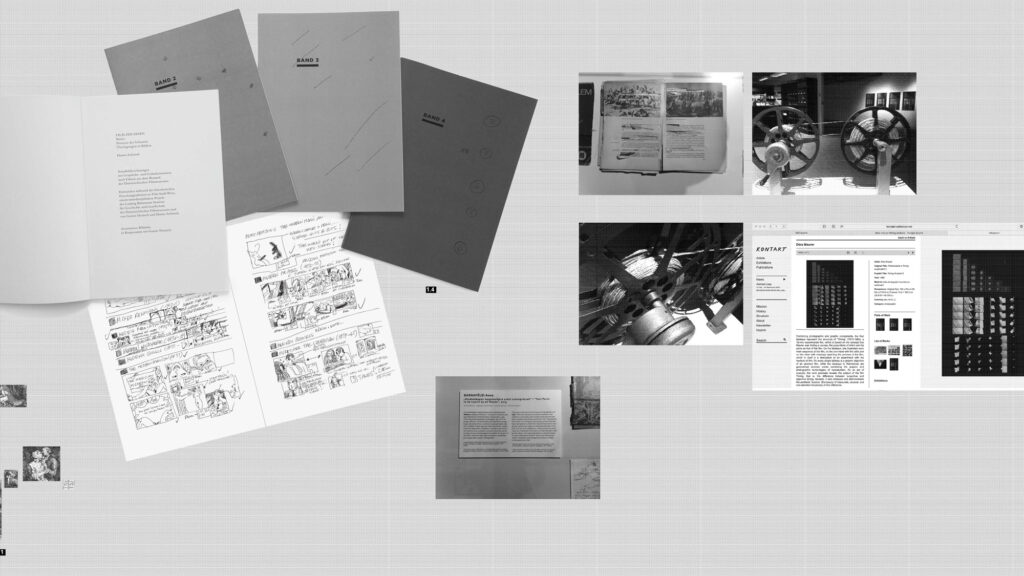
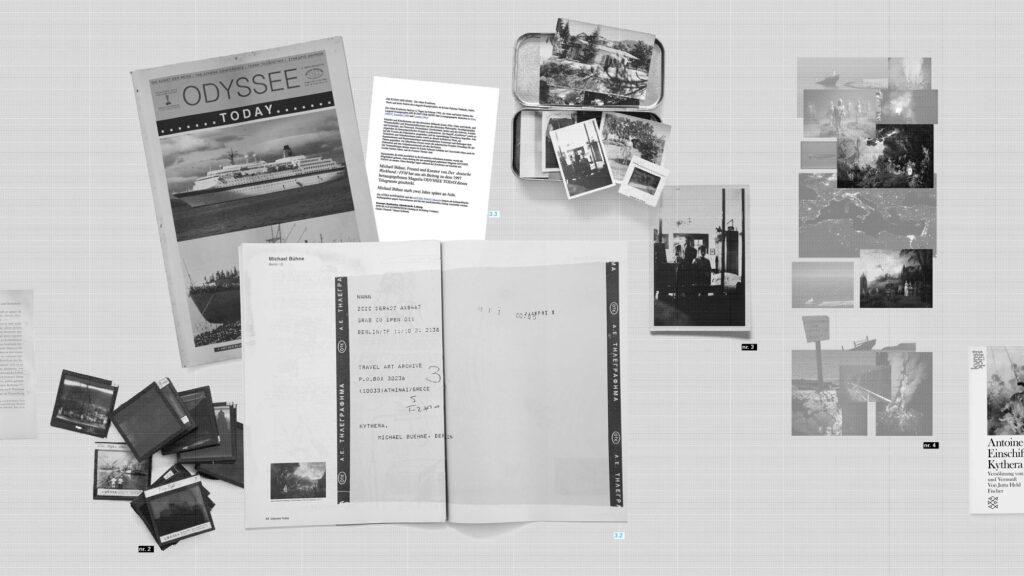
Section Objets trouvés
Idea: Sabine Folie
Graphic concept and realisation: Sabine Folie and Simona Obholzer
The archive of found items, those searched and found forms, which constitute the departure point and subject of the works at the same time, are not merely an annex or footnotes to the exhibition: As the “Section Objets trouvés” – an ordered chaos of reference points – they form the entrance to the exhibition right at the beginning and therewith a first translation that transcends the individual objects.
Based on an “archive” of “associative objects” that reflect the conception, discussion, and developmental processes of this project exhibition, Sabine Folie was invited to conceive an exhibition in the exhibition: the “Section Objets trouvés” – its name referring to the sections of the fictional museum by Marcel Broodthaers, the “Musée d’art moderne. Département des Aigles” (Museum of Modern Art, Department of Eagles).
Multiple processes of transfer and homogenisation – scanning and photographing, the sober, equalising treatment in black and white, and screening as a reference to the representationality and mediatedness of every object – achieve a distance that eclipses the “original” and reveals the derivative intrinsic to every artistic process.
Contributions
■ Marlies Pöschl in collaboration with Farnaz Jurabchian: Cinema Cristal
Single-channel installation, HD, stereo, variable duration, loop, 2016
Lalezar – a street located in the city centre of Tehran, formerly home to several cinemas, is today characterized by a multitude of luminous elements that are offered for sale alongside the street. The flow of images through light, cinema, seems to have broken apart into a variety of different light sources. “Cinema Cristal” is re-combining these different fragments of light into a new composition, a dance of still images, in the manner of experimental film. On the sound-track we hear memories, stories and homages related to Tehran’s cinemas and the meaning of cinema as aesthetical, social and memorial space – by film lovers, witnesses and theoreticians.
■ Lydia Nsiah: distortion
Single-Channel-Installation, Found Footage, Loop, HD 4:3, Colour and B&W, Stereo, 4'40'', Sound: Billy Roisz
supported by bundeskanzleramt österreich and wienkultur, distributed by sixpackfilm
In 1949, Hans Richter retrospectively cited distortion as an essential element in the quiver of the historical film avant-garde. Commercial film production failed to express an interest in such effects. "None of these ´poetic alienation processes´ were under patent; but the film industry still didn´t touch them." (1) In distortion image distortion returns brilliantly, and does so as a commercial copyright instrument, of all things. The material bases of the video are DVD compilations of (largely canonical) experimental, ephemeral, and animation films. When these films are duplicated, their copy protection encoding generates digital artifacts, which now either — depending on the angle — soberly mutilate pictorial inventions by Duchamp, Léger, and Lye, or transform them in a second-order deformation. [...] Here, [the interference signals] move Nsiah´s rhythmic montage and Billy Roisz´s finely modulated soundtrack (distilled from the visual material) back into the avant-garde lab. There, the play with excessive demands is a questioning of what is given (media-technically as well as perceptually) and designing what is new. The gesture obtains its cunning irony in that it is precisely works of the film avant-garde that lose their instrumental working base (16-24 individual frames per second) on DVD. The final shot of "distortion", a landscape image, reveals the change to digital motion picture processing as a shift of the horizon. (Joachim Schätz)
(1) Hans Richter: The Avant-Garde Film Seen from Within. – In: Hollywood Quarterly, Book 4, Autumn 1949. p. 37.
■ Elisabeth Kihlström: Flat pack nr. 1
Sculpture, installation
“Platitude and profoundness, banality and drama”
–Henri Lefebvre
It is commonly accepted that acceleration, speed, is the condition of modernity. But everything has its flipside, and modernity also brought inertia, blank petrification and repetition with it. Boredom.
Henri Lefebvre wrote; “the threat of massive boredom hovers over us: exhausted themes, worn-out expressivity, universal pleonasm, spectacles which are monotonously ‘private’, etc.”
Boredom used to be an indoor thing. But now that our interior space exploded and we all carry a portal to our internal life in our pockets, we can be bored anywhere, anytime.
Because many of us can work everywhere nowadays, the living space and working space is increasingly blurred. And what does this mean for interior design? Is office chair entering our bedrooms? Are daybed and chaise lounge coming back? In short, how does a space for contemporary thought look like?
You need to be able to move
Be it physically or mentally
Between spaces
In order to construct a thought.
The vessel, whatever it may be
Material or virtual
Does not automatically provide a destination.
Typically,
You’re trapped in a space
Not greater than your ability to imagine it.
A voyage of loose attentiveness
Looking out of a window,
Into a window.
■ Christiana Perschon: Ghost Copy
Single-Channel-Installation, Found Footage Film, Loop, Colour/B&W, Stereo, 02’28’, 2016
Supported by bundeskanzleramt österreich, wienkultur, Austrian Filmmuseum
Allegorical images flash up between black frames: Over this, a sound montage of scraps of conversation and noise. Inspired by the compositional principle of Günter Brus’ “Vienna walk” (1965) documented on 8mm film, “Ghost Copy” synthesizes amateur analogue film material of the Austrian war and post-war generation with digital sound fragments found in social networks. Repurposed found footage sets into motion a regenerative process whereby the disembodied visual voices of the past reach from within the film's frames, into the present.
■ Nathalie Koger: La sauvegarde
Freestanding sculptural object with embossing on handmade paper, 2016
The departure point for the work is the Picture Collection of the Josephinum in Vienna, which stores and preserves historical documents of the Medical University of Vienna. The collection was established by the doctor and medical historian Max Neuburger, who archived photographs, illustrations, and prints from 1906 up to his dismissal under Austrofascism. The storage and registration of these documents with an archival index card system evidences an interest to order spaces, objects, and practices from European and non-European folk cultures into a Western history of conventional medicine. Furthermore, they indicate an interest in a cultural and artistic history of medicine. The artistic work "La sauvegarde" explores the processes of perusing, searching, choosing, and ordering select pictures and narrations in the archive. The selection and appropriation of the documents follows the personal preferences and reference points of the artist, while maintaining a connection with the search for a form.
■ Karin Fisslthaler : Once the day will come
Found footage video installation, endless loop, B&W, silent, 2015/16
Despite attempts to mediate and decode the definite, gestures as a means of nonverbal communication are always cast in an interpretative limbo. In film this beyond and in-between-ness find its match in the "hors-champ" — the realm out-of-field, which, according to Gilles Deleuze, forms "a universe or a plane [plan] of genuinely unlimited content".[1] This out-of-field refers not only to a place but to time: a reference to the already past, present, or future imaginations, fears, desires, and utopias.
The departure material for the found footage video installation "Once the day will come" is the science fiction film "Woman in the Moon" (1929) by Fritz Lang, who invented the idea of the countdown in the film, which would be later introduced into space flight for the real launch of rockets. The installation arranges scenes with the gesture of pointing in a circulating fashion, like the hands of a clock, which move forwards or backwards depending on the viewpoint in the exhibition.
[1] Gilles Deleuze, Cinema 1. The Movement-Image, trans. Hugh Tomlinson and
Barbara Habberjam (Minneapolis: University of Minnesota Press, 1986), 16.
■ Hanna Schimek: The Modern Magician - The Projector as Space of Action
2-channel video installation, HD, colour & B&W, silent, endless loops, left channel: 0:22 min, right channel: 5:46 min, 2016
Camera: Gustav Deutsch
Editing: Lydia Nsiah
Media transfer from film to still, from still to drawing, and from drawing to film. The departure point for the installation is a film taken from the database for the found footage film "FILM IST: a girl & a gun" by Gustav Deutsch. An overhead projector serves as the tool to transform a freeze frame taken from its original movement in the film into a drawing. The drawing, like the film, represents an individual depiction of reality. The chosen sequence from the film "The Modern Magician" is exemplary for the content of this work: a reflection upon the capturing, disappearance, and transformation of (film) images.
■ Cana Bilir-Meier & belit sağ: Mersin 16.02.03 - ‘The one who comes today and stays tomorrow’
Performance and video work, colour, sound, variable duration, loop, 2016
The title comes from the short essay "The Stranger" by Georg Simmel[1] in which he describes the stranger as one who is both very familiar and at the same time unknown. On the other hand, the short article by Walter Benjamin, "The Storyteller"[2], introduces the storyteller who is at the same time the stranger. The performance and video work started with the family archive of Bilir-Meier's grand-aunt. In videotape recordings from 16.02.03 in Mersin, Turkey her grand-aunt Melahat tells stories to her relatives as "the storyteller". She talks about her previous lives, where she is a stranger to the family. These stories told in domestic spaces carry both personal and social aspects, touching upon issues greater than just Melahat's own story. In their work belit sağ and Cana Bilir-Meier explore different forms of archives in combination with research, representation, and questions of visibility. "Whose research is it? Who owns it? Whose interests does it serve? Who will benefit from it? Who has designed its questions and framed its scope? Who will carry it out? Who will write it up? How will its results be disseminated?”[3]
[1] Georg Simmel, "The Sociological Significance of the 'Stranger'," in Introduction to the Science of Sociology, eds. Robert E. Park and E. W. Burgess (Chicago: University of Chicago Press, 1921), 322–327.
[2] Walter Benjamin, "The Storyteller" in Illuminations, ed. Hannah Arendt, trans. Harry Zohn (New York: Schocken Books, 1969 [1936], 83–109.
[3] Linda Tuhiwai Smith, Decolonizing Methodologies: Research and Indigenous Peoples (London: Zen Books, 1999), 10.
■ Jennifer Mattes: Time To Stay Goodbye - The Case (For the memories themselves are not important)
Found footage, HD (digital and analogue), video installation, variable duration, 2016
The planned work (Part 2) builds upon a previous work (Part 1). It continues the story of a character, a diver. On the way to the ocean floor, in the bars of Atlantis (Part 3) following a shipwreck, he strands on the island Kythera, the birthplace of Aphrodite and the motif of a utopia portrayed in art history, influenced by failure and repeatedly declared an ideal. Based on this condition, the "white cube" story to be told is situated in a "black box riddle bracket". In the beginning was the riddle. And the case. A case full of something. Images, information, memories, garbage. Inflated like a balloon that is too heavy to fly. Everything has a commonplace which unifies the picture book, the libraries of Babel, the garbage dumps. Call it an archive or canon or memory, it is not about the names. Somewhere in-between resides a collective memory. The projection surface. Only the "archival gesture", an act of "consignment", a localisation in a sign system makes the archive, makes the author, the "new archivist". What is copy, what is original? What is possibly reality? Here is my stage, my country, my border, my selfie. This is the archive. The holiday resort. Where is the origin? In the projection of the subjective it becomes our ocean, our Ours, our black box, our investigation. The YES-NO. This place names things, which thereby become things in the first place. Real paths become medial, actual conflicts virtual. But our collective memory grows and winds around our movements, dreams, and desires. Until the floor of the ocean. Until the end of memory. Always a myth. From here we look into the void. Shipwreck with spectator. And divers. Between diving and drowning.
■ Jannik Franzen: Unbehagliche Sammlung [Discomforting Collection]
Video, HD, colour and B&W, sound, 9:24 min, 2016
"Grand gestures in a tight space": In a cellar of the Academy of Fine Arts Vienna plaster casts of famous sculptures from the Antique and Renaissance stand crowded one next to the other. They are the remains of the Glyptotheque from the eighteenth and nineteenth century, which once comprised 4000 items. A slight discomfort with the nostalgic-morbid plaster cast museum led to a quest for the discarded, excluded in times of self-valorisation by Antique grandeur. A 100-year-old film document reveals connections between the plaster cast museum and its historical and political context: classicist aesthetics and colonial research go hand-in-hand.
