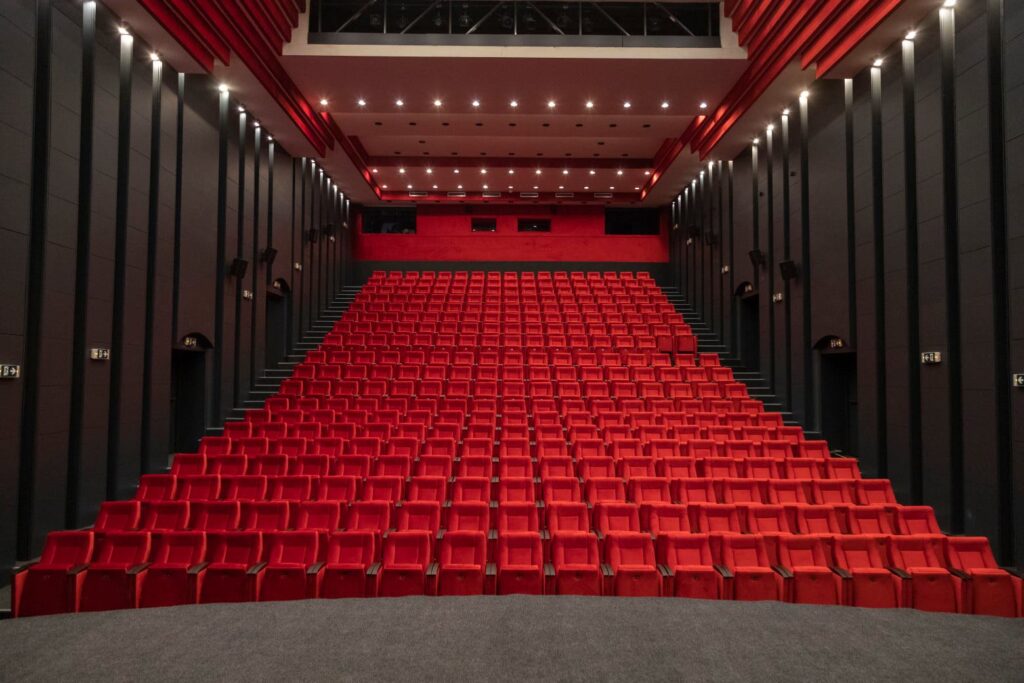
Screening as part of the 20th Art Biennial "refinerymonastery" in Pančevo
■ DATE:
■ LOCATION:
Vojvode Živojina Mišiča 4
Pančevo, Serbien
■ ARTISTS:
Katharina Swoboda, Simona Obholzer, Lisa Truttmann
■ SUPPORT:
Austrian Embassy in Belgrade
■ CURATED BY:
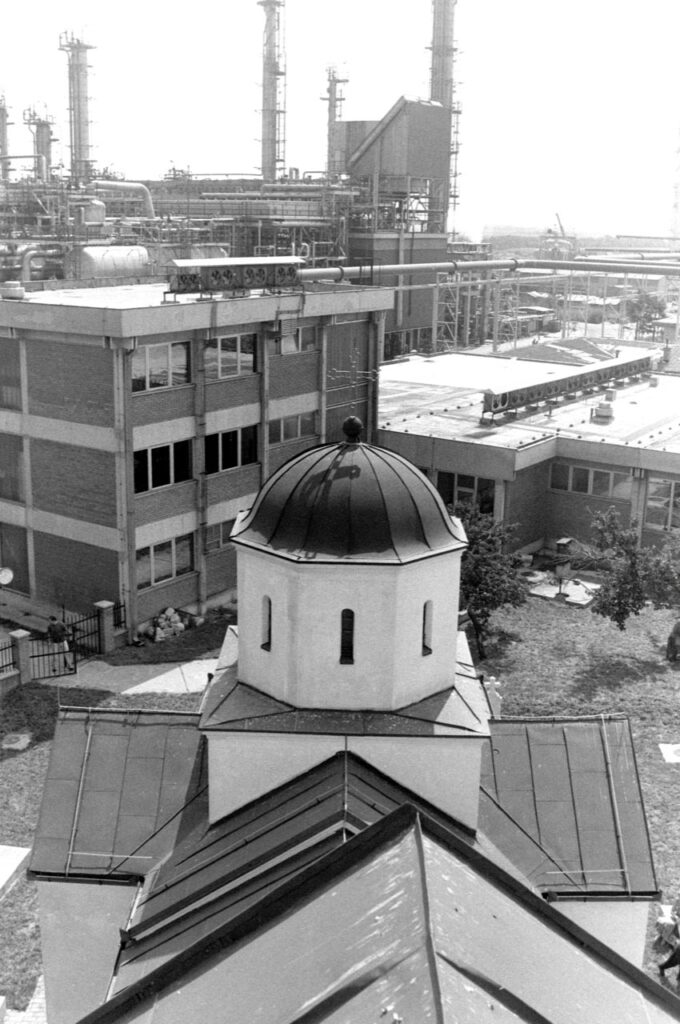
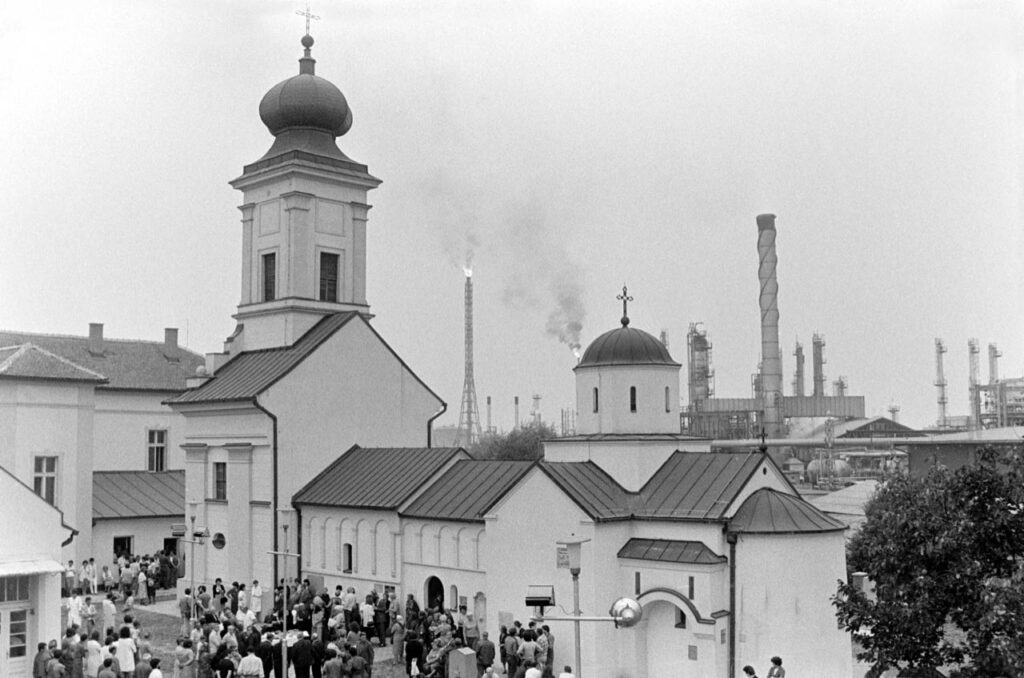
The 20th Biennial of Art in Pančevo is thematically inspired by a local hybrid phenomenon that reflects the iconic and seemingly contrasting, horizontal and immediate coexistence of the Oil Refinery and the Vojlovica Monastery, and whose interdependence can be symbiotic or conflicting, depending on the point of view. The Biennale "refinerymonastery" raises questions about whether and how it is possible to act outside and over the domains of matrices, patterns and conditions generated by the monastery and the refinery, each for itself and together, and how to resolve the relationship between limited parochial activity and unrestrainable need for openness and inventiveness. The "refinerymonastery" may find temporary answers in art that reconciles speculative imagination and technology. If it is not possible to deviate from both dogmatism and hypercapitalism, then an artistic proposal is possible in the sense of creating a temporary difference.
Maja Ćirić


Program
■ Iris Blauensteiner & Christine Moderbacher: The world is blue at its edges
16:9, colour, stereo, 15 min, AT, 2021
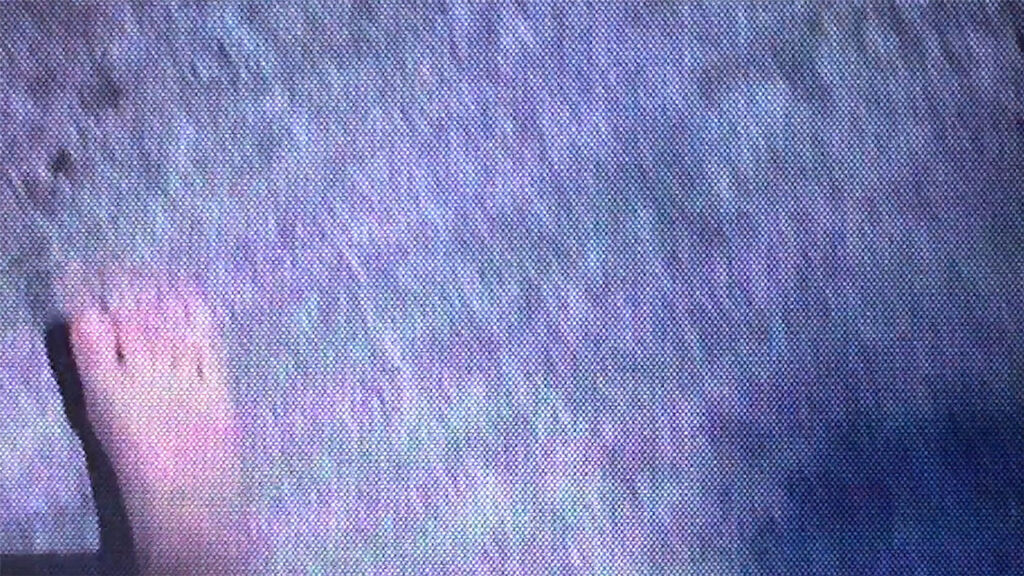
"What could I tell you about the world I live in?" Addressing her unborn child, the narrator tries to find answers partly through claustrophobic pictures interwoven with intimate notes on a pregnancy in times of a pandemic. Based on a childhood memory, the experimental short film spans from the Cold War Iron Curtain, to the so-called “refugee crisis” and the renewed closing of borders during COVID-19. Textures of walls closing in, blur with pixelated maps, creating a subjective portrait of a new reality and its digital image-world.
Iris Blauensteiner’s and Christine Moderbacher’s “The world is blue at its edges” is directed at an unknown future. It’s a film about life and everything that speaks against life. As if behind glass, fragments of perception appear. They confront the somber world of today, consisting of screens and lockdowns, with the faint heartbeat of an unborn child. In the film the mother shares her thoughts with the child. What can she show to her future offspring, which images of today can speak tomorrow? (Patrick Holzapfel)
■ Enar de Dios Rodríguez: Liquid ground
HD, 16:9, colour, sound, 32 min, AT/ES, 2021
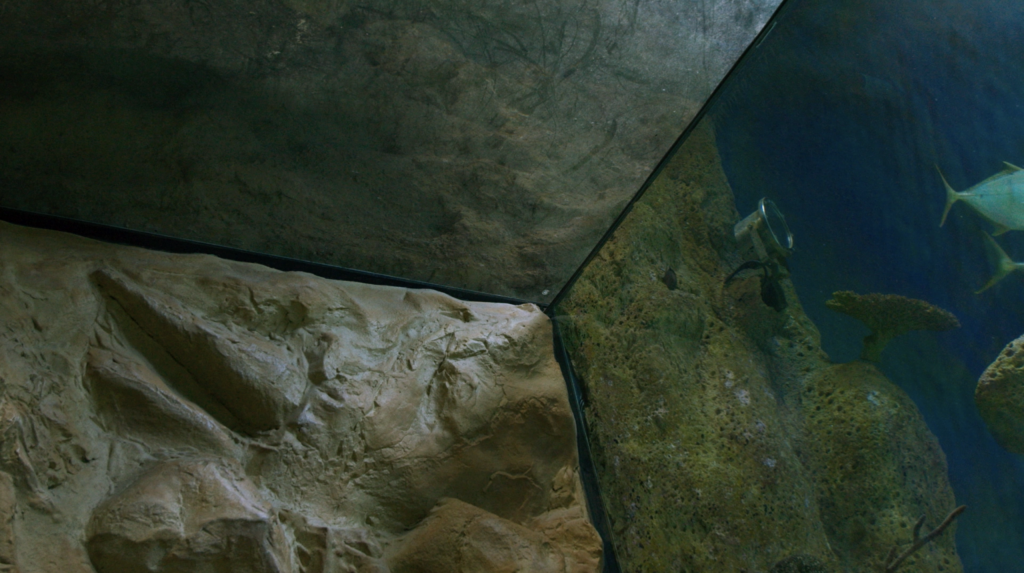
Although the oceans make up more than 70% of the Earth’s surface, to date now only a very small portion of the seabed has been mapped. However, in recent years, the mapping of these spaces has accelerated due to different economic, geopolitical and scientific interests, determined to build a ‘new continent’ to be explored and exploited under the sea.”Liquid ground” is a video essay that takes as its thematic axis the ocean floor and its current cartography to talk about colonialism, ecology and representation.
Shaped by a wide variety of found material – from the illustrations of the first worldwide oceanographic expedition, to current technologies and visions related to the oceans floors – Liquid ground functions as a reminder of the liquid grounds that, in reality, sustain and compose us. Moreover, it is a call to disobey the stability of the arbitrary, extractive and limiting lines that are drawn over space. Much like any other form of knowledge, “Liquid ground” also offers us a series of riddles.
■ Marlies Pöschl: Shadow Library
4K-video, 16:9, colour stereo, 7 min, AT, 2021
In a near future, data is no longer stored in data centres but in the DNA of plants. During a presentation of the data garden of an Austrian mobile phone manufacturer called Cyan, the film accidentally leads us to a second, invisible ‘library’ – the ‘shadow library’, which is stored on some of the plants. The video addresses how the effects of globally unequal production relations inscribe themselves in plants, migrate with the plants and thus anchor themselves in collective memory.
The text in the second part of the video is based on poems by the Chinese poet Zheng Xiaoqiong, who addresses the living and working conditions of Chinese migrant workers in her work. The soundtrack of the film (‘Fern’ by Mileece) is based on the sonification of electric currents in plants.
■ Katharina Swoboda: Stones
2K-video, 16:9, colour, stereo, 8 min, AT, 2021
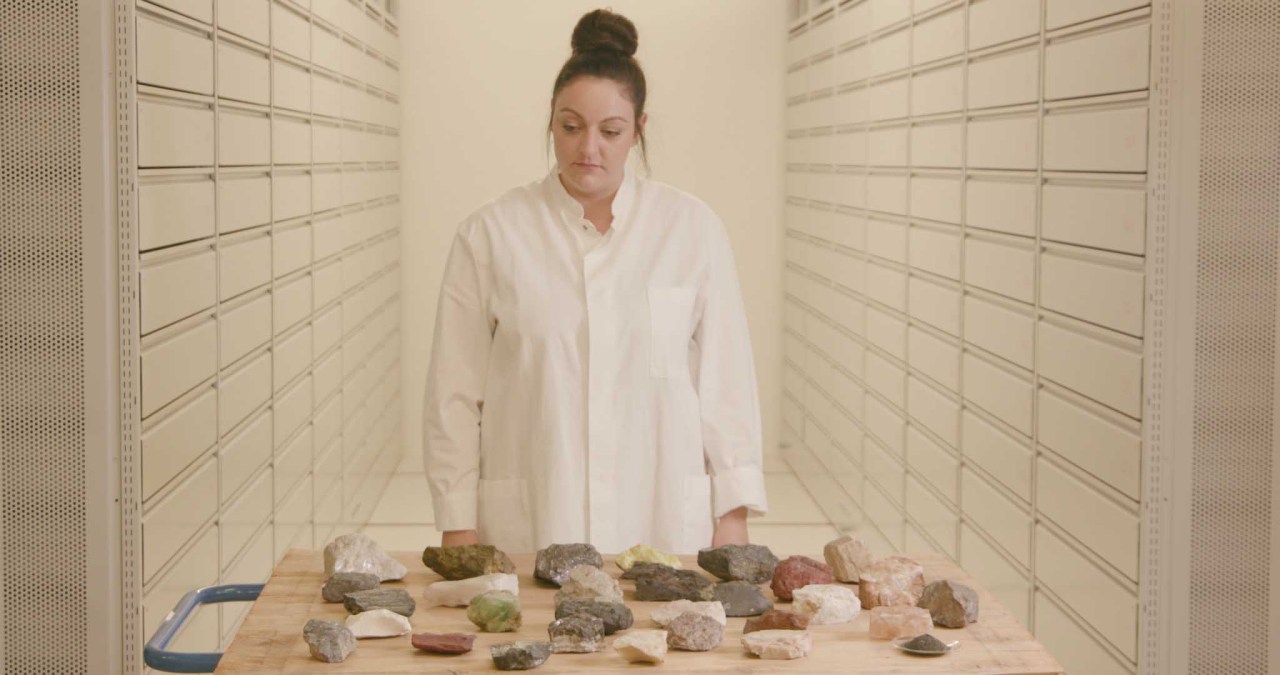
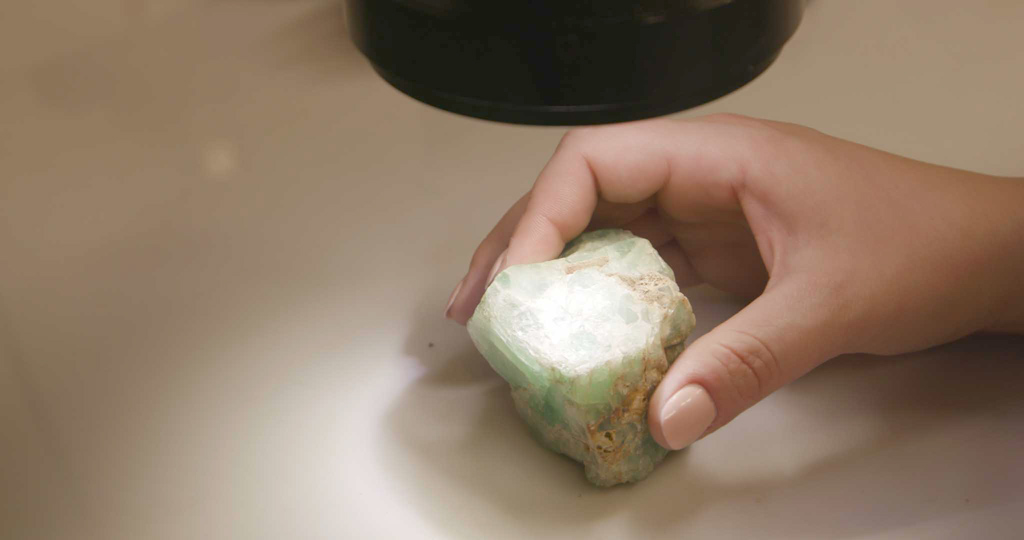
Most raw materials used in a smartphone are extracted from the earth. Great quantities of rock need to be mined and then laboriously processed to extract the elements needed to build the phone. Some of these coarse rocks, from which elements such as palladium, tantalum, lithium and rare earth metals can be extracted, are shown in the video. A female scientist examines these stones under a microscope and shares an abstract look at the “inner landscapes” of a smartphone. The video ends with an experiment – after referring to the beginning of the smartphone's raw material supply chain with the rocks, the experiment focuses on the end of the useful life of the device.
■ Simona Obholzer: Perfect Particles (x kWh)
2K-video, 9:16, colour, silent, 6 min, AT 2021
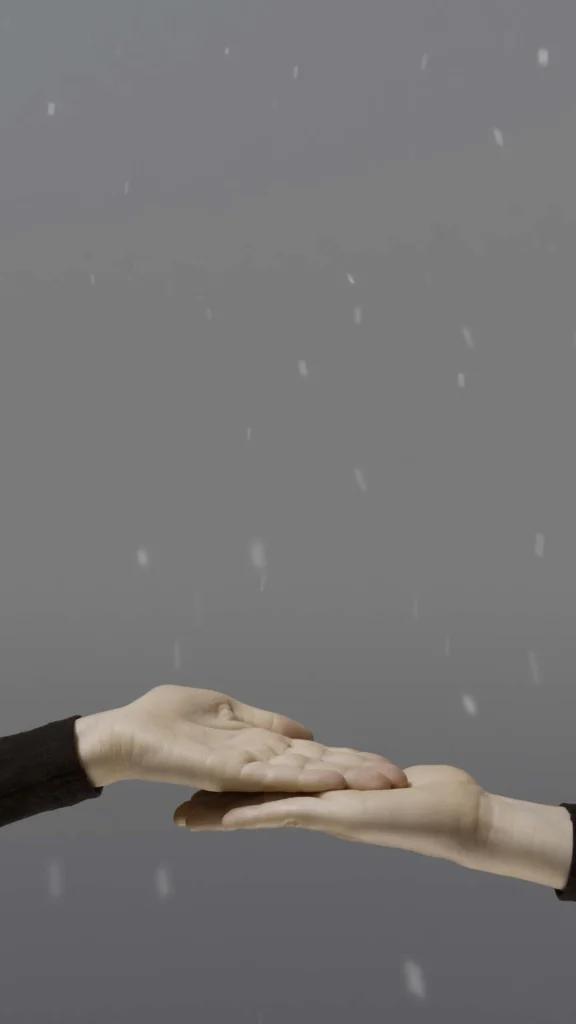
Snowfall creates a special kind of landscape. A white layer covers everything, everything is given a new surface. The snowy landscape is a highly emotionalised landscape that is reproduced in many ways and behind which, in times of global warming, lies a lot of technology. In “Perfect Particles (x kWh)” computer-generated nature imitates the natural phenomenon. Snow falls incessantly, sometimes more, sometimes less. The artist's hands reach out towards the "natural spectacle" in anticipation of a random, ephemeral contact.
The flakes, however, are digitally generated, and have no connection to the material world. The particles ejected by the emitter leave no trace on the image of which they have become a part. The physical contact remains a mental experiment.
Simona Obholzer's installation addresses the viewer's body as an empty space between the two screens. She invokes the haptic perception of the viewer and plays with their orientation between the space created by the image and real space.
■ Lisa Truttmann: Tracks I-III
HD-Split-Screen, 16:9, colour, stereo, 20 min, AT, 2021
At the beginning of film history, fast-moving landscapes haunted early cinemas as “Phantom Rides.” Back then, cameras mounted on trains visually conquered supposedly untouched areas at top speed, now mobile radio signals control our technological gaze and access rural areas. "Tracks I-III" searches for traces, following the former section of the “Ischlerbahn” between the towns Mondsee and Strobl. On a digital phantom ride of the present, we cross the landscape, associate connections, looking forward in fragments and backwards in time. We ask how invisible signals travel, how they manifest themselves in moving images, and why we are now looking at cell phones instead of the screen in a cinema.