■ DATE:
■ LOCATION:
■ ARTISTS:
■ CURATED BY:
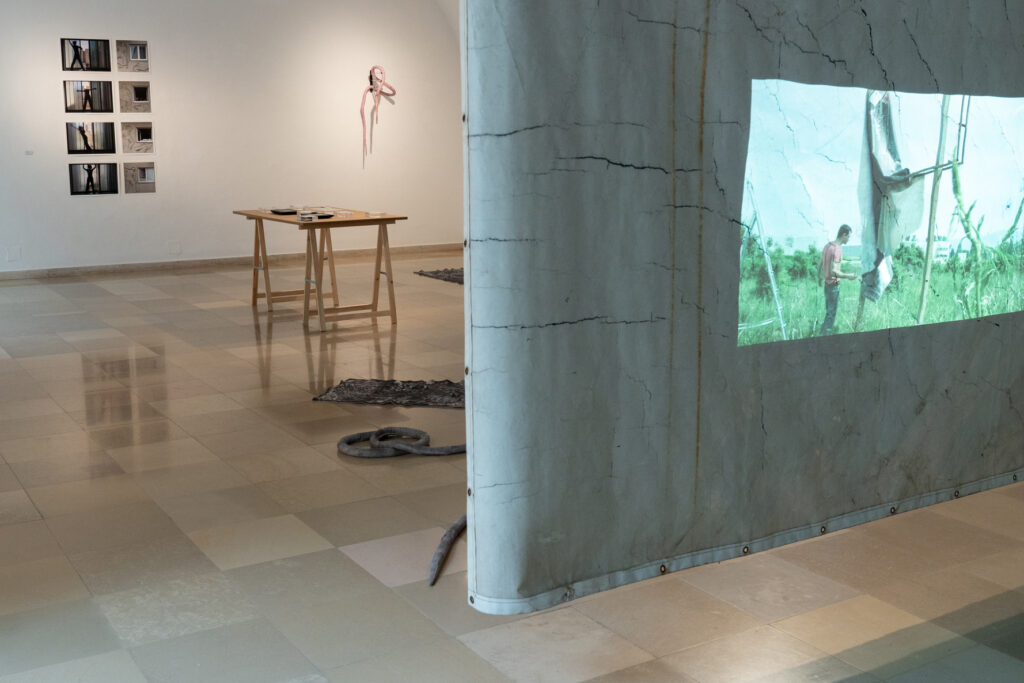
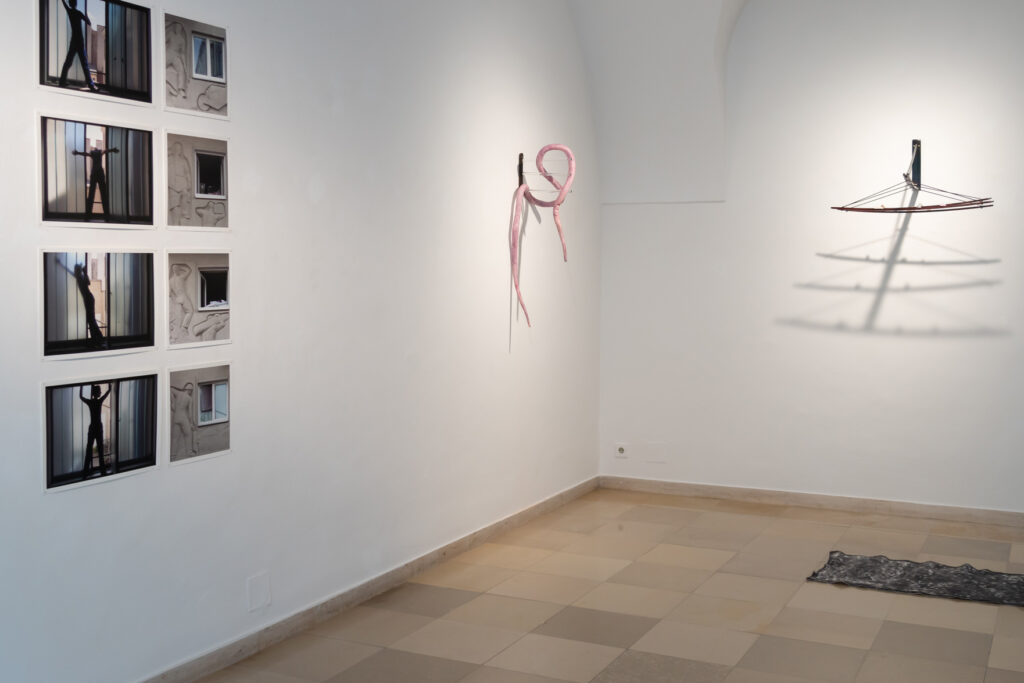
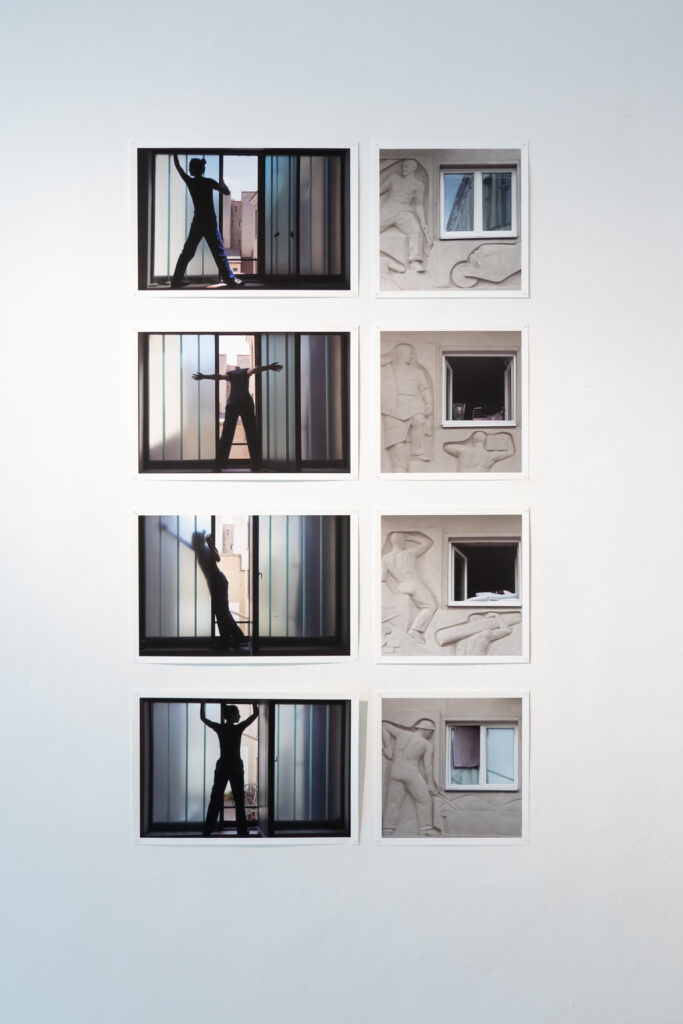
Margan’s photographs juxtapose two motifs. On the one hand, a building façade with socialist imagery is shown, glorifying the worker’s body and its contribution to society through physical labour. The adjacent windows, on the other hand, offer glimpses into private spaces, thereby revealing other, often hidden forms of labour, such as domestic work or care work.
In relation to this, Luiza Margan performs a series of movements within the industrial windows of the former Leica factory in Vienna. Today, the building houses artists’ studios, including the artist’s own. Margan’s actions correspond to the representations of workers in the socialist relief.
By combining these two elements, a visual dialogue emerges around the invisible aspects of artistic labour, the precarity of cultural work, and the societal perception of these practices.
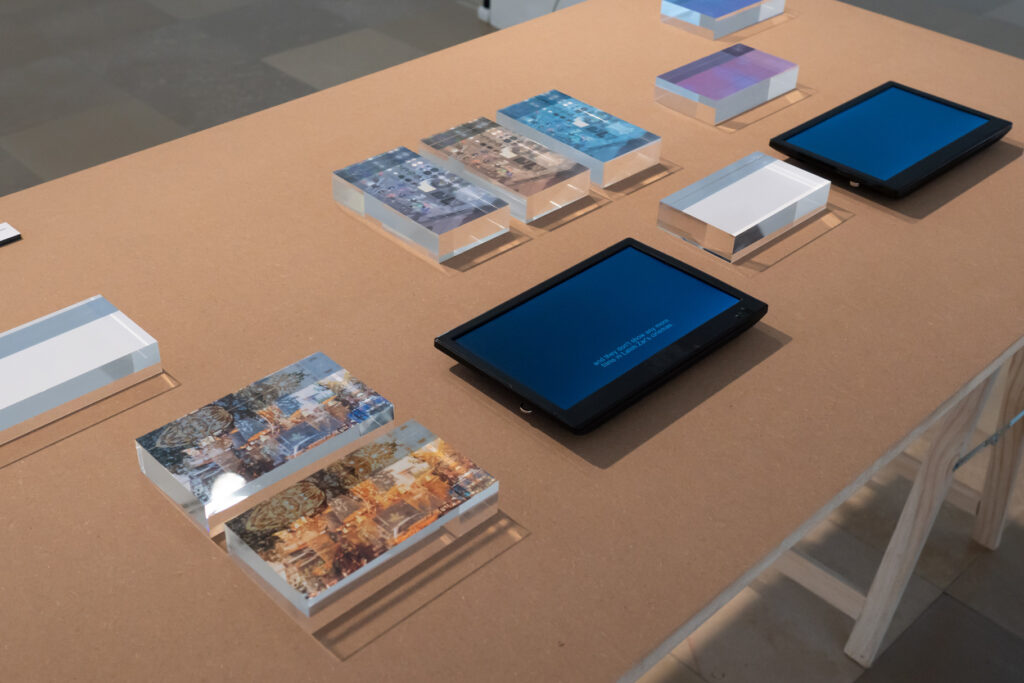
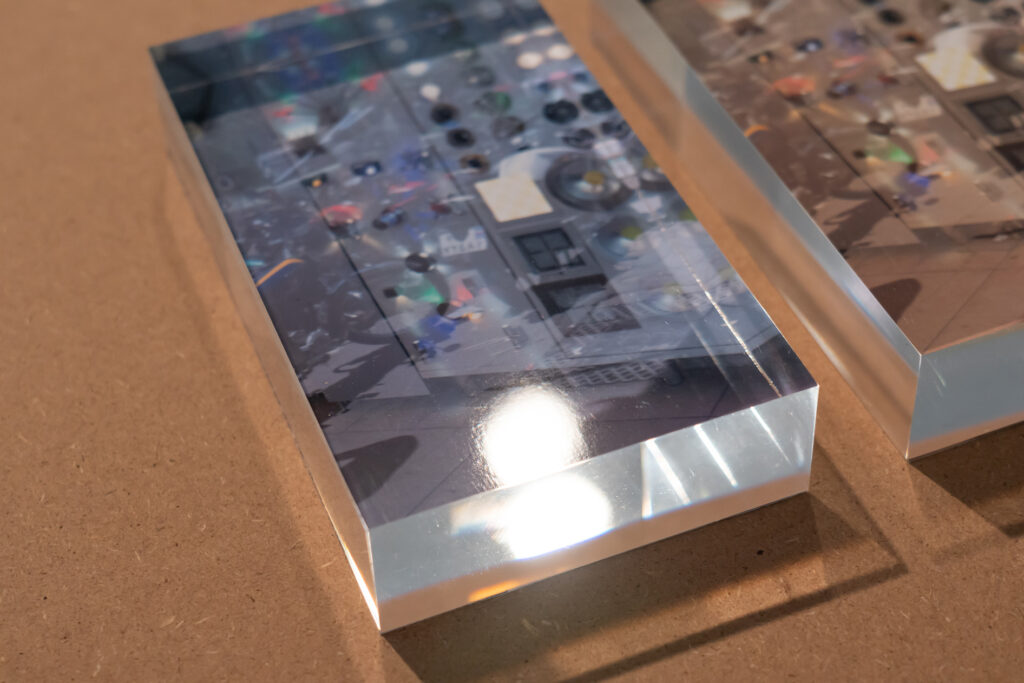
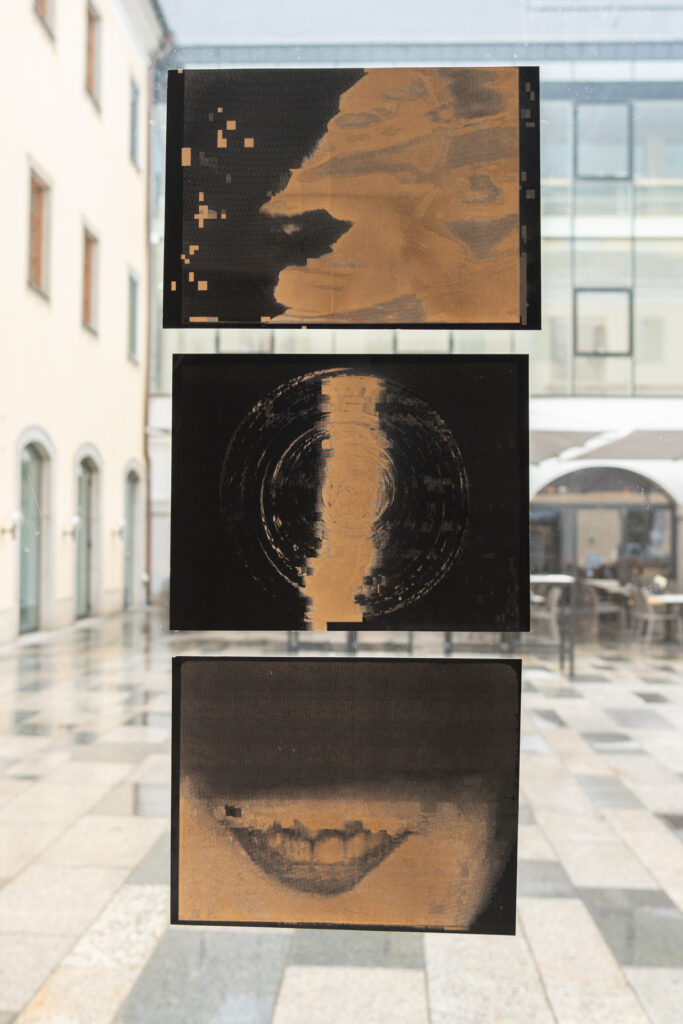
Nsiah’s series "burnt in" (2017) emerged from her film work "distortion" (2016) and makes use of contemporary laser print technology. Its material basis consists of DVD compilations of (largely canonical) experimental, ephemeral, and animated films. Their copy-protection encoding generates digital artefacts (glitches) during duplication, which in turn transform visual compositions by Marcel Duchamp or Fernand Léger into a second-order deformation.
In the exhibition, the paper works are presented as translucent screens, thus becoming inscribed within an in-between space of ephemerality and canon, as well as digital copy and analogue original.
Lydia Nsiah lives and works in Vienna and on the move. She studied fine arts as well as film and media studies in Vienna, Berlin, Montreal, and Amsterdam. As an artist and researcher, she engages with gaps and interstitial spaces through film, photography, text, and installation. Her work addresses themes of forgetting and remembering, mistakes and error, film art and its uses. Her works are exhibited and published internationally.
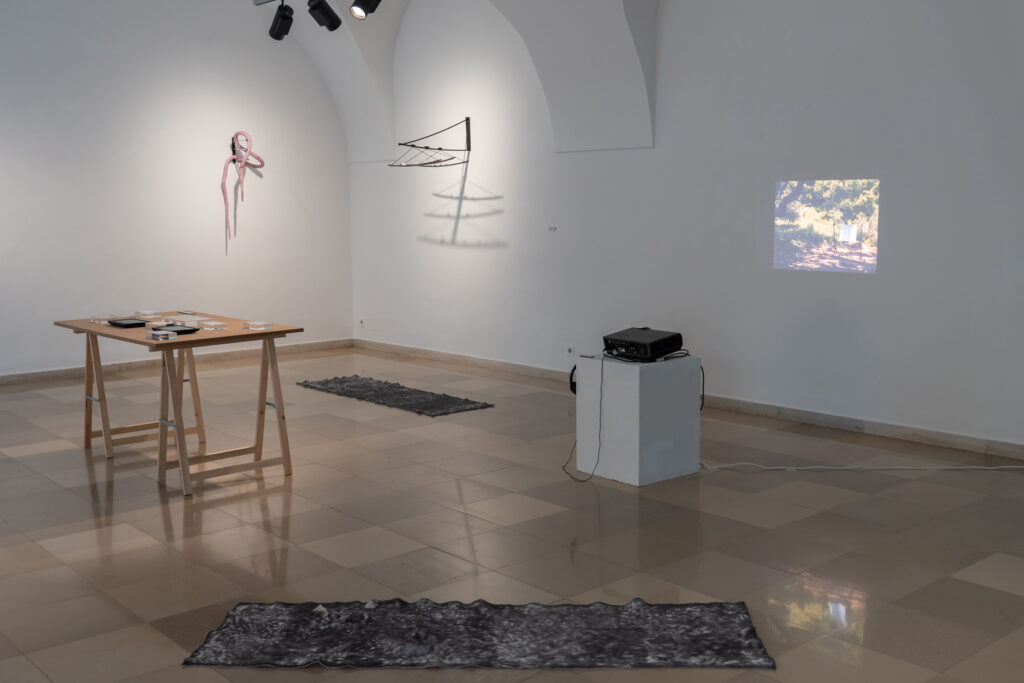
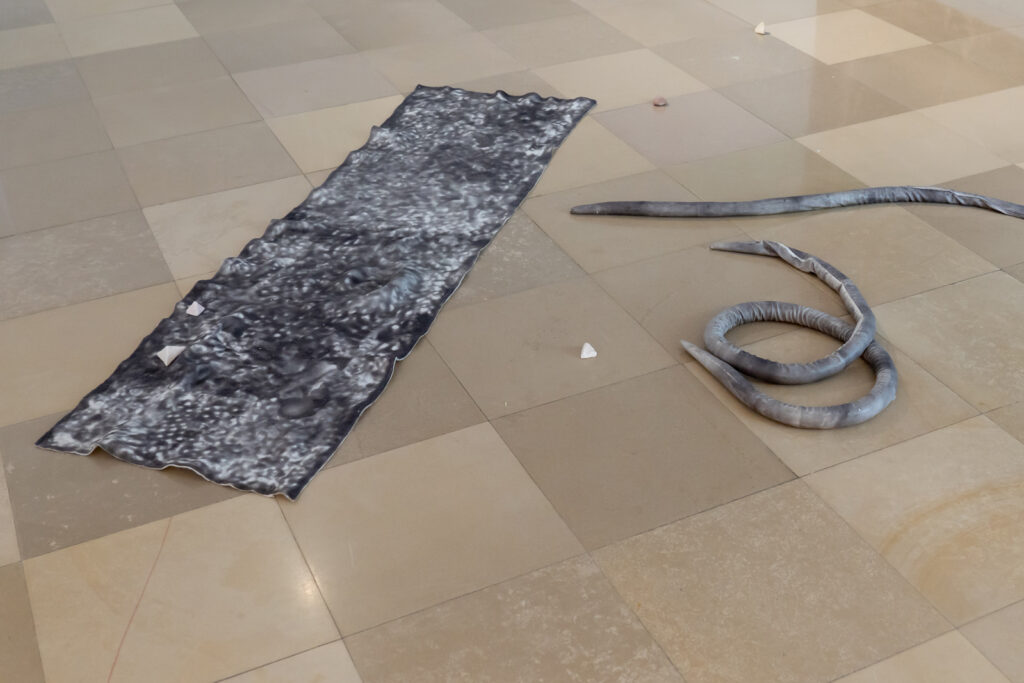
In their collaborative installation, Koger and Obermair create an experimental setting that incorporates sensory impressions such as touch and the perception of warmth. Using self-made yoga mats, thermochromic paints, and sculptural elements of fabric and silicone, they construct material interfaces where the “form memory” of materials can interact with human senses.
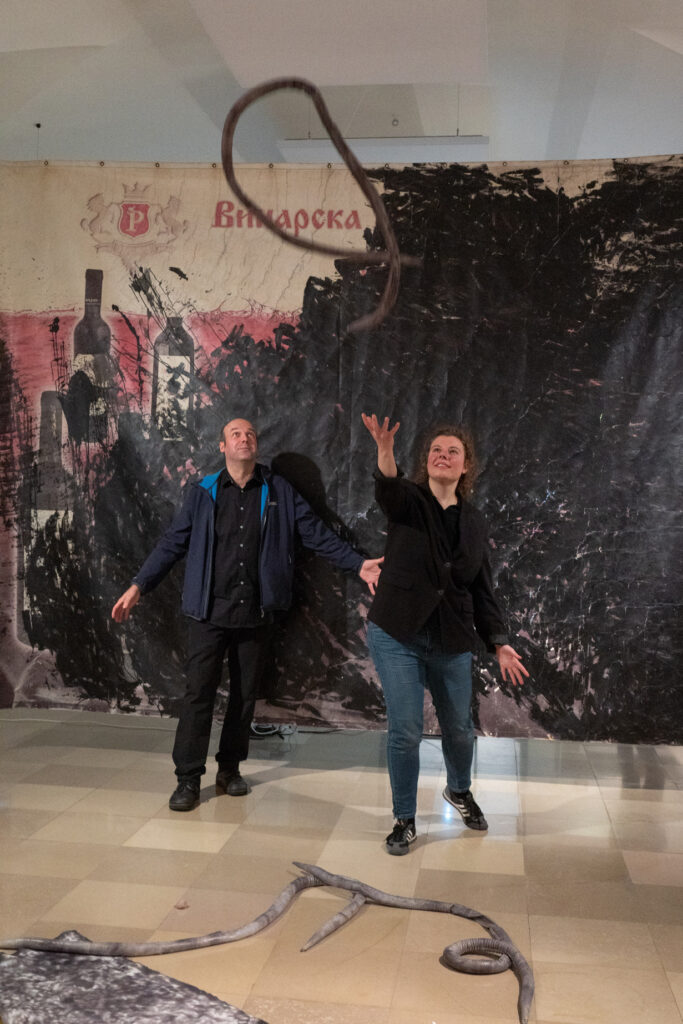
Snake-like objects function as a hinge to the collective body of the exhibition’s visitors. Conceptually, Koger and Obermair draw on questions of anxiety and well-being derived from so-called “screening tests”, as used in psychology.
Laleh Zar Street in the centre of Tehran was once known for its numerous cinemas. Today, the area is characterised by a multitude of luminous objects displayed for sale in the दुकans lining the street. The flow of images — cinema itself — seems to have fragmented into individual light sources in the wake of the Iranian Revolution.
A woman pushes her mother along the street in a wheelchair, as if the two were making a film together: each shop window becomes a frame, the street resembling a drive-through cinema. Like the installation itself — a spatial adaptation of Cinema Cristal — in which the images of the film are examined in terms of their “conditions of light.”
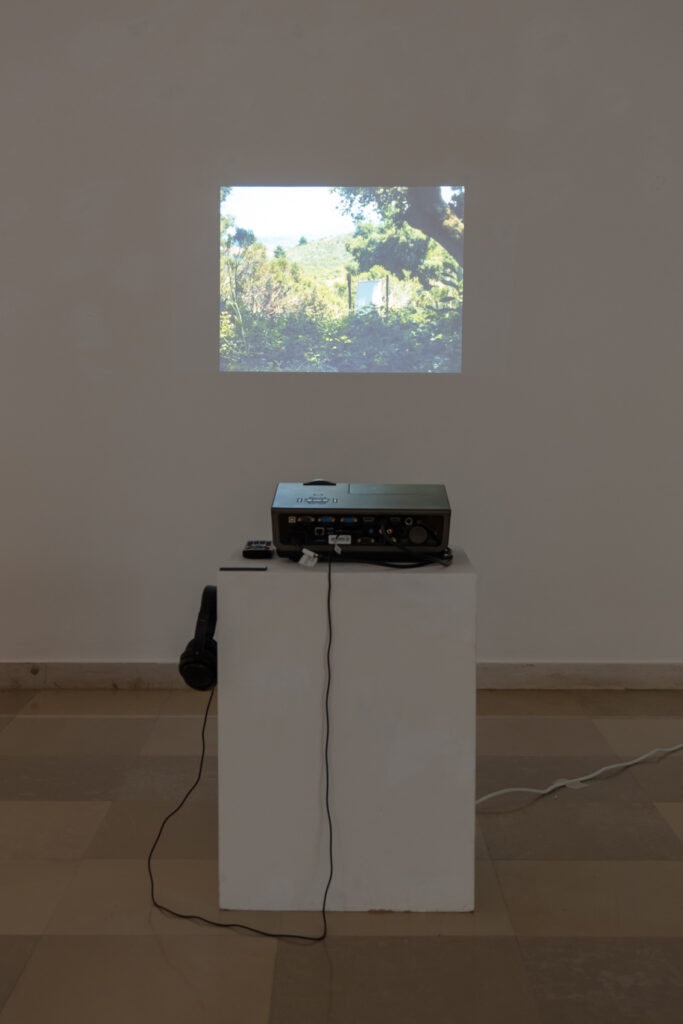
In various locations around the world, Viktoria Schmid constructs projection screens whose aspect ratios are based on a range of existing and even fictional film formats. These screens are then filmed, with the chosen film format corresponding to the aspect ratio of the screen itself.
In "A Proposal to Project", Schmid engages with 16mm film in the 4:3 format. The screen was installed in the sculpture park of the Djerassi Resident Artists Program in California and invites nature-based projections: shifting sunlight creates shadow plays that reveal the faint outlines of trees and the surrounding environment.
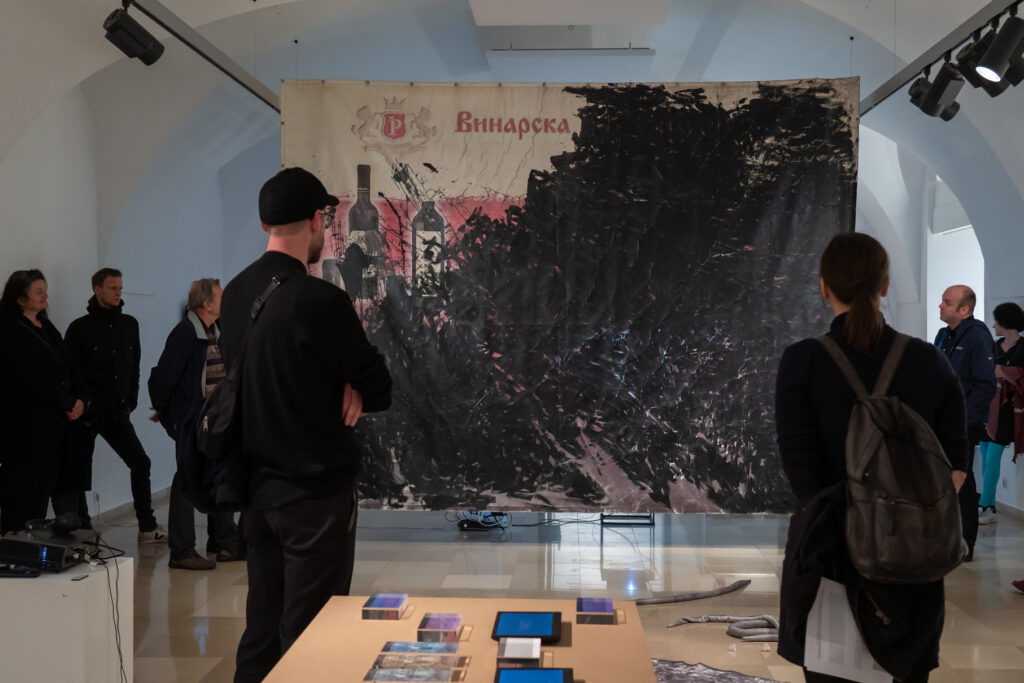
Stoyanov discovered an unused and partially destroyed billboard in a wasteland near Sofia Airport. The approximately 3x4 meter billboard was painted over with black paint by the artist on location, in its original position, as thoroughly as possible. The material moved due to the wind, thus forming a lively surface in contrast to the still canvas in the studio. The artist had to physically respond to these circumstances, creating a kind of "Minimal-Post-Pleinair-Actionism." In the process, a sculptural artwork also emerged: through the monochrome treatment and the dark color, the volume of the hanging (art) fabric was accentuated. After completing the overpainting, the artist opens the new artwork "New Piece of Art" in the second project phase. Now dressed in an elegant suit, he delivers a speech in the style of Andrea Fraser and institutional critique. In the exhibition space, the black vinyl billboard is hung once again, and the action is projected onto its reverse side.
The video shows the "Penguin Pool," a modernist zoo architecture located at the London Zoo. The video emerged from Swoboda's engagement with zoological gardens and architectures built for animals, particularly with the architecture group "Tecton." Due to today's animal welfare regulations, many of the structures constructed by the group at the time no longer house the animals originally intended for them; the Penguin Pool, for example, stands completely empty. The visitors at the zoo are searching for the penguins, with very few noticing the architecture. The visitors were masked out of the image, leaving only the architecture, which once again is reminiscent of a model.
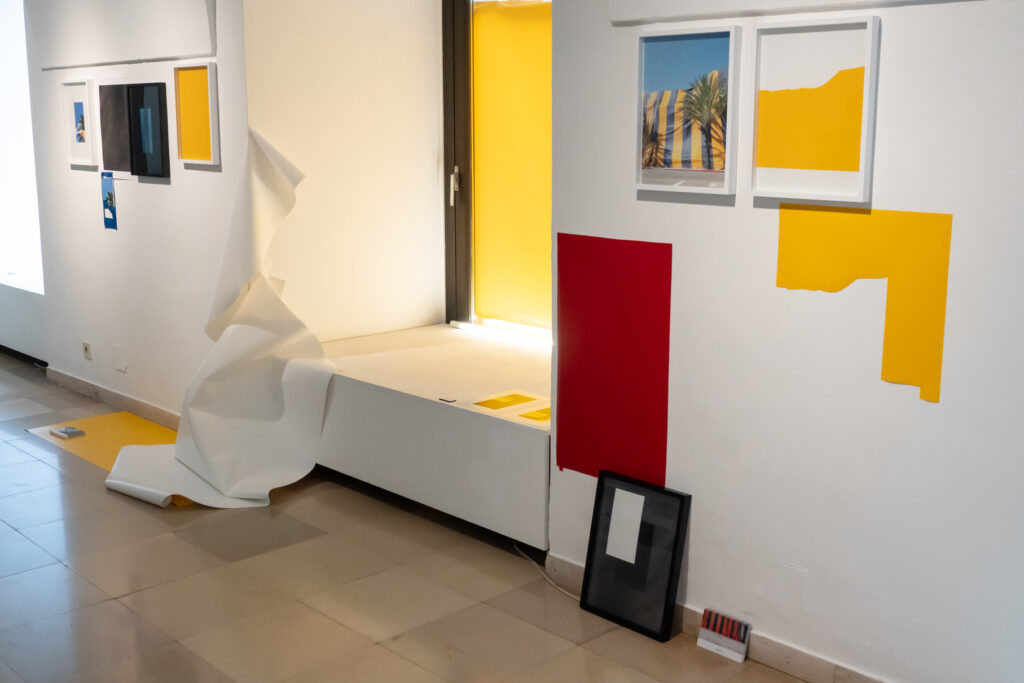
The buildings wrapped in colorful tent tarps within the cityscape of Los Angeles are simultaneously eye-catching and foreign bodies. As a measure against termite infestation, the toxic gases of the insecticides are kept from escaping into the interior. This form of screens is used as a casing, though they should be understood less as protection than as an unsparing boundary. For beneath the colorful surface, brutal processes of extermination take place. From the interior of the building, the gaze is now directed outward — the window itself thus becomes a screen, yet the view of the world is obscured by a dense layer of plastic. As a projection surface, the tent tarps have already served as the basis for meandering trains of thought in Truttmann's essay film "Tarpaulins" (2017), with further working and thinking processes later staged in the exhibition space. In the context of the exhibition, the focus is directed toward materiality and format, and the "zigzag approach" is expanded as an artistic strategy. For in this case too, the big screen is not the only window to the world.
lives and works in Vienna and Rijeka. She studied at the Academy of Fine Arts in Ljubljana (Diploma 2006) and at the Academy of Fine Arts Vienna (Diploma 2013). Her multimedia projects explore the relationships between political ideologies and personal narratives, with a particular focus on how social power structures shape public space.
Her international exhibition activity includes numerous solo and group exhibitions. Her works have been presented at institutions such as the Generali Foundation Salzburg, Belvedere 21, the Museum of Contemporary Art Zagreb, and the National Museum of Slovenia. In 2019, she was awarded a fellowship at the Akademie Schloss Solitude in Germany.
was born near Munich and has lived and worked in Vienna since 2004. His work spans sculpture, photography, installation, and video. His international exhibition activity includes venues such as HDLU Zagreb, Künstlerbund Baden-Württemberg, Kunstraum Niederösterreich, and CSA Space Vancouver. In 2016, he received the Austrian State Scholarship for Fine Arts.
He has undertaken artist-in-residence stays in China, Iceland, and North Macedonia. In addition, he has worked as a curator, for example for the Kunstbunker Nürnberg. Since 2017, he has run the exhibition space hoast in Vienna together with Ekaterina Shapiro-Obermair. Obermair is co-editor of the publication "Das große Moskau, das es niemals gab – Bauten der sowjetischen Avantgarde im zeitgenössischen Moskau" (SCHLEBRÜGGE.EDITOR, 2008).
born in 1977 in Ruse, Bulgaria, lives and works in Vienna. He studied at the Academy of Fine Arts Vienna and the Academy of Arts in Sofia. In his multimedia artistic practice, he investigates urban and suburban spaces and their relationship to cultural and institutional frameworks.
He has participated in numerous exhibitions both nationally and internationally, and has received several awards and grants, including the BKA studio residency in Mexico (2019), the BKA studio residency in Istanbul (2017), the Otto Mauer Prize (2011), the MAK Center for Art and Architecture residency (2012), the Sovereign European Art Prize(2011), the Europa Zukunft Prize (2008), and the Prize of the City of Vienna (2007).