LIQUID TIMES, EMBODIED PLACES
■ DATE:
■ LOCATION:
Kunstuniversität Linz
Hauptplatz 5-6, 4020 Linz
Sofa-Hörsaal
■ ARTISTS:
■ DETAILS:
of the IFK and the University of Art Linz
■ CURATED BY:
Film programme (90 min.)
"Imaginary Explosions, episode 1, Eyjafjallajökull", Caitlin Berrigan, 2018, 11:21 min.
"Europium", Lisa Rave, 2014, 21 min.
"Studies after Nature", Katrin Hornek, 2015, 9:18 min.
"Jaime's House", Marie Gavois, Michel Klöfkorn, 2021, 4:38 min.
"Every Rupture", Sasha Litvintseva, 2020, 13 min.
"Liquid ground", Enar de Dios Rodríguez, 2021, 31:46 min.
Program
■ Caitlin Berrigan: Imaginary Explosions, episode 1, Eyjafjallajökull
English, with English subtitles, colour, 11:21 min., 2018
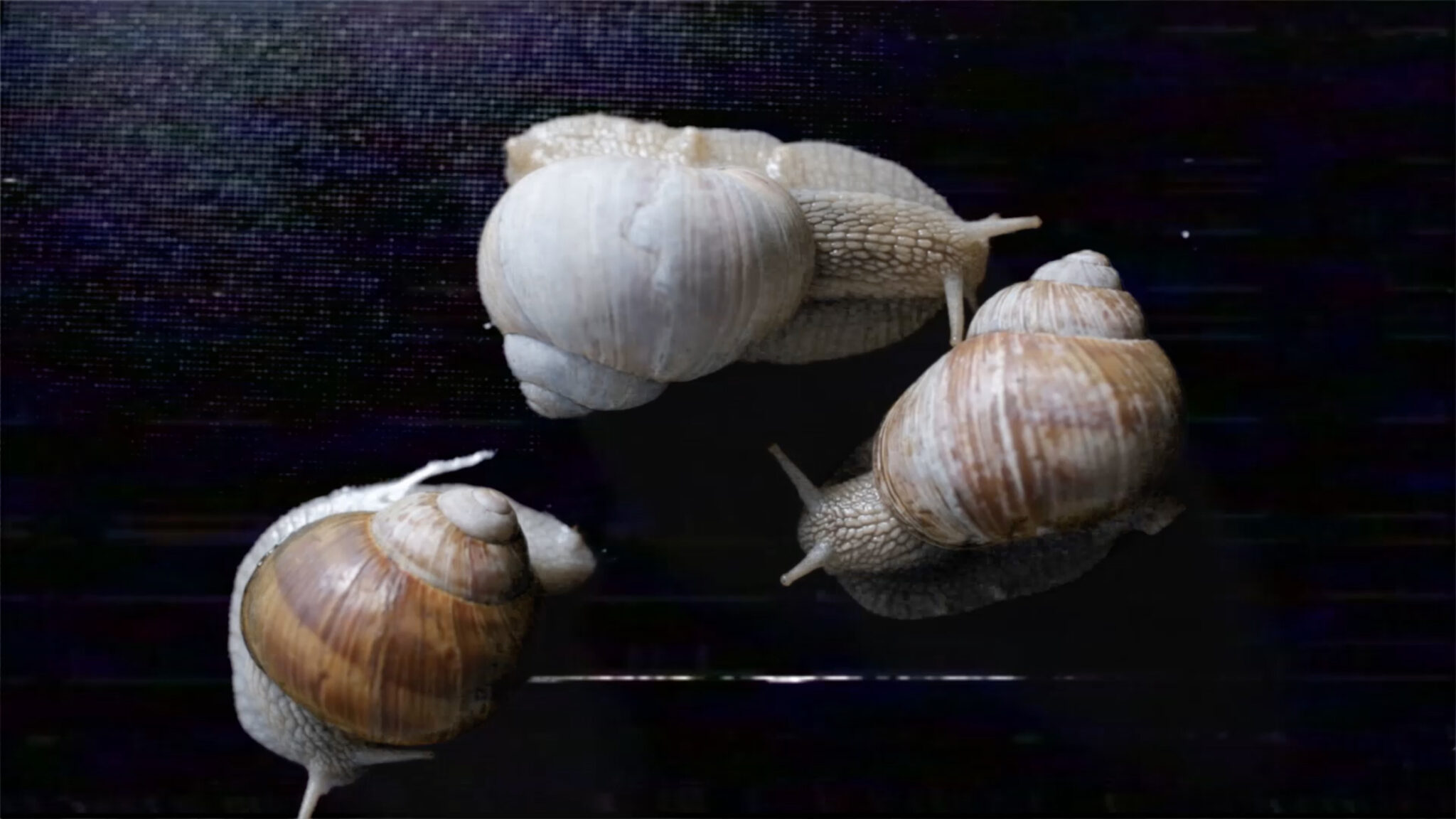
"Imaginary Explosions" follows an affiliation of transfeminist scientists cooperating with the desires of the mineral earth to simultaneously erupt all volcanoes. Through episodic videos, the scientists interpret volcanic activities across place and time. Their shared objectives are to divest technoscientific instruments of their military and corporate power, and to re-embody them in the service of the mineral earth. Imaginary Explosions draws upon geology and embodied knowledges to investigate how deep time and interspecies communication might assist us in radical planetary transformation.
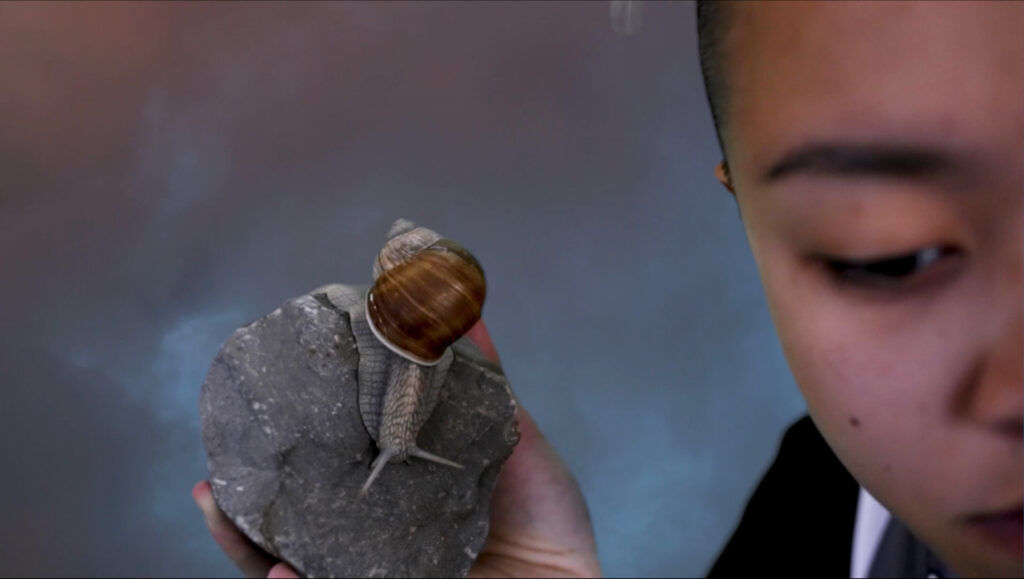
The first video episode focuses on the 2010 eruption of the volcano, Eyjafjallajökull, in Iceland, when the deep time of volcanic activity ruptured into the human time of global air travel. Timescales and affective embodiment shift across geological time, snail time, human time, and the rapid pace of the news media cycle. Artists and scholars whose real-life work pushes the limits of science and culture depict fictionalized versions of themselves in the videos and collaborate on the scores, narratives, and sculptures. The speculative fiction cosmology explores what other presents and futures become possible once we begin to think beyond the framework of the human.
■ Lisa Rave: Europium
English and German, with English subtitles, colour, 21 min., 2014
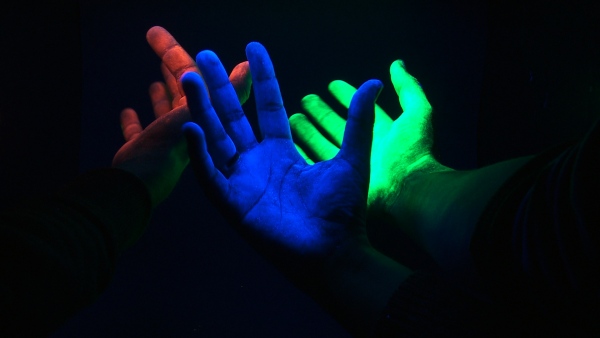
What does the magical spiritism of indigenous peoples have to do with profane digital flat screens, and what connects the traditional shell money “Tabu” to European currency? Lisa Rave’s Europium draws connections between Papua New Guinea’s colonial past and the planned excavation of the rare earth element Europium from the Bismarck Sea (Pacific Ocean). Using various levels of imagery, the essay film weaves a narrative around Europium, whose fluorescent qualities are used to validate European banknotes and to ensure the brilliance of colors on flat-screen surfaces. It describes this seemingly mundane fact as a return and repetition of history, pointing to the human and ecological violence inherent in the extraction and transformation of a raw material into monetary value – while also exposing the invisible ghosts of the past as they appear in the modern objects of our lives.
■ Katrin Hornek: Studies after Nature
No dialogue, colour, 9:18 min., 2015
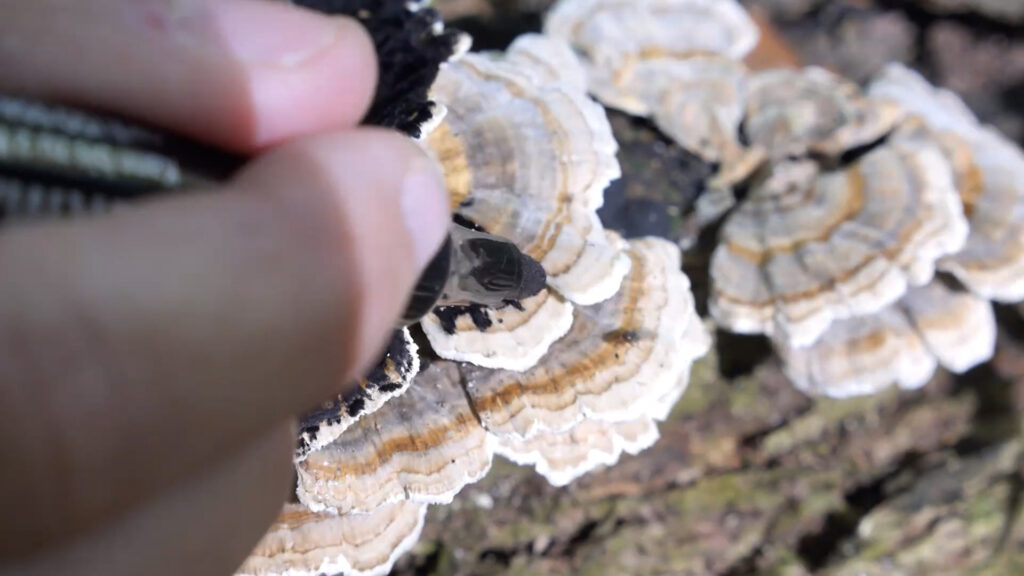
"Studies after Nature" is a set of instructions, an episodic film about playful interaction with nature after the end of its naturalness. In search of the shifting forces behind forms, mushrooms—as creatures between the category of animals and plants—are used to understand the fluid relationship between human, object, and nature.
■ Marie Gavois, Michel Klöfkorn: Jaime's House
No dialogue, colour, 4:38 min., 2021
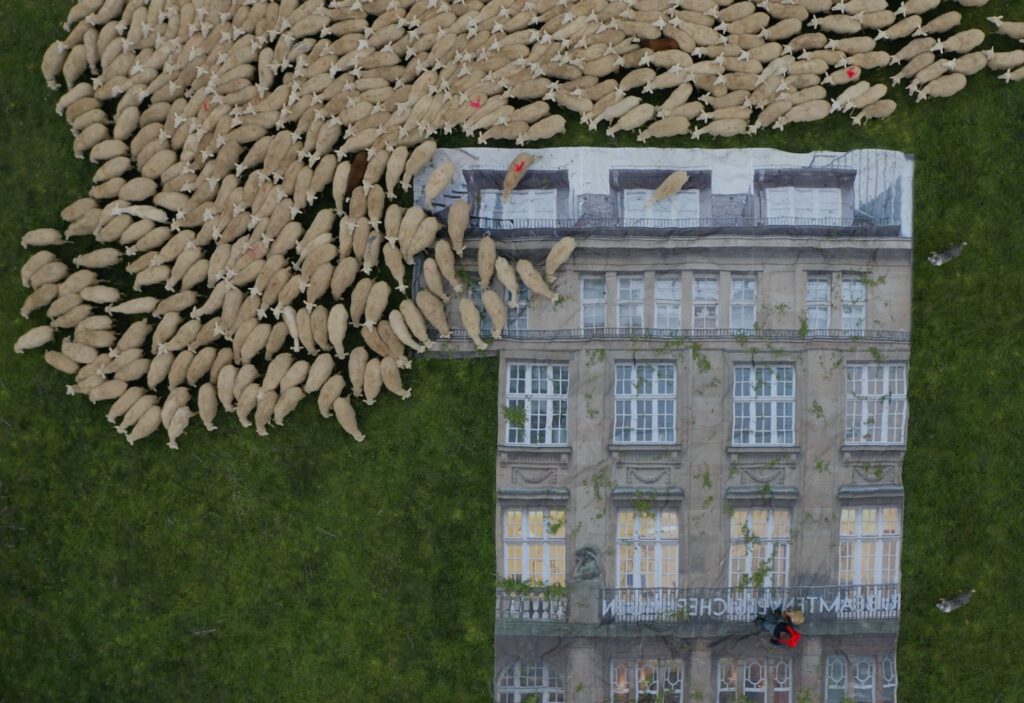
The lockdown came as a surprise during our shooting in the Spanish Pyrenees. From one day to another, the whole country was placed under house arrest. We were hiding in the mountains. Where else were we supposed to go? Are we already living in a collage, but haven’t noticed yet?
Presented in collaboration with Betty Schiel, Frauen* Film Fest Dortmund+Köln.
■ Sasha Litvintseva: Every Rupture
English, colour, 13 min., 2020
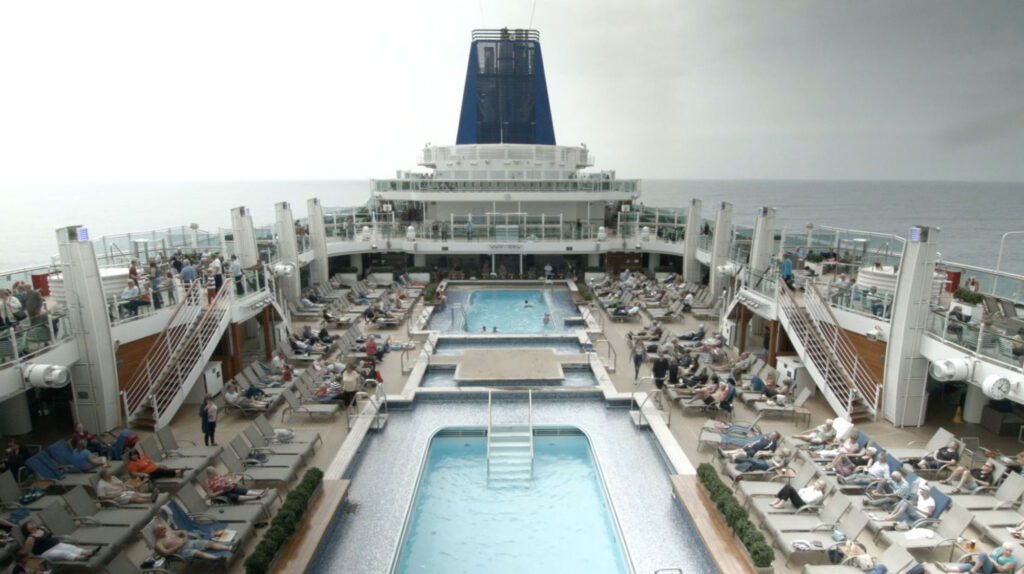
A cruise ship during the Brexit referendum. A bird colony unknowingly destroying the forest it calls home. A world in a pandemic. Nothing is a closed system. Moving through these three ecologies, the film questions what old images can mean after a rupture and opens up a space for mourning.
■ Enar de Dios Rodríguez: Liquid ground
English with German subtitles, colour, 31:46 min., 2021
Although the oceans make up more than 70% of the Earth, until now only a very small part of the seabed has been mapped. However, in recent years, the mapping of these spaces has accelerated due to different economic, geopolitical and scientific interests, determined to build a “new continent” to be explored and exploited under the sea. "Liquid ground" is a video essay that takes as its thematic axis the ocean floor and its current cartography to talk about colonialism, ecology and representation.
Shaped by a wide variety of found material—from the illustrations of the first worldwide oceanographic expedition, to current technologies and visions related to the oceans floors — "Liquid ground" functions as a reminder of the liquid grounds that, in reality, sustain and compose us. Moreover, it is a call to disobeying the stability of the arbitrary, extractive and limiting lines that are drawn over space. Like any other form of knowledge, Liquid ground is also a set of riddles.
