■ CONCEPT AND REALIZATION:
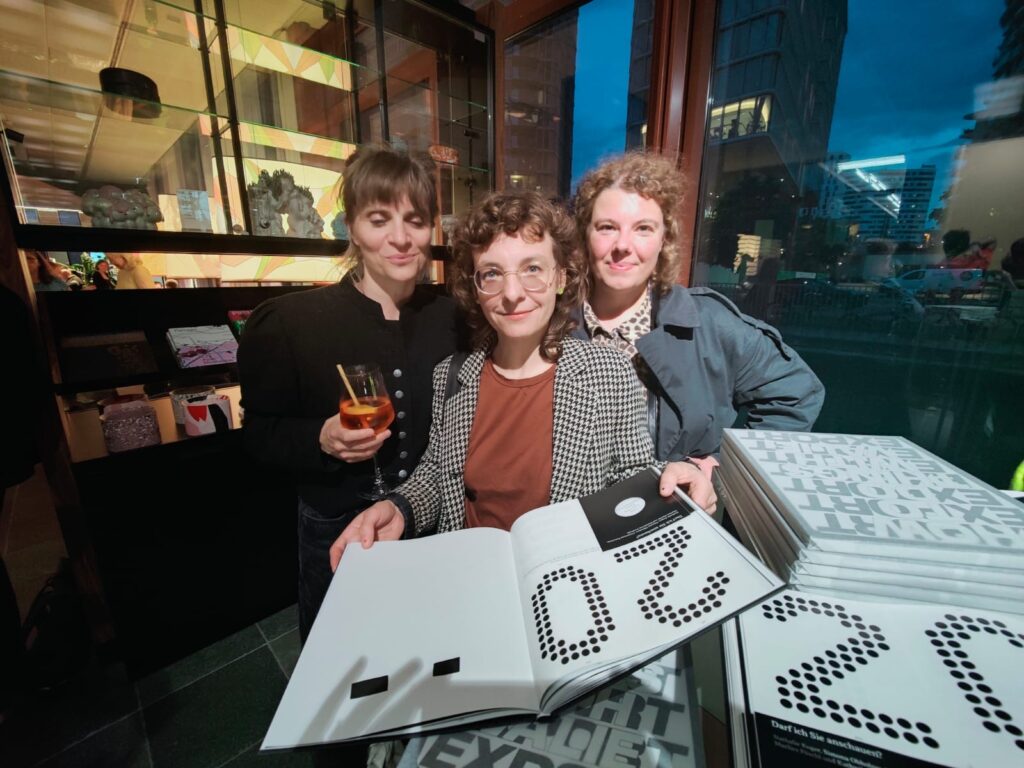
The Golden Pixel Cooperative was invited by the Österreichisches Filmmuseum to develop a collective artistic contribution for a publication accompanying a jubilee event dedicated to the life’s work of VALIE EXPORT. The publication focuses on EXPORT’s cinematic work and understands it as a field of aesthetic and political possibilities— a visionary dispositif for renegotiating perception and critically transforming a society shaped by patriarchal structures. The volume brings together contributions by long-time collaborators and artistic kindred spirits who respond to the invitation to reflect on individual works by EXPORT, translate them into contemporary discourses, and examine their enduring political potential.
In developing their contribution, Nathalie Koger and Christiana Perschon engaged in particular with the question of “female” regimes of looking in EXPORT’s work. Central to their investigation were the strategies through which EXPORT analyzes, subverts, and deconstructs the mechanisms of the so-called “male gaze”—those historically embedded visual orders that structure perception along male-dominated perspectives.
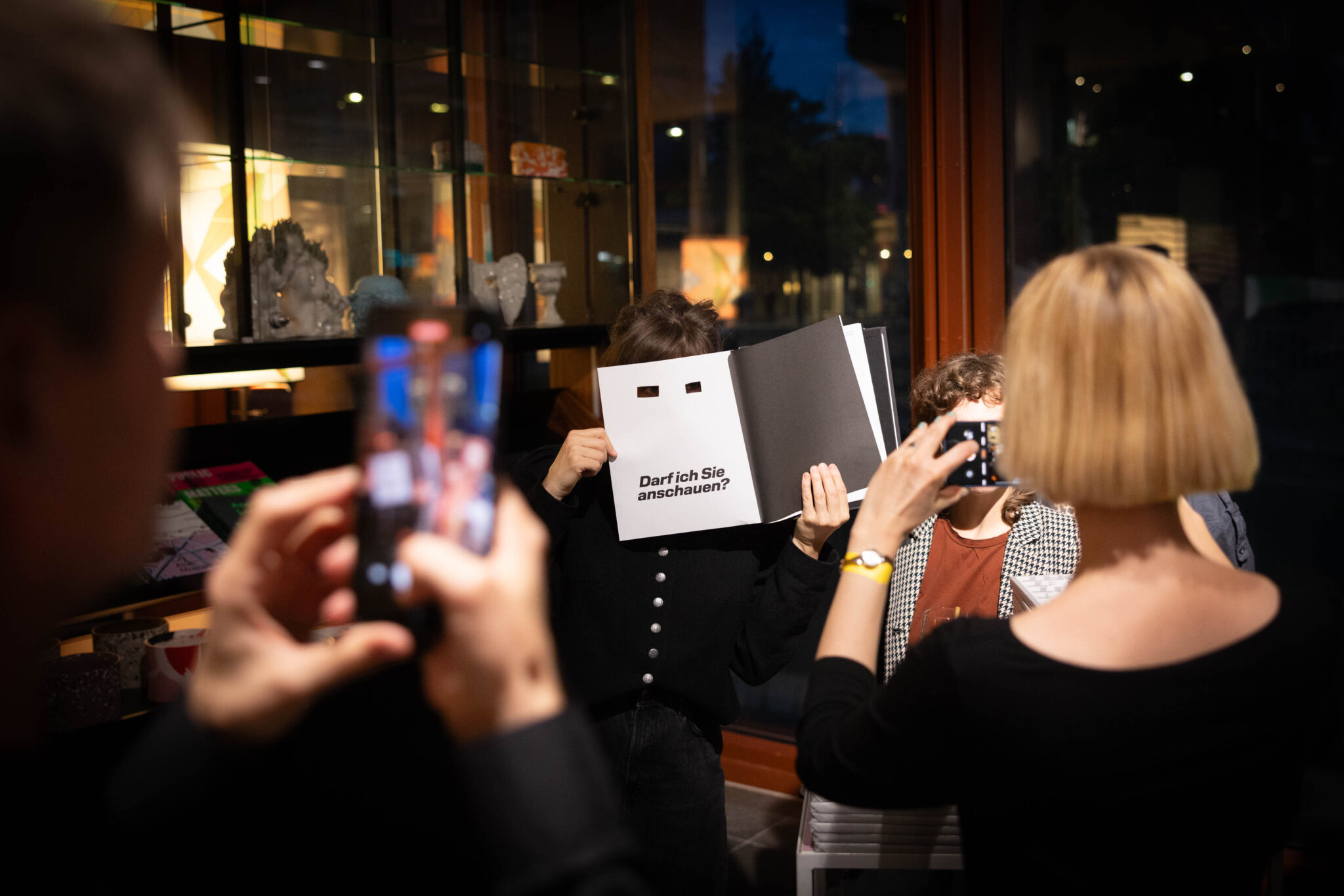
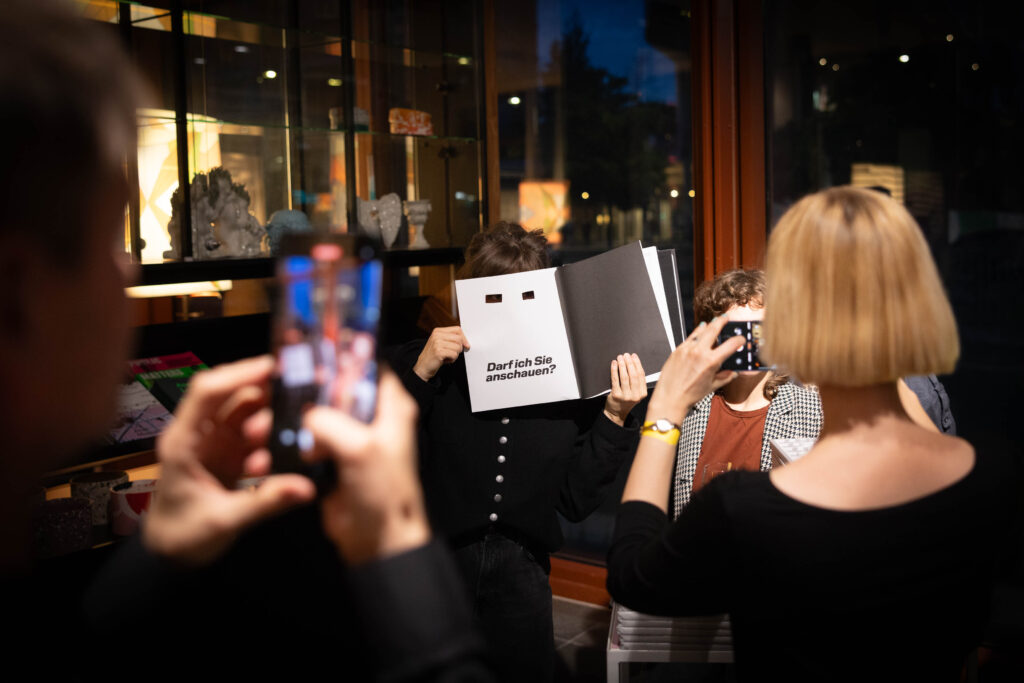
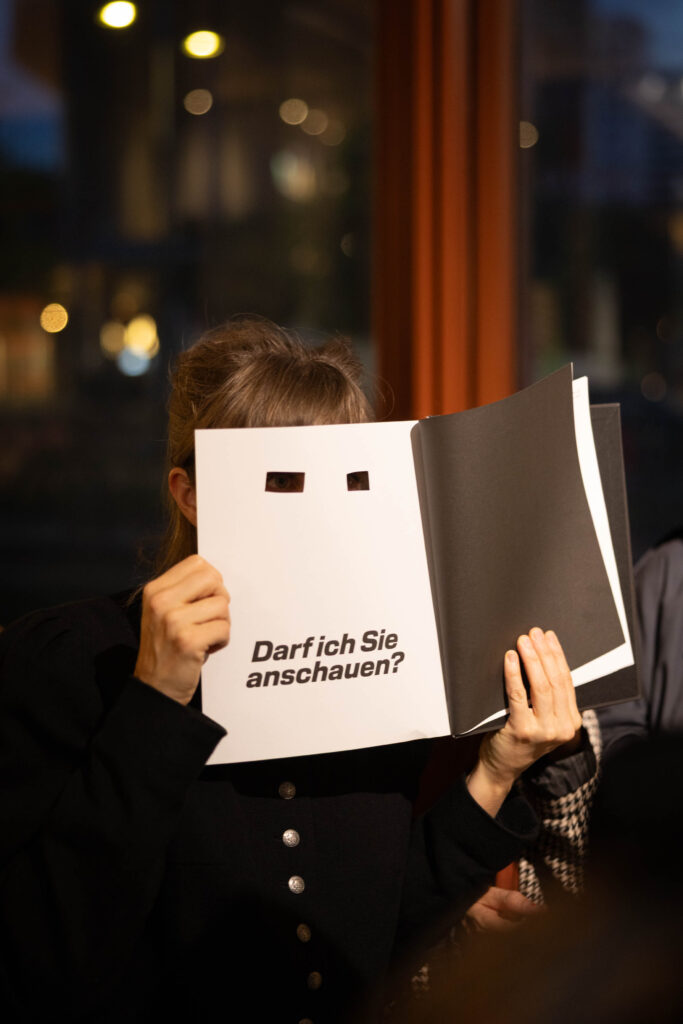
Drawing on EXPORT’s recurring motif of perforation or the circular opening in lens-based images, members of the Golden Pixel Cooperative (Nathalie Koger, Simona Obholzer, Christiana Perschon, Marlies Pöschl and Katharina Swoboda) developed a performative book contribution within a workshop framework. It takes the form of a detachable stencil that simultaneously functions as a mask, foregrounding the eye as a central instrument of the gaze in encounters with others. The printed phrase “May I look at you?” further transforms the object into a performative gesture: seeing is no longer assumed to be a neutral act but becomes visible as a socially and politically situated practice, implicating questions of consent, power, and reciprocity.